
How to communicate with a teacher weekly comes down to one habit: agree in advance on a channel, a short format, and a day of the week, then keep to it. Send the same kind of update every week, ask one or two specific questions, and finish by agreeing what happens next. Ten focused minutes on Friday beats a long email that arrives the night something goes wrong.
That routine matters even more when your child cannot tell you how school went. Plenty of children with autism or other disabilities come home and say nothing, or say something that does not match how hard the day actually was. A weekly check-in with the teacher becomes the only reliable window you get into the classroom, and it keeps small problems from quietly compounding.
I have kept a weekly log for years, across elementary, middle, and high school. The families who do this best are not the ones who email most, they are the ones who decide what the message will contain before they sit down to write it. What follows is the system I use, with the blanks you can fill in for your own child.
Everything here is general information about school communication, not legal or medical advice. Your child’s IEP, 504 plan, or school handbook sets the actual rules for who you contact and how fast they must answer.
Table of Contents
- What You Need
- Step-by-Step: How to Communicate With a Teacher Weekly
- 1. Choose a Reliable Communication Method
- 2. Prepare a Short Weekly Update
- 3. Ask About Your Child’s Learning and Support
- 4. Agree on the Next Week’s Plan
- 5. Keep a Communication Record
- Common Mistakes
- Frequently Asked Questions
- How often should I contact my child’s teacher?
- What should I write in a weekly message to my child’s teacher?
- How do I communicate with a teacher when my child has communication delays?
- What if the teacher does not respond to my weekly message?
- How can weekly communication support my child’s IEP or 504 plan?
- When should I request a meeting instead of sending another message?
- Start With One Fixed Day a Week
What You Need
You need very little, and that is the point. Gathering these five things in the first week of school turns a vague hope into an agreement the teacher can actually keep.
One point of contact. Find out who the teacher of record is, and whether the school routes parent questions through a front office, an app, or the teacher directly. If your child has a case manager, the person who coordinates their IEP, that person is your fastest route to the rest of the team.
A copy of the current plan. Read the IEP or 504 plan before your first conversation so you can ask about real goals rather than general worries. Know the two or three accommodations your child actually uses.
A short list of questions. Three or four questions is plenty for a written weekly message. More than that turns a check-in into homework.
A fixed time each week. Pick a slot, like Friday morning or Monday evening, and stay in it. Consistency is what makes a teacher trust that the message is not an emergency.
A place to keep records. A notebook, a folder in your email, or a shared document. Saving every weekly exchange is what lets you spot a trend before you request a formal meeting.
One thing worth asking for early: the school’s normal response time for parent email. Teacher families have said plainly that they would rather set a window themselves than have one assumed, so ask instead of guessing.
Step-by-Step: How to Communicate With a Teacher Weekly
1. Choose a Reliable Communication Method
Pick the method the school already uses, then confirm it with the teacher in the first week. Email is the default for a written record. A school app or messaging system works when the whole class is on it, since it keeps your message in front of other staff too.
A phone call is faster but leaves no record, so follow any call with a short written summary. A communication notebook that travels in the backpack works well in the lower grades and for children who cannot yet use speech reliably. A scheduled meeting fits families with more complex needs, though monthly is usually more realistic than weekly.
Whatever you choose, ask the teacher directly: how do you prefer to hear from me, and how quickly can you usually reply? You would be surprised how often that question gets a clearer answer than an assumption would.
2. Prepare a Short Weekly Update
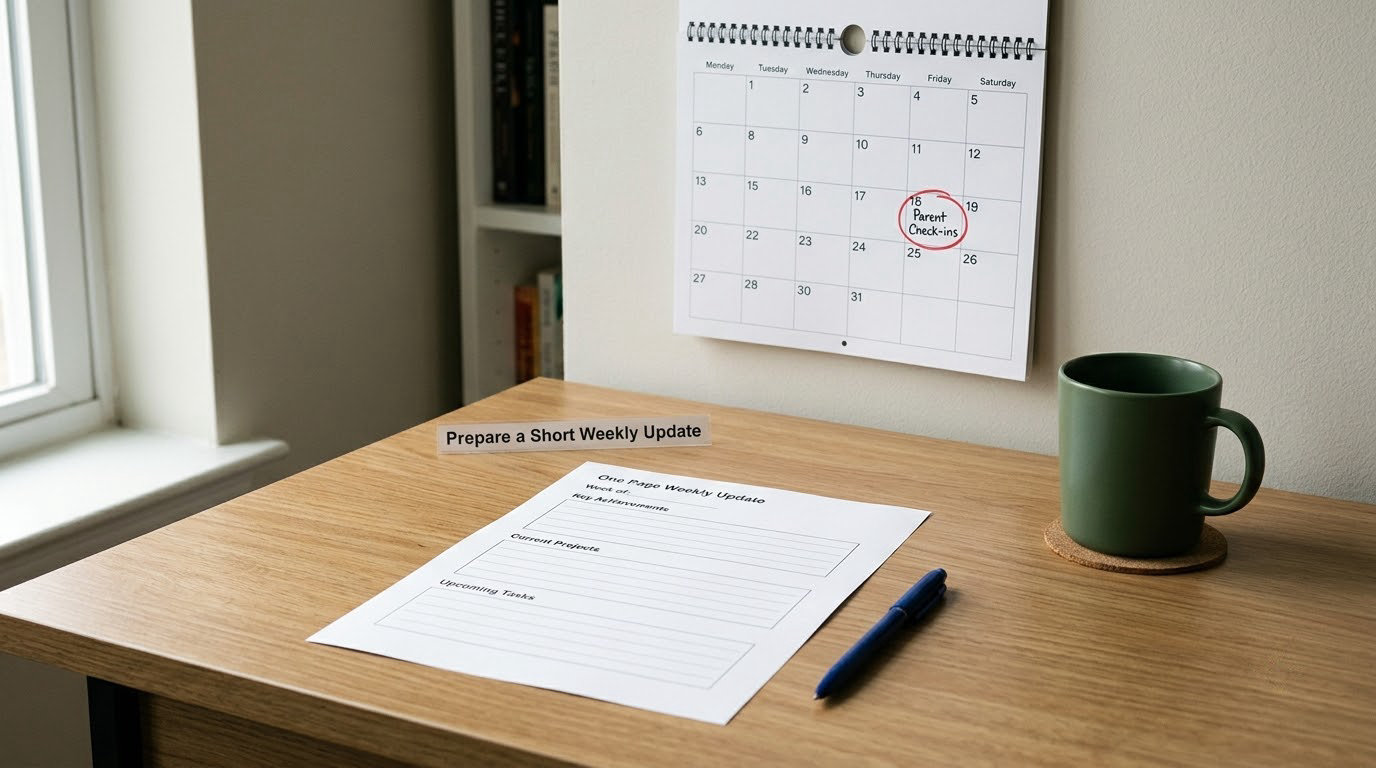
Write three things: one thing that went well, one thing that was hard, and one specific request. Keep it under 200 words. A busy teacher reads many of these at once, and a short message gets read.
Specific beats glowing. “He played tag with a partner and followed that kid’s directions for a full recess” tells a teacher far more than “he had a great day.” Parents of autistic children often hear this advice from teachers themselves, and it holds up.
You can reuse a simple structure, with a subject line like Weekly check-in, first name, Friday:
Subject: Weekly check-in, Jamie, Friday
One win this week: Finished his reading log on Tuesday with no reminders.
One hard spot: Two breakdowns during math, both after noise level rose at the 10-minute mark.
From home: Two good nights of sleep, and we practiced the visual schedule both mornings.
One question: Is there a quieter spot he can use during group math, or should we practice something at home?
Send it when you said you would. A message that arrives reliably on Friday reads as routine; the same message arriving at 9 p.m. on Sunday reads as anxiety.
3. Ask About Your Child’s Learning and Support
Turn your question into something answerable in two or three sentences. Which subject or skill got attention this week, and is your child working at the same level as the group or getting modified work? What did instruction look like, so I can practice something similar at home?
Then go further. Is there any sensory or regulation support in place, such as a quieter seat, noise-reducing headphones, or a movement break? Who is teaching the social skills on the plan, and is that happening this week?
Ask about progress on the actual written goals. If your child is working toward a reading or communication goal, ask what skill the classroom practiced this week and how it went. Teachers can usually answer that faster than parents expect.
With multiple adults involved, remember that the homeroom teacher sees your child all day, while art, music, and PE teachers see them for one period. Ask the homeroom teacher to pull relevant observations from the specials teachers rather than tracking each one down yourself.
4. Agree on the Next Week’s Plan
End every exchange with a plan, even a small one. Choose one classroom strategy the teacher will try, one thing you will practice at home, and a day you will talk again. Small plans survive contact with a busy week; large ones do not.
Write the plan down in the thread so it exists somewhere other than your memory. Then check whether it worked at the next check-in. A strategy tried for two weeks and then abandoned without a decision is worse than a strategy never tried.
When something needs to change in the formal plan rather than the weekly routine, say so directly and ask about the process. Add a line about progress toward IEP or 504 goals in your weekly message and it becomes usable data at your next meeting, which is hard to gather in the moment.
5. Keep a Communication Record
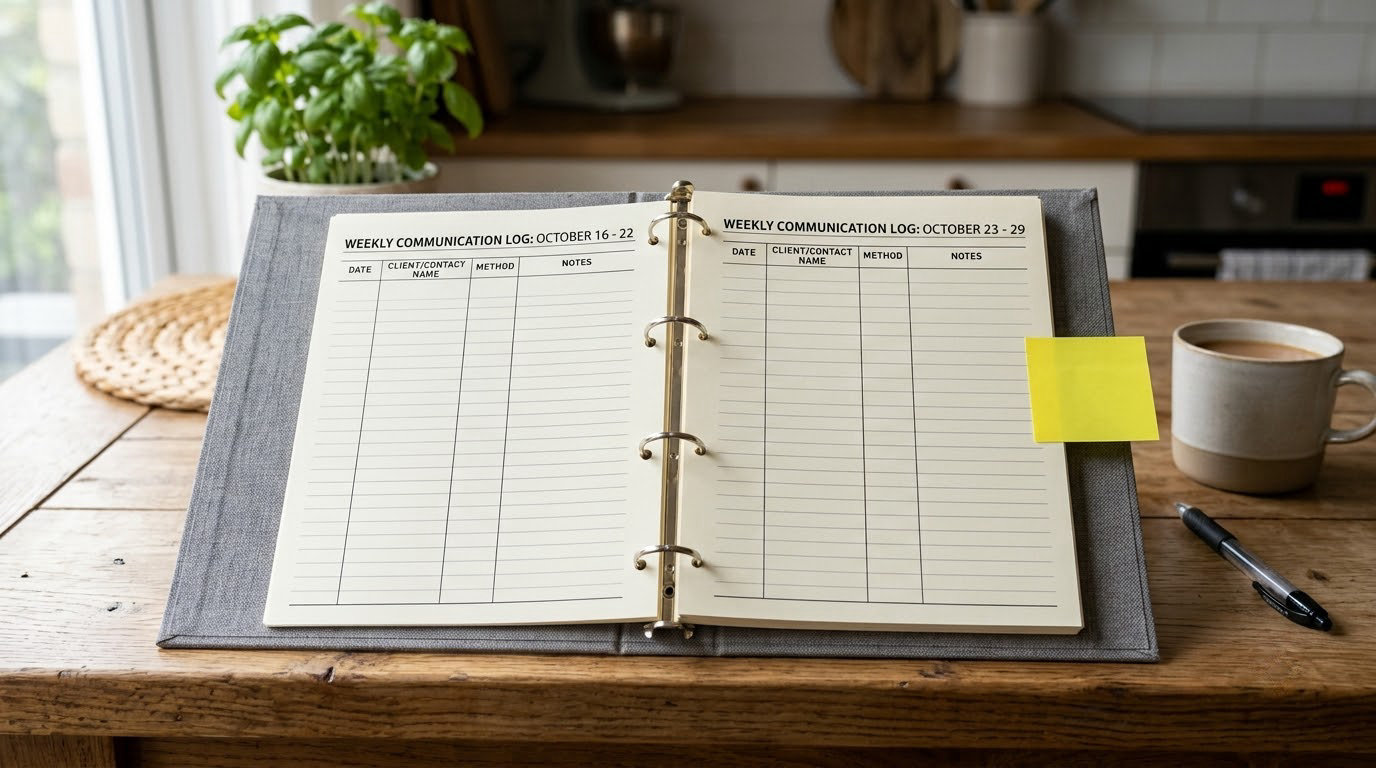
Save every message, both yours and the reply, in one folder. A weekly communication log does not need much: the date, the method, what you asked, what you agreed, and what changed. After a few months that log becomes the most useful thing you own.
Look for patterns rather than single events. Two breakdowns in one week means something. A single hard Tuesday usually means a short night. When you can point at eight weeks of notes, you are having a data conversation instead of a complaint conversation, and the school listens differently.
These records also matter when staff change. If a mid-year transfer or a teacher switch happens, the log lets the new teacher see what has already been tried, so nobody starts over from zero.
Common Mistakes
Sending the emotional version first. A long message about how worried you are gets skimmed. Rewrite it in facts: what happened, how often, what you already tried, what you want to try next. The feeling can stay, but it does not need to lead the email.
Waiting until it is urgent. By the time a weekly rhythm exists, a hard week is a line in a log instead of a crisis. Reserve the urgent channel for urgent things, or you will find it is used every week.
Asking vague questions. “How is he doing?” gets “Fine.” “Which reading group was he in on Tuesday, and did he answer when the teacher called on him?” gets an answer you can use.
Treating one week as a trend. One bad week is data, not proof. Say what you noticed, ask whether it is a pattern, and let the record decide.
Only sending bad news. Teachers notice this, and it wears on them. A weekly message with nothing but complaints teaches everyone that the inbox equals a problem.
Demanding daily detail without agreement. Asking for a full daily report with no conversation is the request families on parenting forums hear pushback to most. Explain why you need it, keep it to a few yes-or-no questions, and thank the teacher for the effort.
Going straight to administration. Escalating on the first miss gets you labeled, and it removes the teacher from the conversation. Move up one step at a time, in writing, with dates attached.
When contact does stall, keep the ladder short and predictable. Teacher, then school counselor, then case manager, then the special education coordinator or administrator. Say what you have already tried and how long you have waited, and keep it factual. Families who wait two weeks before a calm follow-up usually get a reply sooner than families who escalate on day one.
Frequently Asked Questions
How often should I contact my child’s teacher?
Once a week is a reasonable default, especially for a child who cannot describe their own school day. Ask the teacher what rhythm they can sustain, then match it. Some families send a short written update weekly and speak by phone every two weeks. Consistency matters more than frequency, because a predictable note is easy to answer.
What should I write in a weekly message to my child’s teacher?
Three parts: one specific win, one challenge with the context around it, and one clear request or question. Add what you tried at home so the teacher knows the message is a partnership rather than a demand. Keep it under 200 words, and skip anything you would not want read aloud in a meeting.
How do I communicate with a teacher when my child has communication delays?
Do not wait for your child to report on school. Ask the teacher for observations instead: what the work involved, who the child interacted with, how regulation looked, and whether the plan supports were used. Specific classroom observations are more useful than general impressions, and they become evidence you can reference later.
What if the teacher does not respond to my weekly message?
Follow up once, calmly and briefly, naming the date of your last message and the question you still need answered. If nothing comes back after another week, move to the school counselor or your child’s case manager and ask them to reach the rest of the team. Keep the record of dates; it makes the escalation factual instead of emotional.
How can weekly communication support my child’s IEP or 504 plan?
Weekly notes are how you show whether a goal is actually moving. Note which skill was practiced, what the teacher saw, and what you practiced at home. Over a term that becomes a trend instead of an impression, and it is exactly the kind of record that supports a request for a meeting or a change in services.
When should I request a meeting instead of sending another message?
Request a meeting when a pattern has run for several weeks without change, when an accommodation in the plan is not being implemented, or when the written exchange has stalled. Bring your communication log and focus the meeting on one or two specific goals. One clear request is far more effective than a full review of everything that annoys you.
Start With One Fixed Day a Week
If you do nothing else, pick a day, pick a format, and send the same three-part message on it. Ask the teacher in the first week how they prefer to hear from you, then keep your own log of what you asked and what changed. That is how to communicate with a teacher weekly becomes a habit instead of a reaction, and by mid-semester you will have the record that makes every meeting easier.