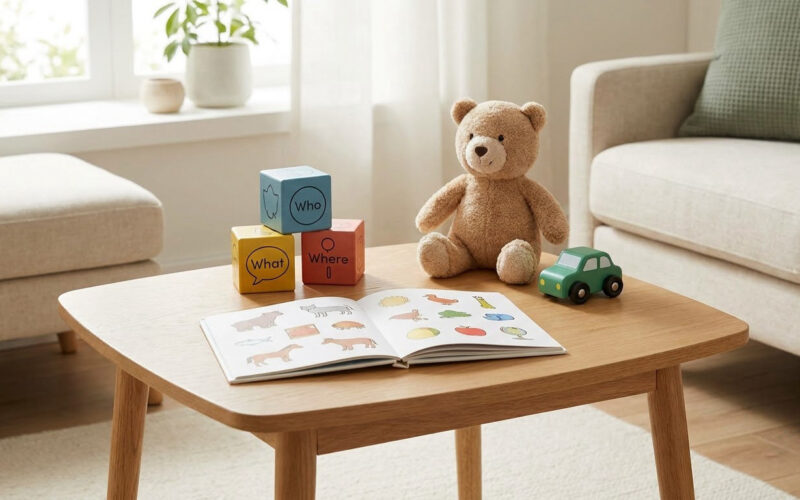
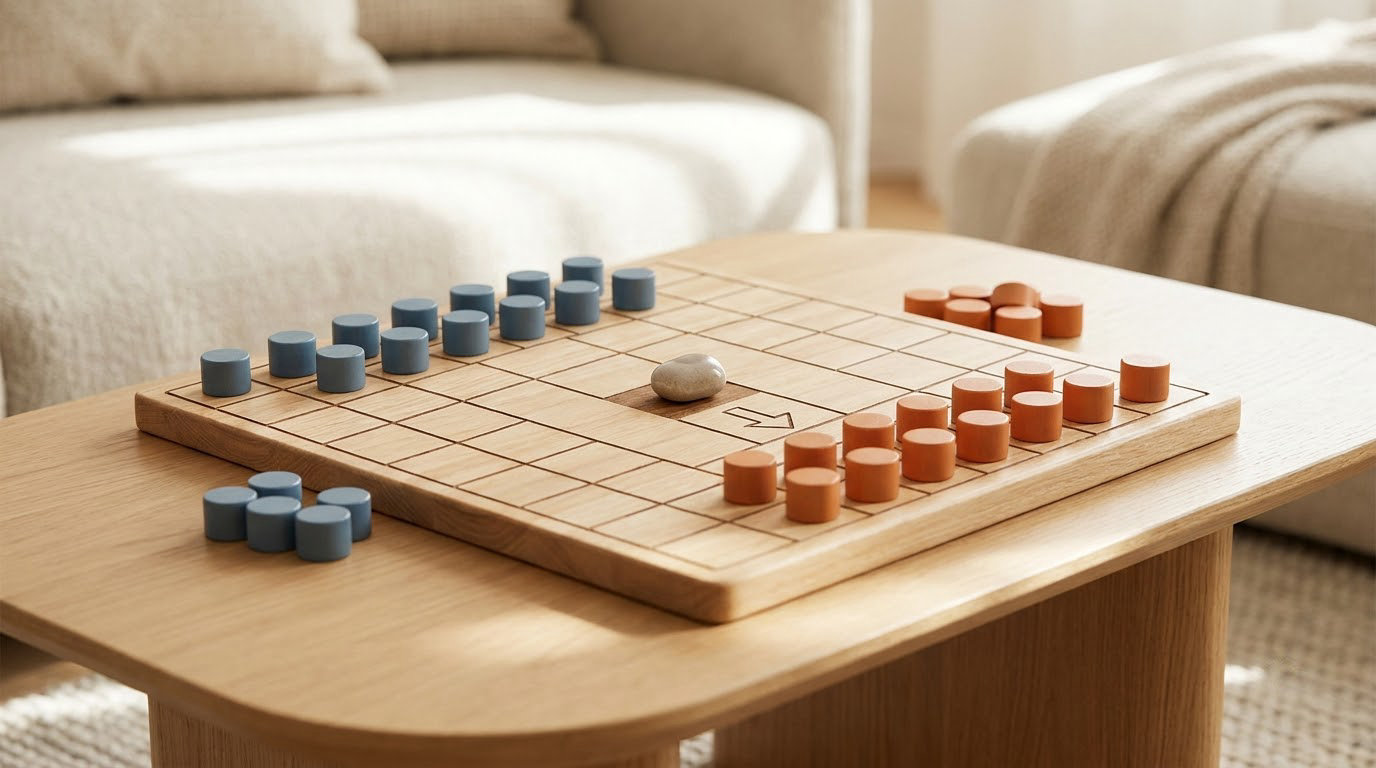
To teach turn taking with games, pick one simple game, model the hand-off yourself, say the same words every single time (“your turn, then my turn”), keep sessions to three to five minutes, and praise the waiting instead of the winning. Most children need a few weeks of that consistent rhythm before the turns start running themselves.
This guide is written for parents, caregivers, preschool and kindergarten teachers, and therapists working with children roughly 18 months to 8 years old. It matters most for children who grab instead of asking, interrupt constantly, rage-quit a game, or freeze when it is not their go.
Turn-taking is the social skill of waiting for your go, taking your turn with something, and handing it back so the next person gets one. Practicing it through play works better than drills, because the waiting gets wrapped in something the child actually wants to do.
Table of Contents
- What You Need
- How to Teach Turn Taking with Games, Step by Step
- Choose a Simple Game Everyone Understands
- Teach the Turn Routine Before Playing
- Practice One Turn at a Time
- Use Games to Practice Waiting and Swapping
- Add Choices and Light Competition
- End on a Successful Repeat
- 12 Turn-Taking Games That Actually Work
- Turn-Taking Games Compared by Age and Skill
- Adapt Games for Your Child
- For autistic children and other learners who need predictability
- For children with speech delays
- For children with attention differences
- For sensory needs, motor needs, and low stamina
- For the child who hates losing and the child who hates winning
- Common Mistakes
- Frequently Asked Questions
- How long should turn-taking practice be for a toddler?
- What are some good turn-taking games for toddlers?
- How do I teach a child to wait their turn without a tantrum?
- What do children learn from taking turns?
- Is there a social story that teaches turn-taking to children with autism?
- What is the 3 6 9 game?
- Conclusion
What You Need
Almost nothing. The best turn-taking games are built from two socks, a cup, and a floor, which is why parents can start the same afternoon they read this.
Start with these basics:
- A soft ball or rolled-up sock for rolling and catching back and forth
- A single die
- Two or three small toys or cups for moving and stacking
- A simple board game, if you have one already (Snakes and Ladders and Candy Land both work at this stage)
- A visual timer, a phone timer, or a song you can sing twice
Optional supports, which make a real difference for children who rely on predictability:
- Turn cards – two cards, one with a picture of each player, moved to show whose go it is
- A first-then board – a simple “first we play two rounds, then we stop” reminder
- A visual timer – the closed shape of the colored section shrinking is easier to read than a number counting down
- Turn tokens – a coin or button that passes back and forth as the marker of whose go it is
Preparation matters more than equipment. Sit where your child can see your hands and face, not across the room. Put every material out before you start so you are not rummaging in a drawer mid-game. And decide in advance how many rounds you are doing, because ending on your terms is much easier than ending after a meltdown.
How to Teach Turn Taking with Games, Step by Step
Choose a Simple Game Everyone Understands
Start with a game that has obvious turns and almost no rules. Rolling a sock ball back and forth works better at the beginning than any board game, because the turn is built into the action itself.
What to do: choose a game with a clear hand-off, a small number of actions, and one visible signal for when a turn starts and ends. Skip games with setup longer than the play. Snakes and Ladders is often called the first board game parents hand over, and parents on r/boardgames describe it plainly as something designed around the social etiquette of taking turns.
How to lower the difficulty: make the physical exchange easier. Sit closer, use a bigger or lighter object, or slow your own turn so the wait feels long and predictable. Add competition only after the basic rhythm is boring to your child.
Teach the Turn Routine Before Playing
Run the routine once, slowly, before the game starts. Sit beside your child, hand them the object, take it back, and say the words you will use for the next ten sessions.
Scripts worth stealing:
- “Your turn, then my turn.”
- “You wait, I go, then you go.”
- “All done, my turn.” (while passing it back)
- “You did wait. Now you go.”
Pair the words with one consistent cue. A turn card, a sing-song phrase, or the same three-second pause before you reach for the object all work. Using a visual timer for turn taking removes the argument about how long is long.
How to tell it worked: your child starts anticipating the hand-off before you speak, or at least looks at your hands at the moment your turn ends.
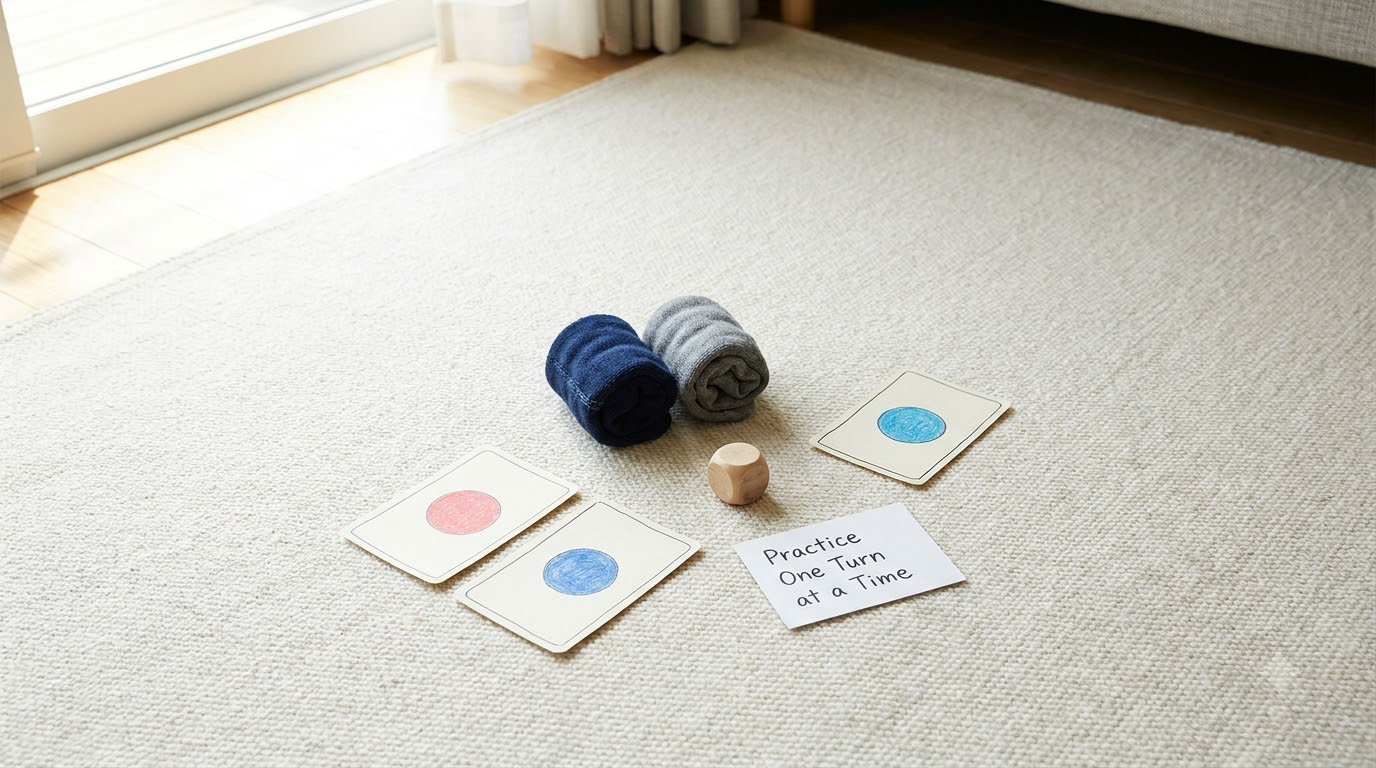
Practice One Turn at a Time
Begin with waits so short they barely register. One second, then two, then five. Most parents start far too high and end up teaching frustration rather than patience.
What to say and do: take your turn, hand over, then narrate the wait. “Now you wait. I am counting to five. One, two, three, four, five. Your turn.” Reinforce the moment the turn starts, not the moment the child wins. A nod, a thumbs-up, an echo of their sound, or returning their words back to them all count as a response, so a child who does not speak can still be recognized.
How to know it is landing: the wait stretches from one second to three without you counting. That is the whole skill, and it grows in seconds, not weeks.
Use Games to Practice Waiting and Swapping
Once single turns are easy, add the part children find hardest: giving the turn up. Cooperative games, where nobody wins and everybody needs the other person, force the hand-off naturally.
Hoot Owl Hoot is the classic example. Players help the owls get home before the sun rises, and one player physically cannot finish without the other. Children’s therapists often reach for cooperative games with no single winner first because nothing has to be given up at the end.
How to raise difficulty: add a second wait mid-turn, or have your child hand you a specific object from a pile rather than a held toy. Practicing the swap with something they are not gripping is much harder, and closer to real life.
Add Choices and Light Competition
Only after the waiting is comfortable should you let there be a winner. Then soften the result so a loss never lands hard. You can let your child roll first, let them take the shorter path, choose the picture they want to match, or deal yourself a card you were not hoping for.
Make sure you win and lose. An adult who never loses teaches a child that games are something adults let them have, and the skill never transfers to peer play.
How to raise difficulty: add a second and third player. Multi-player games make waiting longer and watching other people harder, so most children need a solid single-player rhythm first.
End on a Successful Repeat
Finish every session with a round your child can complete. Reread your visual timer or turn cards, run one clean hand-off, and stop. A predictable goodbye is what makes tomorrow’s start easy.
What to say: “You waited and then you took your turn. That is the whole game.” Then name the specific behavior, not the child. “You waited five seconds” beats “good job,” because it tells your child exactly what to do again tomorrow.
Most turn-taking practice that matters happens in sessions this short. Five minutes a day for two weeks will get further than an hour once a month.
12 Turn-Taking Games That Actually Work
Each game below lists a best age, what you need, and the part of turn-taking it actually practices. Ages are a starting point, not a gate.
- Sock ball back and forth – Ages 18 months to 4. Materials: two rolled socks. Teaches the raw rhythm of hand-off and wait. The single best place to start.
- Roll a die, do the action – Ages 3 to 6. Materials: one die, a small picture chart of actions like clap, hop, or jump. Teaches waiting for a turn with a visible outcome.
- Snakes and Ladders – Ages 3 to 6. Materials: the board. Teaches sitting through another player’s whole turn, which is far longer than a hand-off.
- Candy Land – Ages 3 to 6. Materials: the board. Simple rules, colorful squares, and a slow game that tolerates lots of repetition.
- Pop the Pig – Ages 2 to 4. Materials: one pig figure and dice. Teaches cause and effect with turns, useful for children who need the rules to be physically obvious.
- Two-player dice tic-tac-toe – Ages 4 to 7. Materials: paper, a pen, one die. Roll to choose a square, mark it, alternate. Teaches a clean alternation with no luck involved.
- Spot It or a matching hunt – Ages 3 to 6. Materials: one card deck or a deck of homemade picture pairs. Teaches looking at what another player is doing before your own go.
- Hoot Owl Hoot – Ages 3 to 5. Materials: one cooperative card game. Teaches shared turns with no winner to fight over.
- Don’t Break the Ice – Ages 4 to 7. Materials: one cooperative game. Teaches planning around someone else’s turn instead of around the rules.
- Simon Says – Ages 3 to 6. Materials: none. Teaches impulse control, since most children act first and catch up after.
- Pretend shop or kitchen – Ages 2 to 5. Materials: a few household objects. Teaches role-swapping, where both players take turns being the customer and the grown-up.
- Pass the song – Ages 2 to 6. Materials: a device and two songs. Teaches a turn with a natural end, plus the hard skill of starting again from silence.
You can also run bubbles, bubbles in the bath, or passing a toy car along a track. For children who will not sit at a table, floor games beat tabletop games every time, which is something speech-language pathologists running turn-taking sessions with young children keep running into.
Turn-Taking Games Compared by Age and Skill
| Game | Best age | Players | Materials | Skill practiced | Rules level |
|---|---|---|---|---|---|
| Sock ball back and forth | 18 months to 4 | 2 | None | Basic hand-off and wait | None |
| Pretend shop or kitchen | 2 to 5 | 2 | Household objects | Role-swapping | Low |
| Pop the Pig | 2 to 4 | 2 | One game | Cause and effect | Low |
| Pass the song | 2 to 6 | 2 | Device | Ending and restarting a turn | Low |
| Simon Says | 3 to 6 | 2 or more | None | Impulse control | Low |
| Hoot Owl Hoot | 3 to 5 | 2 to 4 | One game | Cooperative turns | Medium |
| Snakes and Ladders | 3 to 6 | 2 to 4 | One game | Long waits and losing | Low |
| Candy Land | 3 to 6 | 2 to 4 | One game | Long waits and losing | Low |
| Spot It or matching hunt | 3 to 6 | 2 | One deck | Watching another player | Low |
| Roll a die, do the action | 3 to 6 | 2 or more | Die and chart | Waiting for a result | Low |
| Two-player dice tic-tac-toe | 4 to 7 | 2 | Paper and die | Strict alternation | Medium |
| Don’t Break the Ice | 4 to 7 | 2 to 4 | One game | Cooperative planning | Medium |
Adapt Games for Your Child
The goal stays the same in every version: a shared turn that both players notice. What changes is the number of cues, the length of the wait, and how much noise and movement is tolerable.
For autistic children and other learners who need predictability
Teach one rule at a time. Teach “go” first, then “stop,” then combine them, and use the same words in the same order every session. Visual turn cards and a first-then board carry most of the load, since they say the same thing without you having to speak. Parents of autistic children often describe a child who plays a turn-taking game fine until another child enters the space, which is exactly why you should practice with a sibling or friend, not only with an adult. Social stories written around taking turns exist and can help, but a short written plan paired with the game beats a story on its own.
For children with speech delays
Never make words a condition of the turn. Let any signal count: pointing, reaching, holding out a hand, a sound, or eye contact. Praise what they did (“You reached, so I knew it was your go”) so the connection between signal and turn builds.
For children with attention differences
Shorten everything. Three rounds of a fast game beats one round of a slow one. Set a visual timer for the whole session, not the turn, so they can see the finish line. Put movement between rounds rather than at the end.
For sensory needs, motor needs, and low stamina
Skip boards entirely and play on the floor, where a child can drop the game without anyone making a scene about it. Choose fine-motor-free versions: large chunky pieces, or pushing a token with a finger instead of a pencil grip. If sound is a problem, pick games with no sound, and if noise helps, keep the session in a louder room.
For the child who hates losing and the child who hates winning
The child who cannot lose cheats, rage-quits, or demands a rematch. Keep the game on a timer, agree on the number of rounds before starting, and end while they are still enjoying it. The child who cannot handle winning gets anxious, freezes, or cannot stop talking about it, so use cooperative games where there is no result to manage at all.
Common Mistakes
- Making waits too long at the start. Fix: count in seconds out loud and grow the wait by one second a week, not by minutes.
- Correcting every turn. Fix: correct nothing except safety. Reinforce the waiting, ignore the rest.
- Changing the rules mid-game. Fix: pick one rule, write it on a card if you need to, and keep it identical for three sessions before adding anything.
- Rewarding only spoken words. Fix: accept gesture, sound, sign, and eye contact as a turn request, and say so out loud.
- Taking over when the child struggles. Fix: sit on your hands and wait it out for ten seconds. Adults who step in remove the exact practice the game exists for.
- Starting with a competitive game. Fix: run two-player cooperative play with no winner for a week or two first.
- Stopping the moment there is a meltdown. Fix: regulate first, lower the wait time next time, and never scold during the recovery. A meltdown is communication about how hard something was.
- Playing for too long. Fix: stop while the game is still fun. A short good session beats a long one every time.
Four habits do most of the work: model the hand-off yourself, keep the words the same, praise the wait rather than the win, and say a little less every session. That last one is the goal. Prompts should fade until your child is running the rhythm without you.
Frequently Asked Questions
How long should turn-taking practice be for a toddler?
Three to five minutes, once or twice a day, is plenty. Young children hold attention in short bursts, and a session that ends while the game is still fun is far more useful than a longer one that ends in tears. Keep the same game for a week before switching, and stop early rather than pushing through resistance.
What are some good turn-taking games for toddlers?
Start with games that need no rules at all: rolling a sock ball back and forth, taking turns stacking two cups, or popping the bubble one child blows and the other catches. Board games like Snakes and Ladders work well too, but sit within arm’s reach so you can model the hand-off without interrupting. Anything with a clear physical exchange teaches the rhythm fastest.
How do I teach a child to wait their turn without a tantrum?
Shorten the wait before you manage the feelings, because most tantrums come from a wait the child cannot yet tolerate. Count out loud, praise the moment the turn starts, and stay close without taking over. If grabbing happens, block gently, wait until they release, then hand the toy over with the words you always use. Calm repetition does more than talking beforehand.
What do children learn from taking turns?
Children learn to wait, to handle winning and losing, to notice what another person is doing, and to ask for what they want instead of grabbing. Turn-taking also builds the impulse control needed for conversation, group work, and lining up. The frustration that builds when a child cannot wait usually shows up first as interrupting, grabbing, or meltdown, so the skill protects playtime as well.
Is there a social story that teaches turn-taking to children with autism?
Yes, social stories about taking turns are widely available and many autism clinics use them. They work best alongside the game rather than instead of it: read one short story, then play the exact game the story described, using the same words. Add visual turn cards and a first-then board so the routine is predictable, and teach one rule at a time before combining them.
What is the 3 6 9 game?
The 3 6 9 game is a counting and clapping rhythm game where players take turns calling out numbers and clapping on specific ones, like a math version of Simon Says. It does practice turn-taking because the caller holds the floor while others wait. Rhythm and clapping pattern games generally build turn-taking more directly than the counting version alone.
Conclusion
Start with one sock, one floor, and three minutes. Roll it back and forth, say “your turn, then my turn” every single time, and stop while your child still wants another go.
For the first week, repeat that one game daily and count out loud in seconds. In week two, add a die and a small picture chart of actions so the wait has a visible end. Once your child can wait five or six seconds without help, move up to a board game, then to a cooperative game with more players.
Turn-taking is learned by repetition, not by explanation. The words you say at the hand-off matter far less than saying the same words every time.