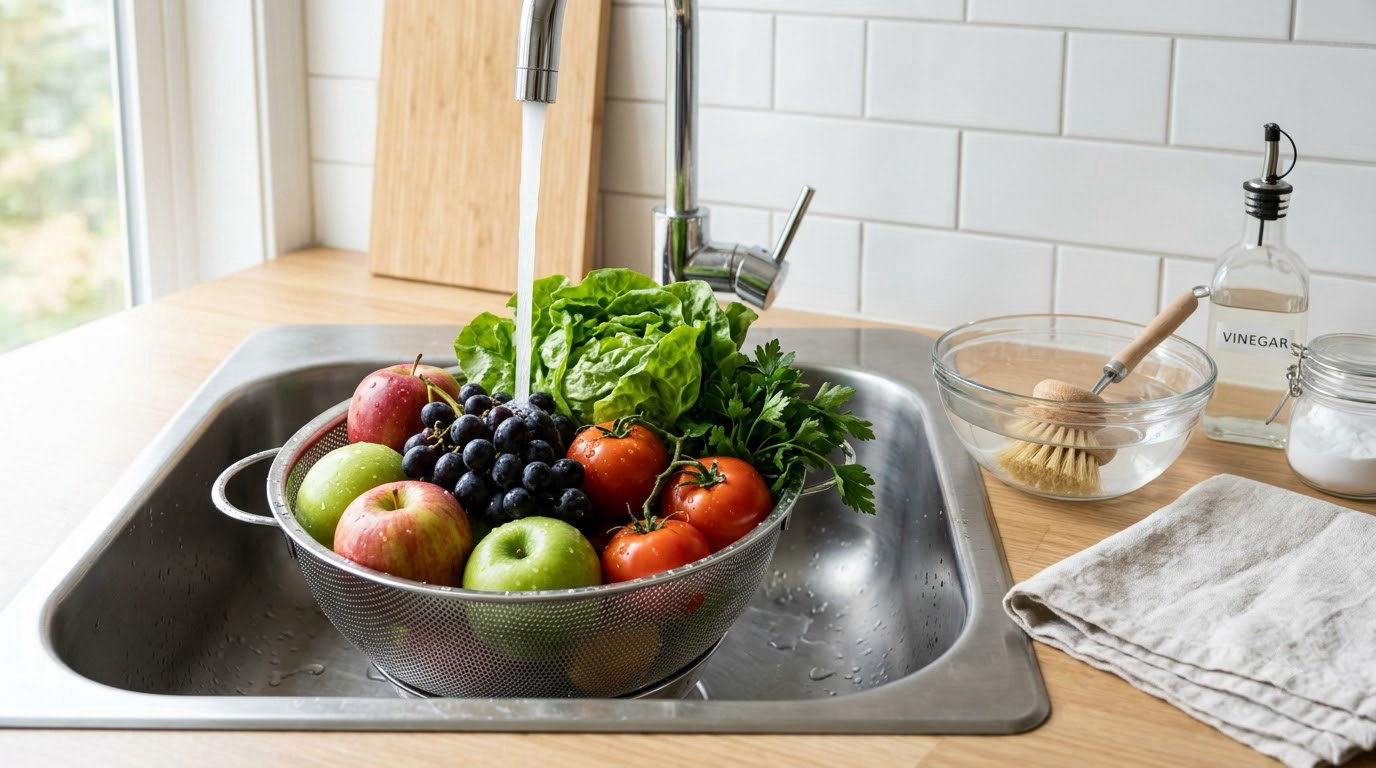
Rinse fruits and vegetables under cool running tap water for 15 to 20 seconds, then wash firm produce by hand. That is the baseline for how to wash pesticides off produce safely, and for most households it is genuinely enough. If you want more, a 1 percent baking soda soak for 12 to 15 minutes is the strongest thing you can do at home for residue sitting on the skin.
What washing cannot do is more important than what it can. Pesticides that a plant has already taken up into its tissue are never going to come off in your sink, and no amount of scrubbing changes that. The goal is removing surface residue and the dirt and bacteria that ride along with it, then making smarter choices at the store for the rest.
Residues on food are regulated, not banned. Farmers market fruit and backyard garden tomatoes carry a different load than produce from a large distributor, and neither one is automatically unsafe. If your family eats conventional produce because organic is not in the budget, washing is genuinely your first line of defense rather than a consolation prize.
Table of Contents
- What You Need
- Step-by-Step: How to Wash Pesticides Off Produce
- 1. Rinse the Produce Under Cool Running Water
- 2. Wash Firm Produce by Hand or With a Soft Brush
- 3. Soak Leafy Greens and Delicate Produce Briefly
- 4. Peel or Trim Produce When Appropriate
- 5. Dry and Store the Produce Properly
- How Does Soaking Help When You Wash Pesticides Off Produce?
- What Washing Can and Cannot Remove
- A Quick Reference by Produce Type
- Common Mistakes
- Using dish soap or bleach
- Reaching for vinegar instead of baking soda
- Soaking produce in standing water
- Washing produce after cutting it
- Assuming washing removes every pesticide
- Skipping the store because washing seems to cover everything
- Frequently Asked Questions
- What is the best way to wash pesticides off produce at home?
- Should I use soap or baking soda to wash produce?
- Does rinsing fruit and vegetables remove all pesticides?
- Is a commercial produce wash safer than running water?
- Should I wash produce before or after cutting it?
- Does organic produce need to be washed too?
- Conclusion
What You Need
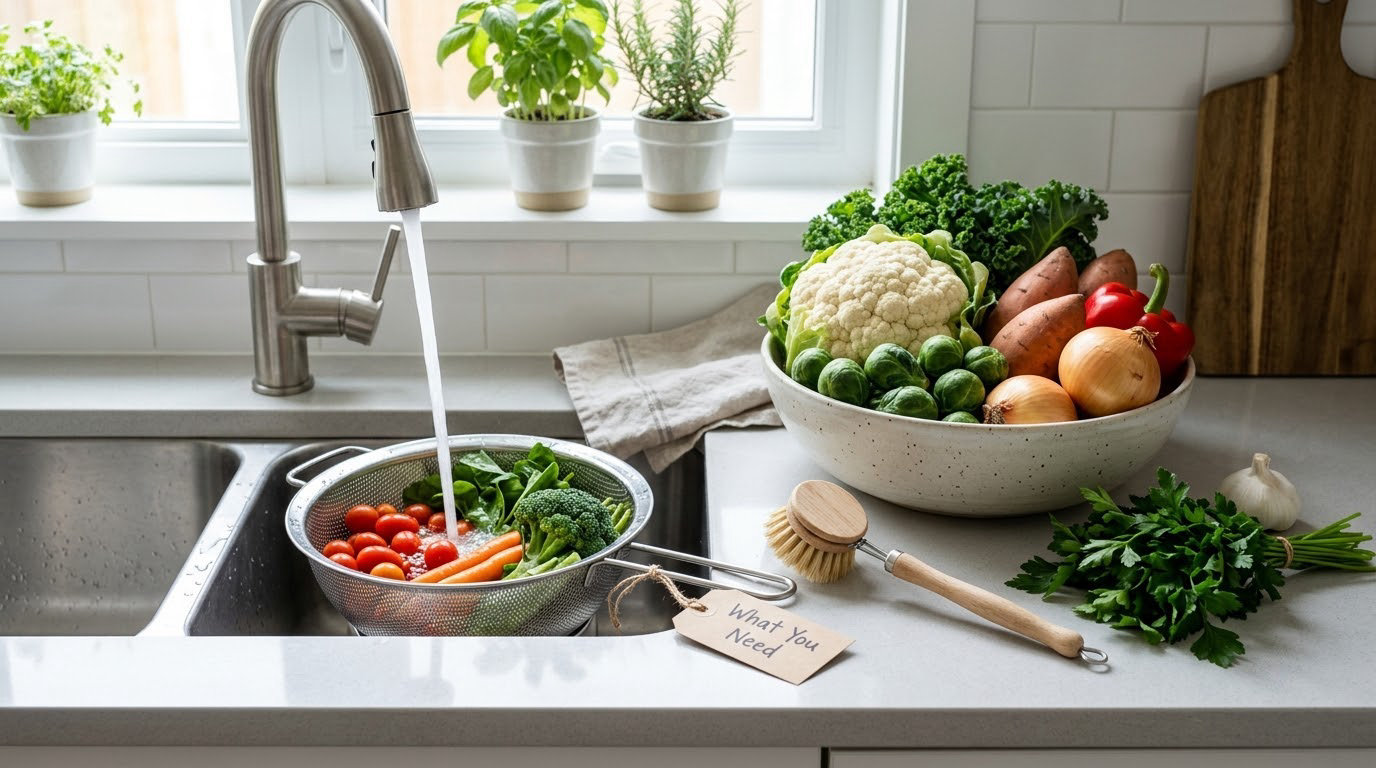
You need very little, and most households already have all of it. The tools matter far less than the technique.
- A colander or strainer for draining greens and smaller items.
- Cool running tap water at full pressure. Warm water is fine for firm produce, lukewarm is better for soft fruit.
- A large bowl wide enough that produce sits in a single layer rather than a pile.
- A soft produce brush for anything with a rough skin, like potatoes, sweet potatoes and cucumbers.
- Baking soda if you want the alkaline soak. One tablespoon in about two cups of water makes roughly a 1 percent solution.
- A clean towel or salad spinner for drying.
Why bother washing before you peel or cut? Because for most common produce, residue concentrates in the outermost layers, which is exactly the part you are about to throw away or the part you are about to bite into. Washing first means you are not eating the concentrated bit.
Skip the cutting board until produce is clean. Washing a pile of spinach after chopping it drives water and any remaining residue into the cuts, and it takes far longer to rinse than a whole leaf.
Step-by-Step: How to Wash Pesticides Off Produce
1. Rinse the Produce Under Cool Running Water
Start with plain water and no soap. Hold each item under cool running tap water for 15 to 20 seconds and rotate it with your fingers.
How do you know it worked? When the water running off the produce comes out as clear as the water going in. Time matters more than scrubbing here, and 15 to 20 seconds is the number that comes up again and again in extension guidance and in the sources search engines lean on for this question.
For leafy greens, separate the leaves first rather than washing the whole head. Grit hides in the layers at the base, and pulling them apart under the tap does more than any soak would.
2. Wash Firm Produce by Hand or With a Soft Brush
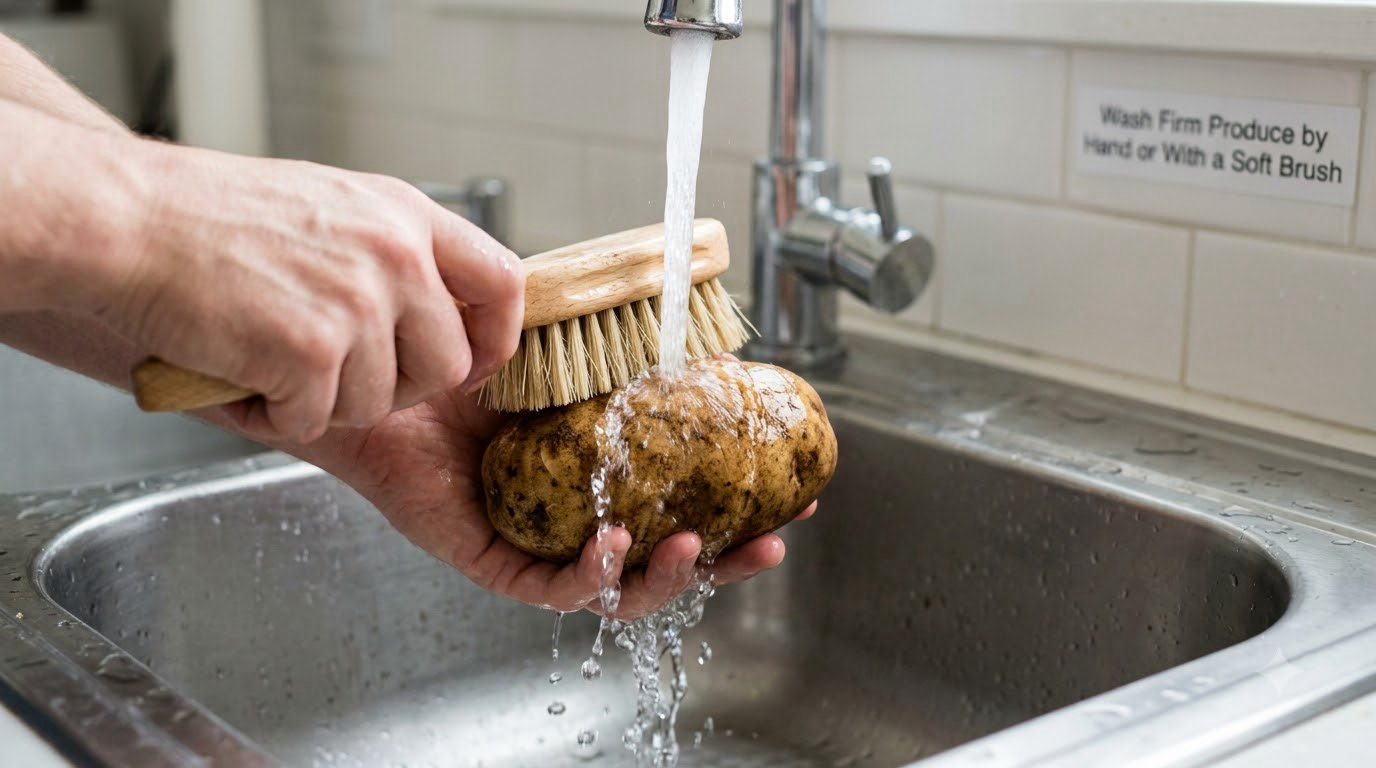
Firm produce takes more force than soft fruit, because the wax and dirt on the skin are bonded to it. Potatoes, carrots, sweet potatoes, cucumbers, squash and melon all benefit from hand rubbing in a circular motion, or from a few passes with a soft brush under running water.
You are looking for the dull, dusty film to disappear. That film is wax plus soil, and once it goes, most of what was sitting on the surface goes with it.
Brush gently. The skin is thinner than it looks and a stiff bristle brush on a potato does not remove more pesticide, it just takes the skin with it.
3. Soak Leafy Greens and Delicate Produce Briefly
A short soak helps when dirt is clinging rather than rinsing away. Fill a bowl with cool water, submerge the produce, and move it around with your hands for a minute or two.
Drain, refill with fresh water, and repeat if the water is still cloudy. Keep the soak short. Water sitting in a bowl picks up whatever was in it, and if you leave produce in a warm basin for a long while you are creating a small incubation environment for bacteria rather than removing anything.
Do not add detergent, and do not add a vinegar solution expecting it to behave like a disinfectant. Vinegar rinses are a common habit, and the honest answer is that it is a weak substitute for what you get from rubbing and moving the produce.
4. Peel or Trim Produce When Appropriate
Peeling removes the layer where most residue sits, which makes it the only reliable option for produce you cannot get clean. That includes very soft fruit like peaches and plums, and anything with a heavily waxed surface that water will not touch.
The tradeoff is real, though. The peel is where a meaningful share of the fiber sits, along with potassium and vitamin C, so peeling everything on the menu every day is not free.
A better compromise for soft fruit is a short soak in a 1 percent baking soda solution, then a rinse, then peel only if you still see residue. Trim the outer leaves of lettuce and cabbage either way. Nobody misses those.
5. Dry and Store the Produce Properly
Drying is not an optional finishing touch. Wet produce stored in a closed bag or drawer breeds bacteria, and rinsing without drying means you have shortened the shelf life of whatever you just cleaned.
Pat greens dry with a clean towel or run them through a salad spinner, and let fruit and firm vegetables air out on the counter for a few minutes before storing them.
For storage, keep whole produce unwashed in the refrigerator and wash only the portion you are about to use. Washing everything on Sunday night is convenient, and it is also the reason a head of lettuce goes slimy by Wednesday.
How Does Soaking Help When You Wash Pesticides Off Produce?
The best available evidence comes from a 2017 study published in the Journal of Agricultural and Food Chemistry, where apples were washed in tap water, a 1 percent baking soda solution, and an EPA-approved bleach solution. The baking soda soak won clearly: after 12 to 15 minutes it removed about 80 percent of the thiabendazole on the surface, and up to 96 percent of the phosmet.
The tap water rinse removed some, but far less. The bleach solution, which is what commercial packing lines use in a much stronger concentration than anyone would safely use at home, performed worse than baking soda.
There is an important limit to that study, and most online summaries skip it. It was one study on one fruit. Researchers mapped the pesticides into the apple skin and found thiabendazole sitting as deep as 80 micrometers and phosmet only about 20, which tells us two things: depth varies by chemical, and neither figure reaches the flesh.
So if you are trying to work out how to wash pesticides off produce, treat the percentage figures as evidence that baking soda works better than water, not as a promise about how clean any given apple is. Baking soda raises the pH of the water, and alkaline solutions break down many pesticide molecules better than plain water does. Vinegar does the opposite, which is the whole argument against it.
What Washing Can and Cannot Remove
Washing removes surface residue, wax, soil, and the bacteria and parasites that travel with them. It does not remove pesticides a plant absorbed while growing, and those are the ones that reach your bloodstream in the largest share.
Post-harvest fungicides like thiabendazole are applied after picking, so they are mostly a surface problem and more of them respond to washing. Systemic insecticides sprayed during the growing season move into the plant, and no sink, brush, or soaking bowl reaches them.
That is why the honest answer to whether washing solves pesticide exposure is: partly. Washing is one of three levers, alongside where you shop and whether you peel.
A Quick Reference by Produce Type
Different surfaces need different pressure. Here is the short version.
- Leafy greens and cabbage: separate leaves, rinse each one for 15 to 20 seconds, discard the outermost leaves, dry thoroughly.
- Berries: do not scrub them. Rinse gently in a cool stream and eat the same day if you can; they bruise and spoil fast once wet.
- Apples, pears, peaches: rub firmly with your hands under running water, or use a 1 percent baking soda soak for 12 to 15 minutes on the waxed ones.
- Melons, cucumbers, squash: the rind holds residue, so scrub with a brush. If you do not eat the rind, washing still matters because cutting transfers what is on the surface to the inside.
- Root vegetables and potatoes: scrub well with a soft brush under running water, then peel if the skin is not something you plan to eat.
- Grapes and small soft fruit: a short cool soak, no brushing, no pressure.
Common Mistakes
Using dish soap or bleach
Do not use Dawn, dish soap, laundry detergent or bleach on produce, even diluted. Produce is porous and absorbs the surfactant, and rinsing afterward does not fully undo it. The residue then gets eaten. This comes up constantly on r/foodsafety, where the consensus is blunt: soap on food is not a compromise, it is a new problem.
The same goes for commercial produce washes and food-grade sanitizers sold for home use. The intent is understandable, and the regulation of them at home is thin, but the plain-water baseline recommended by extension food safety guidance carries no comparable risk.
Reaching for vinegar instead of baking soda
Vinegar is not the better choice for residue removal, because acidity works against you here while baking soda alkalinity works for you. On r/PlantBasedDiet the discussion runs the same way people keep hearing about, water plus baking soda as the DIY method and vinegar as a rinse people do out of habit.
A vinegar rinse is not dangerous and it will not harm you. It is just doing less than the option sitting in the same cupboard.
Soaking produce in standing water
A basin of water that sits there for twenty minutes becomes a bath for everything you rinsed off in the first place. The fix is simple and it is free: use a smaller volume, move the produce actively, drain, and refill with fresh water.
Washing produce after cutting it
Once produce is cut, the pieces have more exposed area and the water no longer moves across a smooth surface. You are also pushing residue into the cut faces and into your cutting board. Wash whole, then cut.
Assuming washing removes every pesticide
This is the mistake that turns people off washing entirely, and it is worth naming directly. Washing is one part of a three-part plan, and it is the only part that happens in your kitchen. The other two are choosing lower-residue produce when you can afford to and peeling items that are waxed or very soft.
Skipping the store because washing seems to cover everything
It does not, and if organic is out of reach for your family that is a perfectly reasonable situation rather than a failure. Washing under running water, buying the seasonal produce, and choosing a mix of what you can is a real strategy. It is just not a reason to stop worrying about it entirely.
Frequently Asked Questions
What is the best way to wash pesticides off produce at home?
Rinse every item under cool running water for 15 to 20 seconds, rotating it with your fingers, then rub firm produce like potatoes and cucumbers by hand or with a soft brush. For waxed or soft fruit, a 1 percent baking soda solution for 12 to 15 minutes removes more surface residue than water alone. Dry thoroughly afterward, and skip soap entirely.
Should I use soap or baking soda to wash produce?
Baking soda, never soap. A solution of about 1 tablespoon per 2 cups of water is alkaline, and alkaline water breaks down many surface pesticides better than plain water. Dish soap and Dawn leave behind a surfactant that porous produce absorbs, which means you end up eating the cleaner. Vinegar is the opposite of what you want, since acidity works against residue removal.
Does rinsing fruit and vegetables remove all pesticides?
No. Rinsing removes surface residue, wax, soil and bacteria, but it cannot touch pesticides a plant absorbed into its tissue while growing. Those systemic compounds only come off through peeling, or by choosing produce that was grown without them. Washing is the one step fully in your control, and it is worth doing well, but it is not a complete answer.
Is a commercial produce wash safer than running water?
Running water is the safer and more reliable default. University extension food safety guidance recommends plain cool water because it clears surface residue without leaving anything behind, and because produce is porous enough to absorb soap and sanitizer ingredients. Commercial washes are formulated for commercial food processing, not home kitchens, and they cost money for results that are hard to distinguish from a thorough rinse.
Should I wash produce before or after cutting it?
Before you cut, always. Whole produce has a smooth surface that water moves across easily, and cutting first creates exposed edges where residue can settle and be carried into your cutting board. Wash whole, dry, then cut. The same applies to storage: keep unwashed produce in the fridge and wash only the portion you are about to cook or eat.
Does organic produce need to be washed too?
Yes. Organic standards restrict which pesticides can be used but they do not eliminate residues, and organic produce still carries soil, bacteria and the occasional drift from nearby fields. Rinse it the same way you would conventional produce. Washing organic removes dirt and microbes rather than chemicals, which makes it a food safety step instead of a residue step.
Conclusion
If you do one thing, rinse everything under cool running water for 15 to 20 seconds before you peel or cut it. Rub firm produce by hand or with a soft brush, keep leafy greens separated and short soaks brief, and dry everything before it goes back in the fridge.
Reach for baking soda only when plain water is not cutting it, mostly for waxed apples, peaches and firm roots. Skip soap, bleach and commercial washes, and remember that washing handles the surface while peeling and smarter shopping handle the rest.