Five minutes of setup, then it mostly runs on autopilot: one drink you like, prepared the night before, kept where you can see it, tied to cues you already have.
Hydration on a busy day is not about drinking more, it is about drinking in small, fixed amounts on a schedule you barely have to think about. If you know how to stay hydrated during a busy day, you stop relying on thirst or memory, both of which fail quietly on the days that matter most. Here is the short version: pick one drink you actually enjoy, prepare it the night before, keep it where you can see it, and tie each sip to something you already do.
For most of us the barrier is not access. Water is right there. The barrier is that a full morning of driving, teaching, meetings, laundry and dinner leaves no gap in which to remember a glass of water.
Most adults need somewhere around nine to thirteen cups of fluid across a day, and food counts toward that total. That sounds like a lot until you break it into six or eight ounce glasses spaced through waking hours, which is a very different thing.
This guide is general information, not medical advice. If you are pregnant, managing a heart or kidney condition, on medication that affects fluid balance, or under a fluid restriction, ask your doctor or a registered dietitian for numbers that apply to you.
Table of Contents
- What You Need
- Step-by-Step: A System That Runs Itself
- Choose a Drink You Will Actually Drink
- Prepare Several Portions Before the Day Begins
- Attach Drinking to Routines So You Stay Hydrated on Autopilot
- Use Visual and Phone Reminders
- Make Water Easier During Transitions
- Adjust the Plan When Your Needs Change
- Common Mistakes
- Tips for Busy Caregivers
- Frequently Asked Questions
- How much water should I drink on a busy day?
- What is the 10 gulp rule?
- Does coffee dehydrate you?
- What are the warning signs of dehydration?
- Does sparkling or flavored water hydrate you the same as plain water?
- How do I stay hydrated when I keep forgetting to drink?
- Conclusion
What You Need
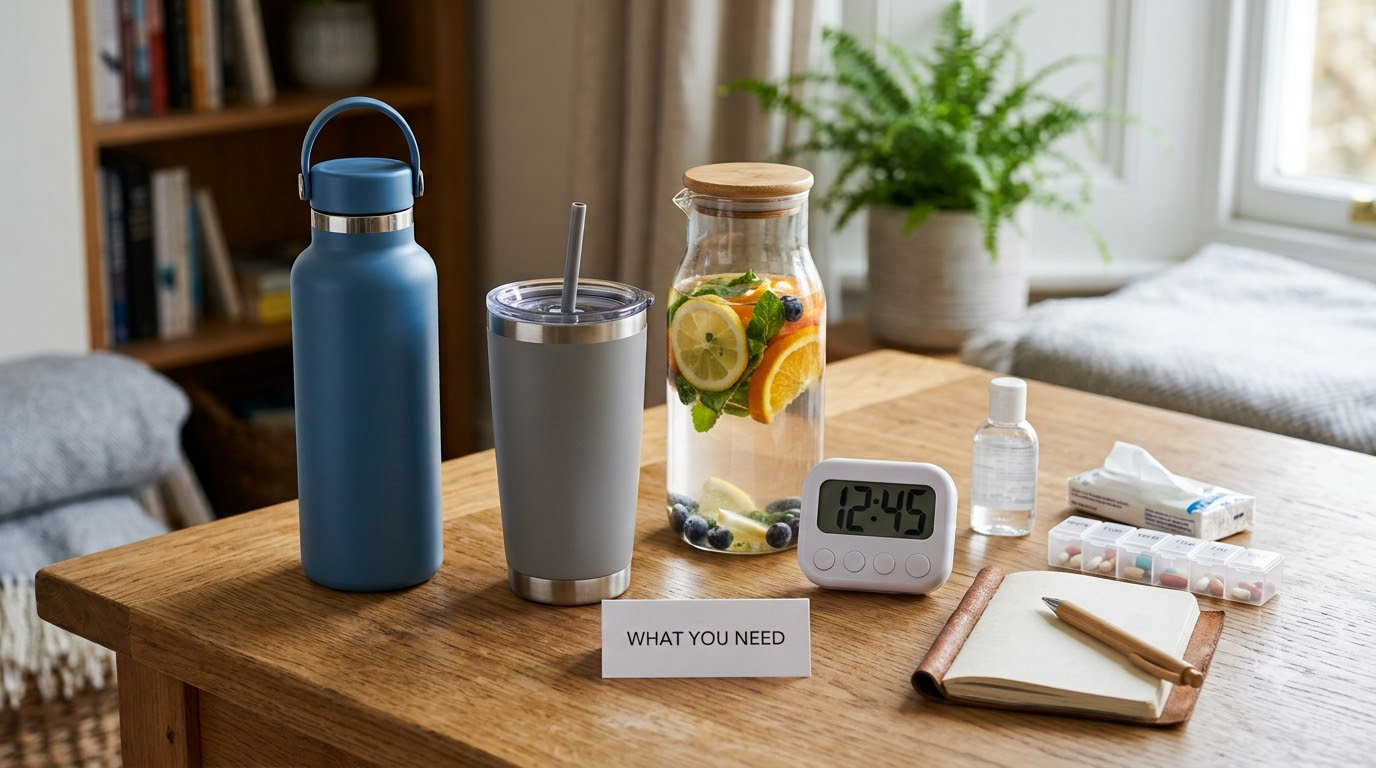
You need very little, and all of it is replaceable. Most parents who get this right are not buying a wellness setup, they are removing two or three decisions from their morning.
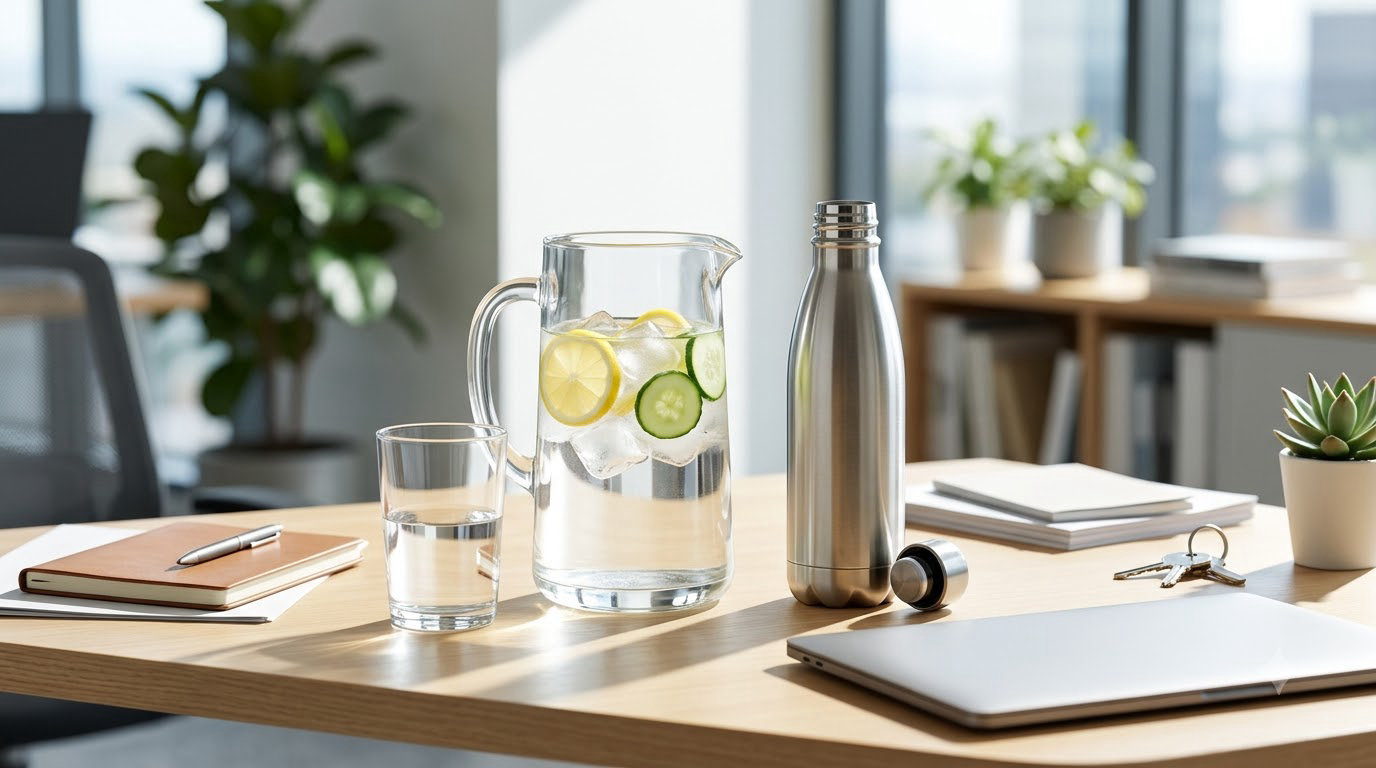
- One container you actually like. A wide-mouth insulated bottle that fits your car cup holder, a tumbler that survives being knocked over by a toddler, or a simple glass you do not mind filling again. The best bottle is the one you will refill without thinking.
- A backup portion within reach. A second glass in the kitchen, water in the car, or a filled pitcher in the fridge. Your refill points matter more than your bottle.
- A drink you will voluntarily drink. Plain water, sparkling water, chilled or room temperature, lightly flavored with fruit. If you only tolerate coffee, coffee is a legitimate starting point.
- One reminder method. A phone alarm, a visual schedule, time markers printed on a bottle, or a family cue. Pick the kind you will still notice in week three.
- A rough number. Not a perfect one. Most adults land somewhere around nine to thirteen cups of fluid a day depending on body size, activity and climate, and food counts toward that total.
Worth saying why this matters at all. Even mild fluid loss reduces concentration and makes people more irritable, and it shows up as a headache, constipation or that three o’clock crash right when your day gets hardest. You are not chasing a wellness score, you are trying to feel like yourself by mid-afternoon.
That is the whole list. Nothing here requires a membership, a subscription or a phone app you will abandon.
Step-by-Step: A System That Runs Itself
Eight moves, in the order they tend to work best. Each one is small enough to keep.
Choose a Drink You Will Actually Drink
People do not fail at hydration because they lack discipline. They fail because the drink in front of them is boring, too warm, or carbonated in a way that makes them burp through a meeting. Choose based on preference and sensory comfort, not on what sounds healthiest.
Flavored and sparkling water are the most common fix among people who dislike plain water. Cold water is another, though research on whether temperature meaningfully changes hydration is thin. If plain water makes you queasy, that is enough reason to stop forcing it.
Herbal tea, diluted juice and milk all count toward your fluid intake. If you are on a fluid restriction, potassium restriction or a diabetes plan, check with your clinician about what counts.
Prepare Several Portions Before the Day Begins
Hydration fails hardest when it depends on you remembering to prepare it. Do the work the night before or the first five minutes after you wake up.
- Fill your main bottle and place it directly in front of your mug or coffee maker, not in the back of the fridge.
- Pour a full glass and leave it where you work, even if you do not drink it yet. A visible glass gets drunk more often than a hidden bottle.
- Fill one small container you can carry without thinking, for the car, the school run, or the bathroom at three in the morning.
The test is simple. If you had to step away from your task to get water, the system failed. Set the drink up so that drinking it costs nothing.
Attach Drinking to Routines So You Stay Hydrated on Autopilot
Habits stick when they borrow the momentum of something you already do without thinking. Drink a glass when the coffee maker finishes, not at a random hour you will forget. Drink with breakfast, with lunch, and with the first medication or supplement of the day.
Add a second glass at the moment you arrive at work or school pickup, and one at the transition you dread most. For many caregivers that is the four o’clock scramble, and that is exactly where the headache shows up later.
Aim for a modest amount at a time rather than a large glass. Six to eight ounces several times across the day is easier on your stomach than a large amount you have to force.
Use Visual and Phone Reminders
Reminders work best when they are tied to an action rather than to a clock you resent. Options range from a sticky note on your laptop lid to a recurring calendar event named drink water, which looks ridiculous and works surprisingly well.
Bottles printed with time markers give you a target without arithmetic. You look at the bottle and see that the 10 a.m. mark has passed, which removes the thinking step. If you prefer tech, an app or a smart bottle that nudges you at intervals will do the same job, though some people report the notifications fade into background noise within weeks.
Whatever you choose, notice that the reminder has to be visible or audible from where you already are. A timer on another room’s counter is not a reminder, it is a decoration.
Make Water Easier During Transitions
The hardest drinking windows are appointments, car rides, work blocks, flights and the in-between moments when you are technically free but already late for the next thing. Plan for those specifically.
A bottle with a lid or straw travels better than an open glass and survives a car seat or a tote. On longer drives, refill at every fuel or rest stop rather than arriving home empty. On flights, take an empty refillable bottle through security and fill it at the gate, then sip through the climb and the descent, when cabin air is driest.
In hot weather or during exercise, plan more often than usual. Sweat losses add up faster than thirst tells you.
Adjust the Plan When Your Needs Change
Your fluid needs are not a fixed number, and treating them as one is a mistake. Heat, altitude, physical work, illness, fever, pregnancy and certain medications all shift what you need.
If you are dehydrated, small amounts of oral rehydration solution or a drink with sodium and sugar are absorbed more efficiently than plain water, which is why sports drinks and pharmacy mixes exist. If you are exercising for more than about an hour in the heat or sweating heavily, electrolytes earn their place. For an ordinary desk day, they usually do not, and flavored electrolyte powders consumed daily are worth a second look at the sugar and sodium content.
Ask a doctor or registered dietitian before changing how much you drink if you have kidney, heart or liver disease, or if you have been told to limit fluids. Overhydration is real, and forcing large amounts of water in a short window can be genuinely dangerous.
One more practical detail. If you take any medication, pharmacist or prescriber can tell you whether it raises thirst or affects fluid balance, and whether timing your drinks around it makes sense.
Common Mistakes
Most failed hydration plans share a handful of mistakes, and each one has a simple fix.
- Waiting for thirst. Thirst lags behind fluid loss, so by the time you feel thirsty you are already behind. Drink on a schedule instead.
- Waiting until the end of the day. A five o’clock catch-up chug rarely works well and often leaves you uncomfortable. Spread the intake forward.
- Forcing an unfamiliar drink. If you only drink sparkling water, drink sparkling water. Adherence beats purity.
- Reminders you tune out. A silent app icon does not remind anyone. Choose something visible or audible.
- Assuming one routine fits everyone. A schedule that works for an adult at a desk will not fit a parent on their feet all afternoon.
- Counting only water. Tea, coffee, milk and juicy fruit all count, which means your total is usually higher than you assumed.
The 8 glasses rule is also less useful than it sounds. It was never a firm guideline, and a fixed count ignores your size, your food, your activity and your climate.
Tips for Busy Caregivers
Caregivers, including parents of young or autistic children, are the group most likely to go the whole day without a real break. A few tactics help.
The pattern is consistent in caregiver discussions online: people describe going from early morning to bedtime and only realizing at night that they drank almost nothing. Not because water was unavailable, but because no moment ever opened up for it. That is why the setup has to be passive rather than something you schedule.
- Keep a backup drink in the room where you spend most of your time, not just in the kitchen.
- Prepare smaller portions more often. A half glass every time you pass the fridge is easier than a full glass you never make.
- Let children join in safely with their own open cup or straw bottle at the same table. It turns your habit into a shared one.
- Ask another adult to cover ten minutes. Ten minutes is genuinely enough to drink something.
- Track what worked in a note on your phone for one week, then keep only the pieces that stuck. Guilt helps nobody.
One useful self-check needs no app: look at your urine. Pale straw color generally points to adequate hydration, deep amber suggests you are behind, and clear all day can signal you are overdoing it. It is a rough gauge, not a diagnosis, but it catches a falling trend earlier than thirst does.
Signs you have already fallen behind include dry mouth, dark yellow urine, a headache that arrives mid-afternoon, tiredness around three, difficulty concentrating, and constipation. Two or more of those on a regular basis are a good reason to build the routine in earlier rather than pushing harder at night.
Frequently Asked Questions
How much water should I drink on a busy day?
Most adults land around nine to thirteen cups of fluid a day, a range the Academy of Nutrition and Dietetics gives based on body size and needs. That total includes water, tea, coffee, milk and juicy foods, not water alone. On a busy day, spread it out: roughly eight ounces every couple of waking hours works for many people. Heat, exercise, illness and pregnancy raise the number. Ask your doctor or a registered dietitian if you have a medical condition or a fluid restriction.
What is the 10 gulp rule?
The 10 gulp rule is an internet habit prompt, not a medical standard. It suggests taking about ten small sips each time you pause for water rather than drinking one large glass. The idea is reasonable in spirit, since frequent small amounts are easier on the stomach and spread intake across the day, but there is no research behind the specific number ten. Treat it as a prompt to drink more often, not as a quota to hit.
Does coffee dehydrate you?
Coffee counts toward your fluid intake. Caffeine has a mild diuretic effect, but in typical amounts it does not leave you net dehydrated, and moderate coffee drinking does not undo your hydration. If you drink several cups a day, let water be your second drink rather than your only one, and add an extra glass of water in the afternoon if you notice fatigue or headache. Very large caffeine intakes on an empty stomach are a different story and can bother your stomach.
What are the warning signs of dehydration?
Common signs include dry mouth, dark yellow or amber urine, headache, tiredness, difficulty concentrating, dizziness when standing, faster heartbeat and constipation. Mild dehydration often shows up as an afternoon headache or energy crash before thirst appears at all. Urine color is a useful rough check: pale straw color usually means you are keeping up. Seek medical care for confusion, fainting, inability to keep fluids down, or signs that continue despite drinking.
Does sparkling or flavored water hydrate you the same as plain water?
Yes, for practical purposes sparkling and unsweetened flavored water hydrate you the same as plain water. The carbonation does not reduce hydration, and neither does a light fruit infusion. Two things to check: heavily sweetened drinks add a lot of sugar, and some electrolyte powders contain more sodium than an ordinary day needs. If plain water makes you feel sick or you simply will not drink it, flavored or sparkling water is a better choice than forcing the alternative.
How do I stay hydrated when I keep forgetting to drink?
Environment beats willpower. Keep water visible in the room where you spend your time, fill several bottles the night before, and tie drinking to cues you already have, such as starting the coffee maker, opening your laptop, or sitting down for meals. Marked bottles and visible glasses work because they replace a mental calculation with a visual one. Many caregivers also keep a spare cup in the room they actually live in. Start with one anchor, not six.
Conclusion
Start with one move tomorrow: choose a drink you genuinely enjoy, fill the container you like best, and place it beside something you already do every morning, like the coffee maker or your kid’s lunch bag. Repeat that setup until it feels ordinary, then add a second anchor around the part of your day that goes wrong most often.
That is how to stay hydrated during a busy day. Less effort, no willpower required, and no catch-up session at nine at night.