Updated for 2026. This guide is educational and does not replace advice from your child’s own doctor. Anything about which treatment to use, how much, or how long should come from your child’s clinician.
The short answer: cool the skin, seal it in moisture, and use only what your child’s clinician has already told you to use. Most flare-ups settle when a caregiver stops the small daily irritants, keeps moisturising on a schedule rather than a crisis schedule, and follows the care plan written for their child.
Learning how to manage eczema flare ups in kids is less about finding a clever trick and more about having the right things within reach before 7pm. I have watched parents lose the first forty minutes of a flare hunting through cupboards for the emollient, and that delay is the whole problem. Updated for 2026, this guide covers what to gather, what order to do things in, and the signs that mean you should stop reading and call someone.
Most of the time, a flare follows a change: a new detergent, a hot week, a cold school morning, a nap in a sweaty car seat, a new food, or an illness. The change is usually obvious in hindsight and almost never obvious in the moment, which is why a simple log beats detective work.
Table of Contents
- What You Need Before a Flare Worsens
- Step-by-Step: How to Manage Eczema Flare Ups in Kids
- 1. Confirm the flare and note possible triggers
- 2. How to calm a flare fast: a short, lukewarm bath
- 3. Apply moisturizer generously and mind the three-minute window
- 4. Follow the care plan your child’s clinician gave you
- 5. Reduce friction, heat, and scratching
- Common Mistakes to Avoid During a Flare
- Switching products mid-flare
- Bathing too often or in hot water
- Stopping the emollient once the skin looks better
- Relying on home remedies
- Cutting out foods without guidance
- Waiting through the warning signs
- Frequently Asked Questions
- How do I calm down an eczema flare fast?
- What is the three-minute rule for eczema?
- What triggers eczema flare-ups in kids?
- Is eczema contagious, and can my child go to school?
- Should I bathe more or less often during a flare?
- When should I take my child to the doctor for eczema?
- What to Do First During the Next Flare
What You Need Before a Flare Worsens
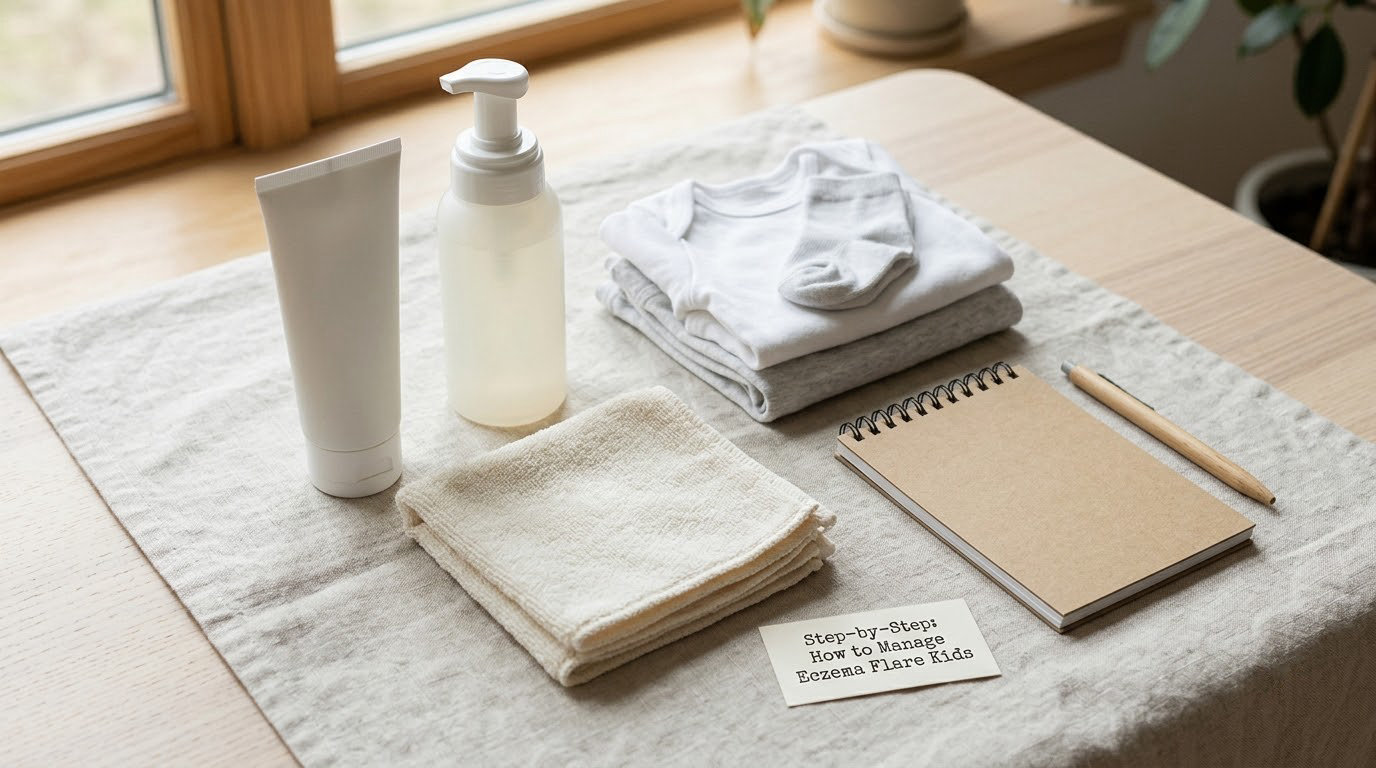
Get these seven things together once, while the skin is calm. A calm week is the easiest time to build a kit, because you are not negotiating with a screaming toddler.
- A written care plan from your child’s clinician. Write down what has been prescribed or recommended, how often it should be used, and where on the body. If your child has a plan from a previous visit, photograph it and keep it on your phone.
- At least two fragrance-free emollients. A thick ointment for the worst patches and a lighter cream for everyday use. Two products mean you are not stuck with a texture your child refuses.
- A mild, fragrance-free cleanser. Soap-free or very gently foaming. Bubble bath has no place in a flare-up house.
- Soft cotton clothing and bedding. Loose, breathable, washed without fabric softener. Keep a spare set nearby so a sweaty outfit does not stay on skin all afternoon.
- A soft washcloth, a small bowl, and a thermometer. Warm, not hot, water. A thermometer matters during illness, when a fever changes how you read the rash.
- A cool-mist humidifier for the bedroom if indoor air gets dry in winter, and a fan or open window for warm nights.
- A notebook or phone note for the symptom log. Date, location on the body, what changed that day, and what you did. That is all.
Two items people forget and later wish they had: soft cotton socks you can cut down for improvised wet wrapping, and a cool pack you can reach without leaving the room.
Step-by-Step: How to Manage Eczema Flare Ups in Kids
Work in this order. Cooling first, moisture second, prescribed treatment exactly as directed, and friction last. You will know a step helped because the skin feels less hot and less tight, and the child stops reaching for it.
1. Confirm the flare and note possible triggers
Look for the pattern your child always shows: patches that feel hot, rough, and raised, sometimes with small cracks, and skin that looks darker, redder, or shinier than usual. Then write down the last 48 hours. Foods, soaps, detergents, new clothing, weather, illness, a haircut, a swimming lesson, a change in routine.
Do not conclude that one thing caused it. Record candidates, not verdicts. A log only becomes useful after several flares, and it is a conversation starter for your child’s doctor rather than proof of anything.
2. How to calm a flare fast: a short, lukewarm bath
Use lukewarm water and keep it brief, around five to ten minutes. A gentle cleanser only where needed, such as the face, hands, and any area that is actively weeping or dirty, and skip it entirely elsewhere. Wash new clothes separately the first time.
Pat dry with a soft towel and press rather than rub. Hot water, scrubbing, and long baths all strip the skin barrier and leave your child feeling worse, not better. Many parents report the itch peaks briefly after the bath, which is normal; the moisturiser applied next is what settles it.
3. Apply moisturizer generously and mind the three-minute window
The three-minute rule is simple: put your child’s prescribed cream or emollient on within about three minutes of getting out of the bath, while the skin is still slightly damp. That window is when the surface holds the most water, so cream applied then absorbs better and does more work.
Use a lot more than feels sensible. If it does not look like too much, it probably is not enough. A common adult rule of thumb is a quantity around the size of the fingerprint pad on your palm for a whole body application, and the amount a child needs is usually a small fingertip per area of a limb.
Apply in downward strokes following the hair direction, and keep thick ointments on the thickest patches rather than spreading them everywhere. Warm a very cold cream in your palms for a few seconds first, which makes it easier to spread and kinder to flinching skin.
4. Follow the care plan your child’s clinician gave you
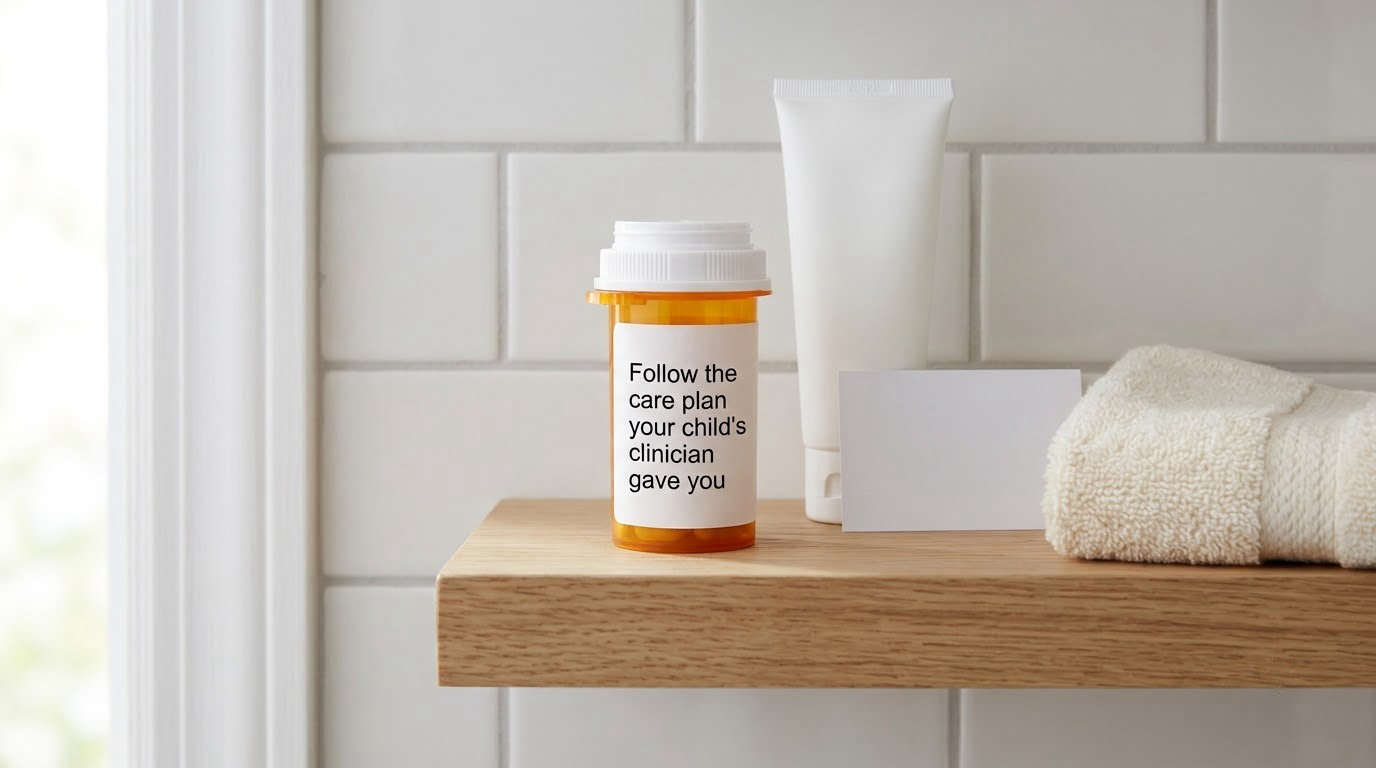
Use only the products and directions your child’s clinician recommended, and read the label rather than guessing from a photo online. Prescribed creams for eczema come in different strengths, and underusing or overusing changes both the result and how the skin behaves afterwards.
Two honest things parents rarely hear. First, a flare can come back shortly after a prescribed cream is stopped, which feels like failure but usually means the inflammation was still active, not that the treatment was wrong. Second, if a cream has not made a real difference within the period your clinician gave you, that is a reason to book the next appointment, not to keep reapplying indefinitely on your own.
Call the doctor or pharmacist if the instructions are unclear, if you cannot get hold of a repeat before the course runs out, or if you are unsure whether a product suits your child’s age.
5. Reduce friction, heat, and scratching
Heat makes itching worse, and so does sweat, which surprises people who assume summer helps. Keep the room cool, remove damp clothing promptly, and rinse sweat off with plain lukewarm water rather than letting it sit.
Keep nails short and smooth, the single most repeated tip in parent forums and the cheapest one. For young children, cotton scratch mittens at night limit damage without stopping the movement they need to settle. Dress in soft loose cotton, avoid wool and synthetic seams against inflamed skin, and offer a cool damp compress for a particularly angry patch.
Scratching briefly feels like relief and then makes the itch worse, which is why a flare can outlast the thing that started it. Distraction works better than prohibition, especially with toddlers who scratch because they are bored as much as because they itch.
Common Mistakes to Avoid During a Flare
These six come up again and again, and each has a safer general alternative.
Switching products mid-flare
Trying three new creams in one evening does not tell you which one helped or made things worse, and new ingredients can irritate skin already inflamed. Stick with what your child’s clinician recommended during a flare, and change one thing at a time when things are calm.
Bathing too often or in hot water
More water does not mean more healing. A short lukewarm bath a few times a week matches what most eczema guidance suggests, and a long soak in hot water leaves skin drier and itchier than it started.
Stopping the emollient once the skin looks better
The visible improvement is the moment to keep going, because the skin barrier is still rebuilding. Skipping moisturiser as soon as the redness fades is one of the most common reasons a flare returns within a week.
Relying on home remedies
Bathing in diluted household bleach is a protocol some clinicians use for children who flare with infection, and it belongs under a clinician’s instructions with a specific dilution, never improvised. Never apply bleach to skin directly, and never pour it into water already in use. If you want to discuss it, ask your child’s doctor first.
Cutting out foods without guidance
Food rarely drives eczema in children, and the usual suspects that get blamed, such as cow’s milk, egg, soy, wheat, fish, shellfish, peanuts, tree nuts, and sesame, are also the foods that matter most for growth. Restricting them without a confirmed allergy can leave a child short of nutrients for no benefit, so any elimination trial belongs with a paediatrician and a dietitian.
Waiting through the warning signs
Oozing or weeping skin, yellow crusts or pus, blisters, hot painful skin, a fever alongside a rash, broken skin from scratching, and sleep that stays broken night after night all need a clinician. So does a flare that has not improved over the period your clinician specified. Seek urgent care for fever with spreading redness, rapid swelling, or a child who seems unwell, rather than waiting for a routine appointment.
Frequently Asked Questions
How do I calm down an eczema flare fast?
Start by cooling the skin: a short bath in lukewarm water, no scrubbing, and a cool room. Pat dry gently, then put on the treatment your child’s clinician recommended, followed by a thick emollient within about three minutes while the skin is still damp. Trim nails, remove tight or damp clothing, and use a cool compress on the hottest patches. Book a doctor’s appointment early if you see weeping, crusting, or signs of infection.
What is the three-minute rule for eczema?
It means applying your child’s prescribed cream or emollient within about three minutes of getting out of the bath, while the skin is still slightly damp. Damp skin holds the most water, and applying moisturiser during that window absorbs better and supports the skin barrier as it rebuilds. If the timer has passed, dry the skin gently and apply anyway rather than skipping it.
What triggers eczema flare-ups in kids?
Common triggers include heat and sweat, dry indoor air, harsh or fragranced soaps, detergents and fabric softener, wool and rough seams, illness, stress, and pollen. In winter, patches often show on the hands and upper arms from dry air and frequent handwashing. In summer, they gather behind the knees and inside the elbows where sweat and friction collect. Triggers vary widely, so keep a short log rather than assuming one cause.
Is eczema contagious, and can my child go to school?
Eczema is not contagious, so siblings and classmates cannot catch it from your child. A child who is comfortable, not in pain, and not actively oozing can usually attend school as normal. Send a small labelled pack of emollient with them if staff are able to help, and tell the teacher what signs mean the itch is winning during the day, such as red, distracted behaviour or fidgeting.
Should I bathe more or less often during a flare?
Keep the same gentle rhythm rather than bathing more to fix the itch. During a flare, a short lukewarm bath a few times a week is generally enough, with a mild fragrance-free cleanser used only where it is needed, such as the hands, face, or any weeping area. Very hot water, scrubbing, and long soaks make itching worse and dry the skin further.
When should I take my child to the doctor for eczema?
Book an appointment if a flare has not improved over the treatment period your clinician set, if the same flare keeps returning, if sleep stays broken for more than a few nights, or if you feel the current plan is not strong enough. Go to urgent care for weeping or yellow crusts, pus, blisters, hot painful skin, a fever with a spreading rash, or a child who seems generally unwell. Inability to sleep at all is a reason to call, not to wait.
What to Do First During the Next Flare
Put every new product aside for now. Run a short lukewarm bath, pat dry, apply the treatment your child’s clinician specified, then seal it with a thick emollient inside the three-minute window. Clear anything pressing against the skin, cool the room, and log the date, the location, and what changed.
Then call the doctor if the flare is severe, keeps coming back, or is not improving the way you were told it would. Weeping, crusting, blisters, fever with a rash, or a child who is simply not themselves are reasons to seek urgent care today. Getting ahead of a flare works far better than catching up with one.