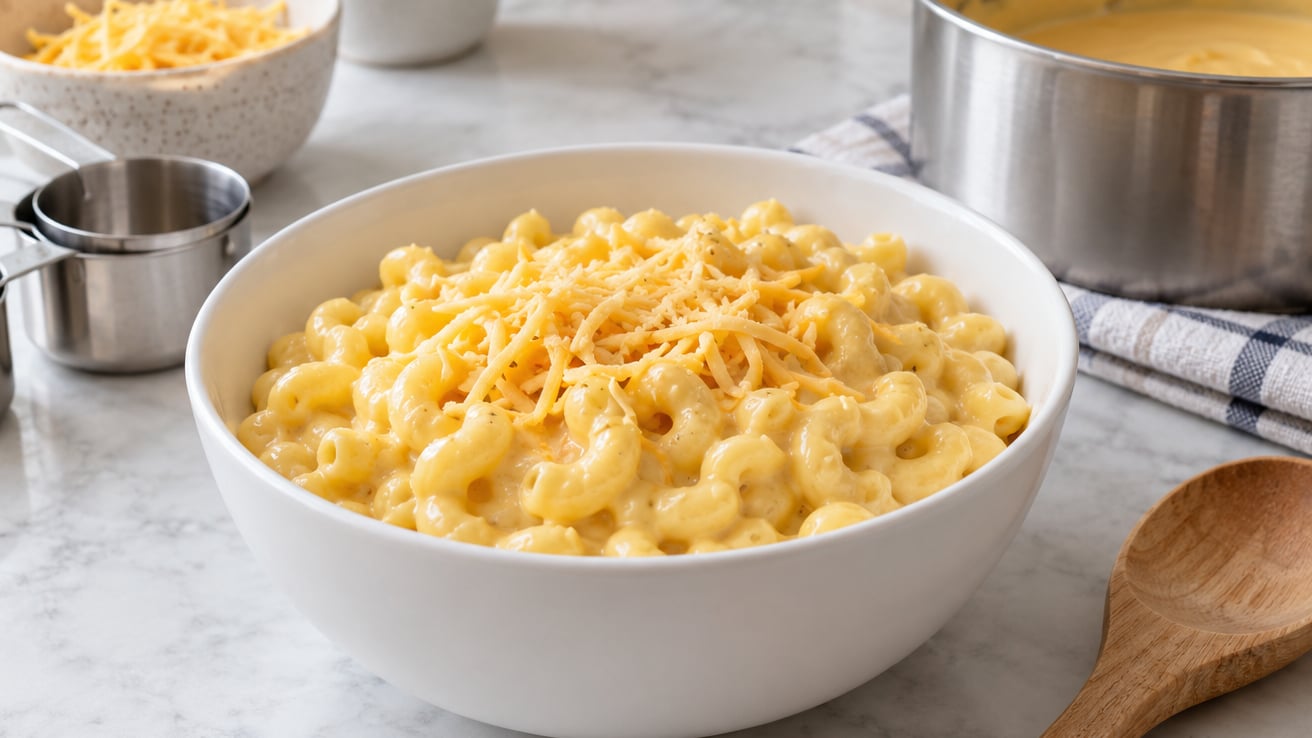
Learning how to make dairy free mac and cheese is mostly a matter of building a sauce from starch, fat and salt instead of dairy, and the whole thing comes together in one pot in about 25 minutes. The version below uses starchy pasta water, nutritional yeast and a splash of plant milk, which is the approach most cooks land on after testing the boxed and shredded options. It is genuinely creamy, it reheats well, and it works for a child with a milk allergy just as well as it does for an adult cutting dairy out.
I make this roughly once a week in our house, and the biggest thing I learned is that the sauce is a sauce, not a recipe. Once you understand how thick it should be and what makes it smooth, you can swap nearly anything. Let me walk you through exactly what goes in the pot and where most recipes go wrong.
Table of Contents
- What You Need
- Step-by-Step: How to Make Dairy Free Mac and Cheese
- Step 1: Choose and Prepare the Pasta
- Step 2: Make the Dairy-Free Cheese Sauce
- Step 3: Add Flavor Without Dairy
- Step 4: Combine and Finish the Dairy Free Mac and Cheese
- Common Mistakes
- Frequently Asked Questions
- What can I use instead of milk for my mac and cheese?
- What is the best non-dairy milk for mac and cheese?
- Is Velveeta cheese dairy free?
- Can I make 3-ingredient mac and cheese without milk?
- How do I store and reheat dairy free mac and cheese?
- Conclusion
What You Need
This serves four as a main or six as a side. Prep is 5 minutes, cooking is about 20.
- 1 pound pasta, elbows or shells
- 2 tablespoons dairy-free butter or olive oil
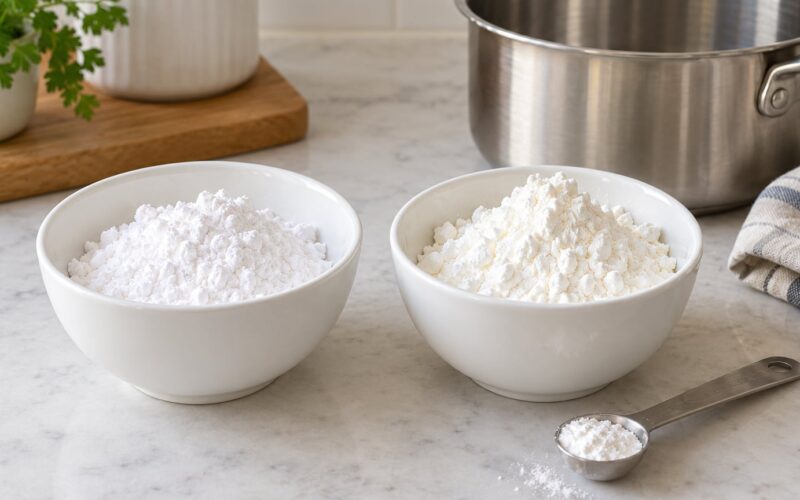
- 2 tablespoons cornstarch
- 1 to 2 cups unsweetened plant milk, plus more for thinning
- 3/4 cup nutritional yeast, plus extra for topping
- 1 tablespoon Dijon mustard
- 1 teaspoon garlic powder
- 1/2 teaspoon smoked paprika
- 2 teaspoons white miso, optional but hard to skip later
- 1/2 teaspoon fine salt, plus more to taste
- 1 cup shredded dairy-free cheddar, divided
- 1/2 cup panko breadcrumbs, optional
A heavy pot, a whisk or a wooden spoon, and something to preheat the oven to 375°F if you want the baked version. That is the whole equipment list.
One habit worth building early: read the label of every dairy-free product you buy, including the plant milk, the butter and the shredded cheese. Milk, whey, casein, caseinate and lactose hide in products marketed to people avoiding dairy, and if a child has an allergy rather than an intolerance, that difference matters. I keep a photo of the label on the fridge because I have bought the wrong block of cheese more than once.
For more swaps that work outside the oven, my dairy free substitutes for milk in baking guide covers the milks that behave best in cooked sauces.
Step-by-Step: How to Make Dairy Free Mac and Cheese
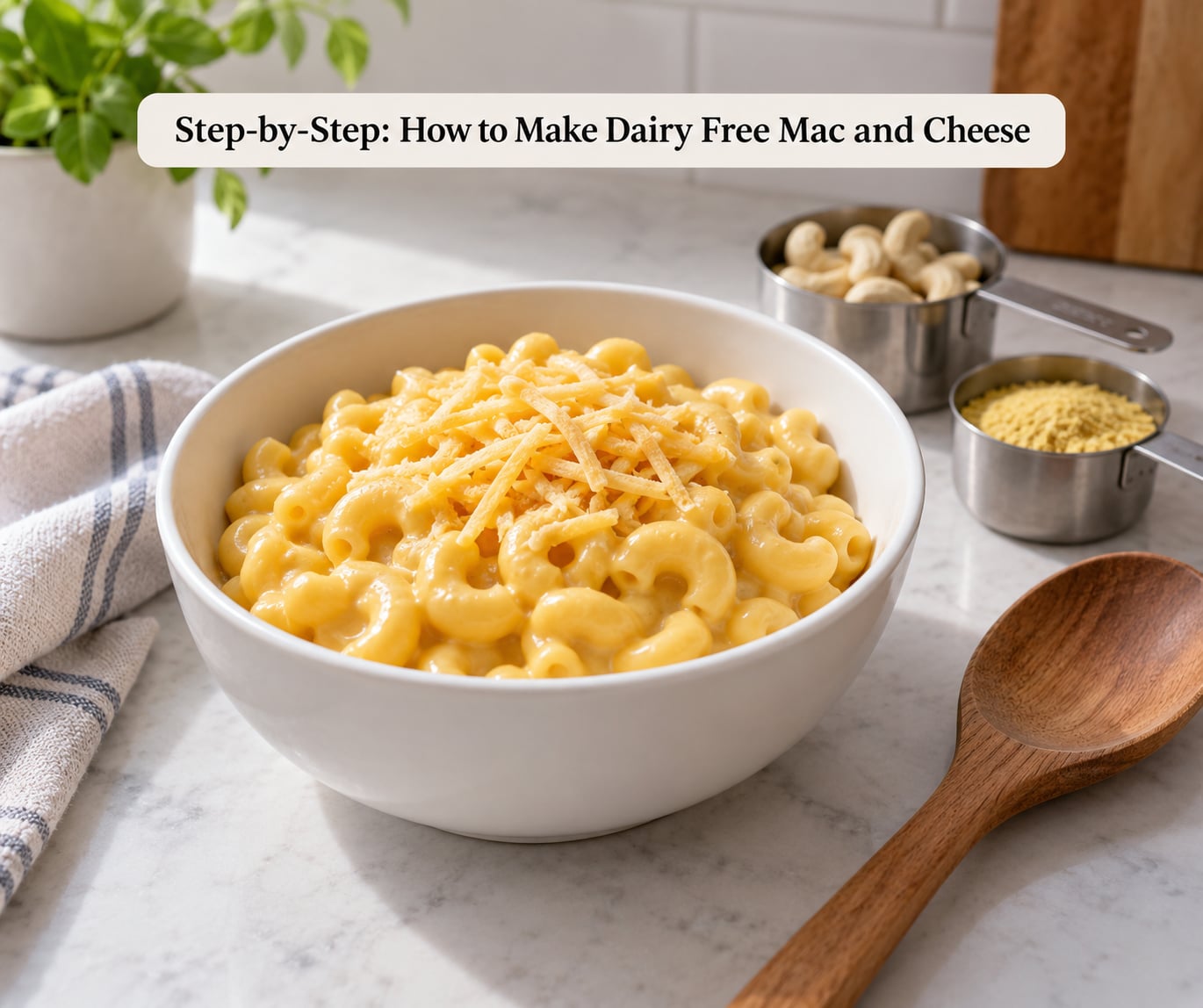
Step 1: Choose and Prepare the Pasta
Regular elbow macaroni gives you the most sauce surface area and the most reliable result. Gluten-free pasta works fine, and it actually holds onto sauce well, but cook it a minute less than the box says because gluten-free pasta softens faster and turns to paste if you push it. Chickpea and lentil pasta hold their shape nicely and add protein. Cauliflower florets work too, though they give you a baked side dish more than a bowl of mac and cheese.
Salt the water well, boil to just under al dente, and scoop out a mug of pasta water before you drain. That water is the most useful ingredient in the whole recipe, and throwing it down the sink is the most common reason a dairy free mac and cheese turns out thin. Drain the pasta, then toss it with a tablespoon of olive oil so the noodles are slick rather than clumping while you make the sauce.
Step 2: Make the Dairy-Free Cheese Sauce
Melt the dairy-free butter in the pot over medium heat. Whisk in the cornstarch and cook it for 60 to 90 seconds until it smells a little toasty, which is what kills the raw starch taste. Slowly pour in 1 cup of plant milk while whisking, then keep whisking until the mixture thickens enough to coat the back of a spoon.
Unsweetened plant milk is the right choice here. Vanilla almond and oat milks are already sweet enough to flatten the sauce, and any milk with added gums can go gluey once it cools. Oat milk is the creamiest of the four, almond is the most neutral, soy has the most protein, and pea milk is the best pick for a soy-free kitchen. You will know the sauce is ready when a spoon dragged through it leaves a clean line that stays put for a second or two.
Take the pot off the heat before you add the cheese. This is the step that separates a silky sauce from a grainy one. Shreds that hit boiling liquid seize into little clumps, and no amount of whisking brings them back.
Step 3: Add Flavor Without Dairy
Off the heat, stir in the nutritional yeast, Dijon, garlic powder, smoked paprika and miso, then fold in half the shredded cheese. Whisk hard for a full minute, right to the bottom of the pot, until everything is smooth with no yellow streaks.
Miso is doing more work than it looks like. A spoonful of salty, fermented flavor reads as the tang that dairy cheese gives you for free, which is exactly the note people miss and can’t name. Apple cider vinegar or a squeeze of lemon does the same job in smaller doses, and both are worth trying if you run out of miso. Add the salt last, after the nooch, because the nooch and the miso are already salty and the pot tastes different once the pasta is folded in.
Step 4: Combine and Finish the Dairy Free Mac and Cheese
Add the drained pasta to the sauce and fold gently with a wooden spoon. Scrape the bottom of the pot, because starch settles there, and keep folding until every noodle is white rather than yellow.
Here is where the reserved pasta water earns its place. Add a quarter cup at a time and stir, checking after each splash. The sauce should be loose enough to fall slowly off the spoon, looser than you think. It tightens noticeably as it sits, and a sauce that looks perfect straight off the heat is usually too thick by the time it reaches the table. Anything past this point, stir in milk rather than water, so you keep the richness.
For a baked finish, spread the pasta into a buttered 9×13 inch dish, top with the rest of the shredded cheese mixed with the panko, and bake at 375°F for 20 to 25 minutes until the top is golden. Leave it under the broiler for the last minute if you want darker edges, and watch it, because it goes from golden to burnt fast.
Common Mistakes
The sauce is too thin. This almost always means not enough starch, not a failure of the milk. Mix 1 tablespoon of cornstarch with 2 tablespoons of cold water, pour it in, and whisk for a minute until it comes together. A slurry of any ratio works as long as you whisk it in cold, since adding a cornstarch paste to a hot sauce just makes lumps.
The sauce is too thick or gluey. That is over-cooked starch, and pasta water is the fix. Add a quarter cup at a time and stir. The same thing happens when plant milk with added gums is used, and it gets worse on reheating, so a thinner sauce made with plain unsweetened milk is worth more than a thick one.
The cheese is grainy. Two causes: heat, and pre-shredded cheese. Shreds coated in an anti-caking powder will never melt into a sauce properly, no matter how long you stir them, and the coating is why many people decide vegan cheese is not for mac and cheese. Buy a block and shred it yourself, and add it off the heat. If you have already made it and it looks grainy, strain the whole pot through a fine sieve and return the sauce to the pan with a splash more milk.
It tastes flat or just salty. Almost never a salt problem. Add acid before you add more salt, since a quarter teaspoon of miso plus a small splash of lemon juice fixes most of what readers describe as a missing tang.
It turns gluey after cooling. Starch retrogrades as the pasta sits. Reheat slowly in a covered pan over low heat with a splash of milk, stirring often, and never let it boil. Microwaving in short bursts works in a pinch but dries the noodles out.
The kids refuse the texture. That is common and it is not a cooking failure. Blending the finished sauce smooth, or serving the sauce on the side for dipping, works for a lot of texture-sensitive kids. A sprinkle of nooch on top adds the visual cue that says cheese even when the sauce itself is smooth. For packed lunches and school days, I keep a rotation of ideas in my dairy free lunchbox ideas for school post.
For batch cooking, make the sauce slightly looser than you want it, since it thickens overnight. Store the mac and cheese and the pasta water separately, and add the water when you reheat. It keeps 3 to 4 days in the fridge and freezes well for up to 3 months, though the pasta texture is a little softer after thawing. If you are also working through a casein-free or gluten-free plan for the whole family, how to start a gluten free casein free diet for kids covers the label reading part that trips most people up.
Frequently Asked Questions
What can I use instead of milk for my mac and cheese?
Starchy pasta water is the best substitute and it is free. A cup of the water you boiled the pasta in thickens the sauce through the starch it carries, and it adds no flavor you did not already want. Plant milk works too, and unsweetened versions are the better choice because sweetened varieties make the sauce flat. For the creamiest result use oat or soy, for a neutral flavor use almond, and for a soy-free kitchen use pea milk.
What is the best non-dairy milk for mac and cheese?
Oat milk has the highest fat content of the common plant milks, which is why it makes the creamiest sauce, and it is the one I reach for first. Almond milk is the most neutral and will not fight with strong seasonings. Soy milk adds the most protein and melts in smoothly. Pea milk is the pick when you need to stay soy-free. Whatever you choose, buy unsweetened and check for added gums, which thicken the sauce and turn gluey once it cools.
Is Velveeta cheese dairy free?
No. Velveeta is a processed cheese made with milk, whey and milk fat, so it is not a safe choice for anyone avoiding dairy. The good news is that most block-style dairy-free cheddar melts better than the processed ones, because it has less added filler to break apart. Shred it yourself from the block, add it off the heat, and whisk it in rather than pouring it into a hot pot.
Can I make 3-ingredient mac and cheese without milk?
You can get a decent bowl with three things: cooked pasta, a spoonful of nutritional yeast and a splash of the starchy pasta water. Warm the pasta water with a tablespoon of cornstarch and the nooch, stir, and fold it back into the noodles. It will not be as rich as the full recipe, so add a drizzle of olive oil or a little dairy-free butter if you want more body. The version above is only a handful of extra minutes and worth the difference.
How do I store and reheat dairy free mac and cheese?
Cool it fast and refrigerate it within two hours, and it will keep 3 to 4 days. Store a mug of pasta water alongside it, because you will need it to bring the sauce back. Reheat covered over low heat on the stove with a splash of milk, stirring every minute or so, and never let it come to a boil. It freezes for up to 3 months, though the noodles go a little softer after thawing.
Conclusion
Start small. Make one batch with a single dependable dairy-free cheddar and one plant milk, taste the sauce before the pasta goes in, and adjust the salt and the tang from there rather than changing everything at once. Once you know how your household likes it, how to make dairy free mac and cheese stops being a recipe to follow and turns into something you do without thinking.