If you are searching for iron rich foods for toddlers, the short answer is that a child aged 1 to 3 needs about 7 mg of iron a day, and it comes from two very different places: heme iron in meat, fish and eggs, which the body absorbs easily, and non-heme iron in beans, lentils, tofu, greens and fortified staples, which absorbs much better when it lands on the same plate as vitamin C.
Toddlers are the highest-risk age group for low iron, mostly because appetites often shrink right around the first birthday while their bodies are still growing fast, and because milk is easy to over-offer. It is a nutrition gap, not usually a crisis, and it closes when a few reliable iron sources are rotated through the week instead of one lucky food.
Everything below is general nutrition information, not medical advice. If your child has anemia, a diagnosed condition, or a restricted diet from allergies or a medical diagnosis, talk with a pediatrician or a registered dietitian before you change how they eat.
Table of Contents
- Iron Rich Foods for Toddlers at a Glance
- 1. Lean Beef and Tender Beef Pieces
- 2. Chicken Liver Pate or Smooth Liver Spread
- 3. Fortified Oats and Oatmeal
- Iron rich foods for toddlers 1 year old at breakfast
- 4. Iron-Fortified Cereal
- 5. Lentil Soup and Smooth Lentil Puree
- 6. White Beans and Kid-Friendly Bean Dishes
- 7. Tofu
- 8. Black Beans and Bean Mash
- 9. Pumpkin Puree
- 10. Spinach and Other Dark Leafy Greens
- 11. Sardines and Other Small Fish
- 12. Eggs
- 13. Whole Wheat Bread and Iron-Fortified Bread
- 14. Fortified Infant Cereal and Toddler Meals
- 15. Blackstrap Molasses in Small Amounts
- Frequently Asked Questions
- How much iron does a toddler need each day?
- What is the best iron-rich food for a picky toddler?
- Can toddlers get enough iron from vegetarian or vegan foods?
- Should I give my toddler an iron supplement?
- How can I make iron-rich foods more likely to be accepted?
- Where to Start This Week
Iron Rich Foods for Toddlers at a Glance
Here is the whole list in one view. The serving column assumes a toddler eating a typical portion, and amounts vary by product and by how a food is prepared, so treat these as guides rather than exact counts.
| Food | Why it earns a spot | Toddler serving idea | Texture or allergy note |
|---|---|---|---|
| Lean beef | Heme iron, easily absorbed | Finely ground or shredded, mixed into sauce | Cook to 160 F; check for allergy history |
| Chicken liver pate | Very concentrated heme iron | A teaspoon blended into mash or spread thin on toast | High in vitamin A; offer in moderation |
| Fortified oatmeal | Added iron in a familiar breakfast | Thickened with breast milk or formula, topped with fruit | Check the label for added iron |
| Iron-fortified cereal | One of the highest per-serving counts | Dry or with milk, plus a vitamin C fruit | Serve milk after, not before, when you can |
| Lentils | Plant iron plus fiber and protein | Blended into soup, sauce or mashed into familiar food | Always pair with a vitamin C source |
| White beans | Iron in a soft, blendable form | Mashed into rice, thinned soup, thin hummus-style dip | Whole beans are a choking risk under age 4 |
| Tofu | Iron plus calcium in one food | Soft cubes, crumbled over rice, blended smooth | Contains soy; check for soy allergy |
| Black beans | Affordable iron with steady fiber | Bean mash, mild soup, thin spread on toast | Rinse canned beans to cut sodium |
| Pumpkin puree | Some iron plus vitamin C in one spoon | Stirred into oatmeal, pancakes or baked goods | Not a meaningful iron source on its own |
| Spinach and greens | Non-heme iron, best paired with vitamin C | Smooth sauce or finely chopped into accepted dishes | Never serve large raw or wilted leaves |
| Sardines | Soft fish with heme iron and omega-3 fats | Flaked and deboned into pasta, mash or toast | Choose lower-sodium canned; debone carefully |
| Eggs | A small amount of iron plus high-quality protein | Soft scrambled, finely chopped omelet, mixed into rice | Fully cooked; follow allergy introduction advice |
| Fortified bread | Added iron in a finger food | Toast strips, cut into sandwiches, torn into egg dishes | Contains wheat; check the label for iron |
| Fortified infant cereal | Iron plus easy calories in a spoonable form | Mixed into puree or offered dry as a spoon snack | Use as one food, not the whole diet |
| Blackstrap molasses | Highly concentrated plant iron | Stirred into oatmeal or yogurt in small amounts | Very strong flavor; check with a clinician |
1. Lean Beef and Tender Beef Pieces
Beef is the most straightforward answer to how to get iron into a toddler, because heme iron from animal foods is absorbed with far less fuss than iron from plants. A small portion of ground beef carries a meaningful share of a day’s needs, and it is one of the few foods where a 2-ounce serving makes a real dent.
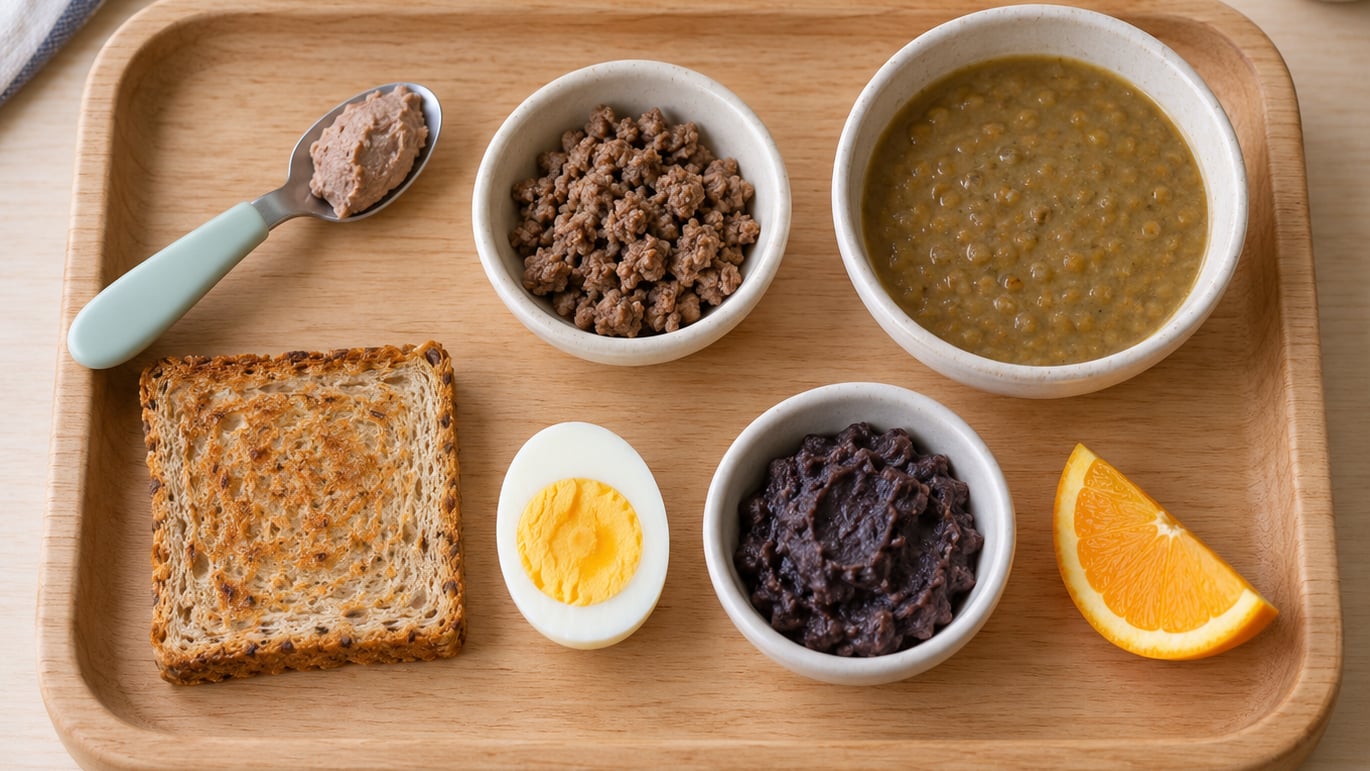
Finely ground beef works better than a steak at this age, mostly for texture reasons. Cook ground beef to an internal temperature of 160 F, then thin it with a little water or broth and spoon it over rice, or fold it into the tomato sauce your child already accepts. Shredded slow-cooked beef is the other reliable format.
Ground beef is also a useful allergen note: it is a common early allergen, and many families introduce it deliberately one at a time so they can watch for a reaction. If your child already reacts to beef, this one is off the list rather than a problem to work around.
2. Chicken Liver Pate or Smooth Liver Spread
Liver is the most iron-dense food on this list, which is exactly why pediatric guidance keeps recommending it in small, occasional portions rather than as a daily staple. A teaspoon of smooth liver pate stirred into a familiar mash delivers a large share of a 7 mg day from a very small volume.
The catch is vitamin A, which liver contains in very high amounts and which builds up in the body. Serve liver about once a week, not at every meal, and keep the portion small. Chicken liver and other poultry need to reach 165 F, and many families find it simpler to use a smooth prepared pate than to cook the organ itself.
If liver is simply not happening in your house, that is fine. It is a supplement to the plan, not the foundation, and the beans, lentils and fortified cereals below do the same job without the vitamin A question.
3. Fortified Oats and Oatmeal
Iron-fortified oatmeal is the reason many families say their toddler’s breakfast is already handled. Check the label for added iron, then thicken cooked oatmeal with breast milk or formula rather than cow’s milk if your child is under 12 months.
Iron rich foods for toddlers 1 year old at breakfast
For a 1 year old, the useful move is to make the fortified base boringly familiar first, then add one accepted topping at a time. Cook it thicker than you think you need, because thin oatmeal often gets refused on texture alone before taste ever enters the conversation. Berries stirred in, or a spoonful of the fruit puree your child already eats, works well.
WhatToExpect forum members repeatedly describe iron-fortified baby oatmeal mixed with breast milk or formula plus berries as a repeatable routine, and the reason it sticks is repetition rather than novelty. Offer the same breakfast four or five days before changing anything.
4. Iron-Fortified Cereal
A single serving of iron-fortified toddler cereal can supply a large fraction of the daily requirement, which makes it one of the most efficient foods on the whole table. Not all cereal is fortified, so turn the box over and look for iron on the nutrition panel before you assume.
Serve it with a vitamin C fruit rather than a large glass of milk. Calcium in milk and in yogurt inhibits non-heme iron absorption, and cereal iron is exactly that kind, so timing matters more here than most parents expect. Offer milk after the meal, when your child drinks it at all.
One common worry is that cereal is nutritionally empty. Fortified cereal is a reasonable food in a varied diet; it becomes a problem when it displaces meat, beans and eggs at the table and becomes the default answer to hunger.
5. Lentil Soup and Smooth Lentil Puree
Lentils carry iron along with protein and fiber, and they are cheap, shelf-stable and endlessly retextured, which makes them the workhorse of a plant-forward toddler diet. A half cup of cooked lentils delivers a meaningful share of the day’s iron with none of the taste of liver.
Format decides acceptance far more than the food does. Blend lentils into a smooth soup, mash them into a thick consistency, stir them into a familiar pasta sauce, or mix a spoonful into oatmeal. Whole dry lentils are a choking risk, so cook them soft and serve them mashed or in a blended soup.
Because this is non-heme iron, serve it with something high in vitamin C. Tomato in the sauce, a squeeze of lemon, chopped parsley, or a side of orange slices all do the work, and parents on nutrition forums treat the pairing as their first move rather than reaching for a supplement.
6. White Beans and Kid-Friendly Bean Dishes
White beans are mild enough to disappear into dishes a child already likes, which is their main advantage over stronger flavors. Mashed white beans stirred into butter and herb rice, thinned into a soup, or thinned to a dipable consistency for spreading on toast all keep the texture out of the spotlight.
Whole beans are round and slippery, and round, firm foods are the ones that cause choking in toddlers. Mash them, blend them, or serve whole only from a soft, well-cooked can in a mashed preparation. Hummus-style dips made from white beans with tahini and lemon work well as a spread, thinned for dipping with bread or soft vegetable sticks.
Rinse canned beans and use the no-salt-added version when you can, since toddlers eat more of these foods than adults expect and sodium adds up quietly across a day.
7. Tofu
Calcium-set tofu is a useful double-duty food, providing iron along with calcium, and it takes on whatever flavor and texture you hand it. Soft or silken varieties mash with a spoon; firmer varieties cube and brown without falling apart.
Serve crumbled tofu over rice, blend silken tofu into a smooth sauce, or mash it into mashed potatoes. A parent I know treats silken tofu blended with white beans and a little tomato as her main no-meat iron dish, and it works because the beans supply most of the iron while the tofu supplies the creaminess.
Soy is one of the top allergens, so this entry disappears entirely for a child with a soy allergy. Check labels on sauces and crackers too, because soy oil and soy protein show up in plenty of foods that do not look soy-forward.
8. Black Beans and Bean Mash
Black beans are one of the more budget-friendly iron foods available, and they blend into a smooth mash that spreads and scoops rather than rolling around the plate. A half cup cooked black beans brings roughly a milligram of iron, and the total climbs fast when a bowl of beans sits next to a bowl of rice and a vitamin C source.
Start mild: a thin soup, or a mash thinned with water and a little olive oil. Some families stir black beans into oatmeal, which is counterintuitive and works because the bean flavor disappears in the sweetness.
Watch the can. Rinsing canned beans cuts a meaningful amount of sodium, and some varieties are packed in a sweet or seasoned sauce with added salt. Plain black beans, no salt added, give you the most control over what your toddler actually swallows.
9. Pumpkin Puree
Here is the honest version: pumpkin is not a significant iron source. A serving of canned pumpkin puree contains a fraction of a milligram, and any parent selling pumpkin as an iron food is overselling it.
What pumpkin does well is travel cheaply with vitamin C, which means it can accompany iron foods rather than replace them. Stir puree into oatmeal, pancakes, muffins or quick bread, and serve it alongside lentil soup or bean mash. Vitamin C works on iron in the same meal, so this is a legitimate reason to use it, just not an iron one.
It also solves a separate problem: it is orange, it is familiar, and it frequently passes for children who reject anything green. That is worth having on the menu even without the nutrient math.
10. Spinach and Other Dark Leafy Greens
Spinach is famous for iron and modest about how much of that iron a toddler absorbs, because non-heme iron from plants competes with phytates in the same meal and with calcium from milk. Some families also notice their child’s stool turning green or darker afterward, which is harmless and worth expecting rather than researching at midnight.
Texture is usually the real barrier. Parents on autism parenting groups describe beans, greens and meat being rejected for predictability and visible bits long before taste is involved, which is consistent with how texture sensitivity works rather than with pickiness about flavor.
Work in smooth sauces, finely chopped portions mixed into accepted foods, or small amounts blended into a smoothie with fruit. Serve greens cooked and soft rather than raw or in large wilted leaves, both for absorption and for choking safety. Greens supplement the plan; they do not replace an iron source such as beef, lentils or fortified cereal.
11. Sardines and Other Small Fish
Sardines are soft, mild and cheap, and they bring heme iron along with omega-3 fats and vitamin D in a soft texture that suits a toddler’s mouth. Flake them into tomato pasta, mashed beans, soft bread or rice, which handles both the flavor and any bones that survive.
Deboning is the part to be deliberate about. Canned sardines flake apart more easily than fresh-fillet fish, and running the flaked meat through your fingers or a strainer catches the small bones. If your child reacts to fish, note that fish is one of the most common allergens and that reaction is not something to work through at the dinner table.
Sodium is the other watch point. Choose canned sardines in water or olive oil with no added salt where you can, and start with a teaspoon to see how it goes.
12. Eggs
An egg is not a big iron delivery, roughly a milligram, and it is worth saying so because eggs get marketed as a protein food for toddlers, which they are. The iron is there, it is reasonably well absorbed, and the food is a useful addition even when something else is doing the heavy lifting that day.
Serve soft scrambled eggs, finely chopped omelet, or egg stirred into soft rice or into a toddler muffin. Cook eggs fully, with no runny yolk. Current pediatric guidance on allergy introduction varies by child and by family history, so follow your own clinician’s plan rather than an internet rule, and introduce egg separately from other new foods if you are tracking reactions.
Eggs are also one of the cheapest iron foods on the shelf, which matters if your child eats eggs but refuses most vegetables.
13. Whole Wheat Bread and Iron-Fortified Bread
Some breads and tortillas are fortified with iron while others are not, so the label is the whole story. Enriched bread often carries added iron; a loaf marketed only as whole grain may carry very little. It takes ten seconds to check, and the difference between the two is large.
Iron rich foods for toddlers that double as finger food are rare, and fortified toast is one of them. Cut toast into strips rather than serving a thick slice, tear it into egg dishes, or use it as the base of a small sandwich with a soft filling. For families avoiding gluten, chickpea pasta and lentil pasta bring a similar iron contribution without the bread, and tahini stirred into oatmeal or yogurt adds a small amount too.
Watch for the combination of bread and milk at breakfast, which is a large chunk of calcium arriving right before the best iron in the meal.
14. Fortified Infant Cereal and Toddler Meals
Iron-fortified infant cereals and toddler meal products exist because the window after 12 months is exactly when iron intake falls off. They are useful, particularly for a child who is no longer on iron-fortified formula and is eating mostly milk and crackers.
Use them as one food inside a varied diet rather than the spine of it. Single-grain cereals are easy to introduce one at a time if you are watching for reactions, and multi-grain and toddler-ready varieties suit a child past the first year. Mix single-grain cereal into a puree or thin it into oatmeal for the youngest toddlers, and offer it dry or as a spoon snack for a child who handles textures well.
Portion size matters more than type. A half cup of fortified cereal is a serving; three cups is a problem, because it displaces the iron foods your child would otherwise eat. Read the serving size on the box and stop there.
15. Blackstrap Molasses in Small Amounts
Blackstrap molasses is a concentrated plant iron source with a fraction of a teaspoon carrying a noticeable amount, which is why it shows up in iron-focused toddler lists at all. It is a food, not a supplement, but the concentration is close enough to the supplement range that it deserves caution.
In practice it is used stirred into oatmeal, yogurt or a smoothie, in small amounts, because the flavor is strong and full-sized servings are unappealing. Run it by your pediatrician or registered dietitian before using it regularly, especially for a young toddler or a child with an existing iron-related diagnosis, since it interacts with the same dosing logic as a supplement.
Keep any iron drops or iron-containing products locked away and out of reach. Accidental overdose of iron is a genuine danger for small children, which is the main practical reason to keep supplements in a high cabinet rather than on the counter.
Frequently Asked Questions
How much iron does a toddler need each day?
A child aged 1 to 3 needs about 7 mg of iron per day, according to the Dietary Guidelines for Americans and the NIH Office of Dietary Supplements. Babies aged 7 to 12 months need 11 mg, and children aged 4 to 8 need 10 mg. Think in weekly averages rather than perfect meals, and talk to your pediatrician if your child is not meeting the target over time.
What is the best iron-rich food for a picky toddler?
For most picky eaters it is an iron-fortified cereal served with a vitamin C fruit, or a lentil or white bean mash blended into an accepted dish like pasta sauce, rice or oatmeal. Beef, liver and sardines absorb best but get rejected most often. Serve milk after the meal rather than before it, since calcium reduces absorption of the iron in plant and fortified foods.
Can toddlers get enough iron from vegetarian or vegan foods?
Yes, with planning and vitamin C pairing, because non-heme iron absorbs less readily. Build meals around lentils, white beans, black beans, tofu, tahini, fortified cereal and fortified bread, and serve a vitamin C source at each meal. Plant-based diets also carry more phytate, which binds iron, so soaking beans, sprouting and using sourdough bread all help a little. A registered dietitian can check a full plan.
Should I give my toddler an iron supplement?
Only with guidance from your pediatrician or a registered dietitian, because the dose depends on age, weight and whether blood tests show a need. Iron is not a vitamin where more is better, and excess iron is toxic for small children, so keep all supplements locked away. If your child is drinking a lot of milk, eating few solid foods, or has risk factors such as prematurity or heavy bleeding, ask about screening rather than self-treating.
How can I make iron-rich foods more likely to be accepted?
Change the texture before you change the flavor. Blend or mash iron foods into accepted meals, offer a small portion on a familiar plate, keep the rest of the meal normal, and repeat the same version several days in a time. For sensory-sensitive children, predictability matters more than taste. Serving milk after meals and pairing iron with vitamin C also helps more than adding variety for its own sake.
Where to Start This Week
Pick two reliable anchors rather than fifteen new foods. One breakfast built on fortified cereal or oatmeal with a vitamin C fruit, and one dinner protein that rotates between ground beef, lentils, white beans or tofu, is enough to move most toddlers meaningfully toward 7 mg a day.
Watch the drinks, not just the food. Milk after meals rather than before, and daily totals kept in the range pediatric guidance suggests for toddlers rather than filling every gap, does as much for absorption as any single food choice.
If your toddler is pale, unusually tired, melting things or chewing on non-food objects, or moving toward more milk and fewer solids, that is worth a conversation with your pediatrician rather than another week of menu planning.