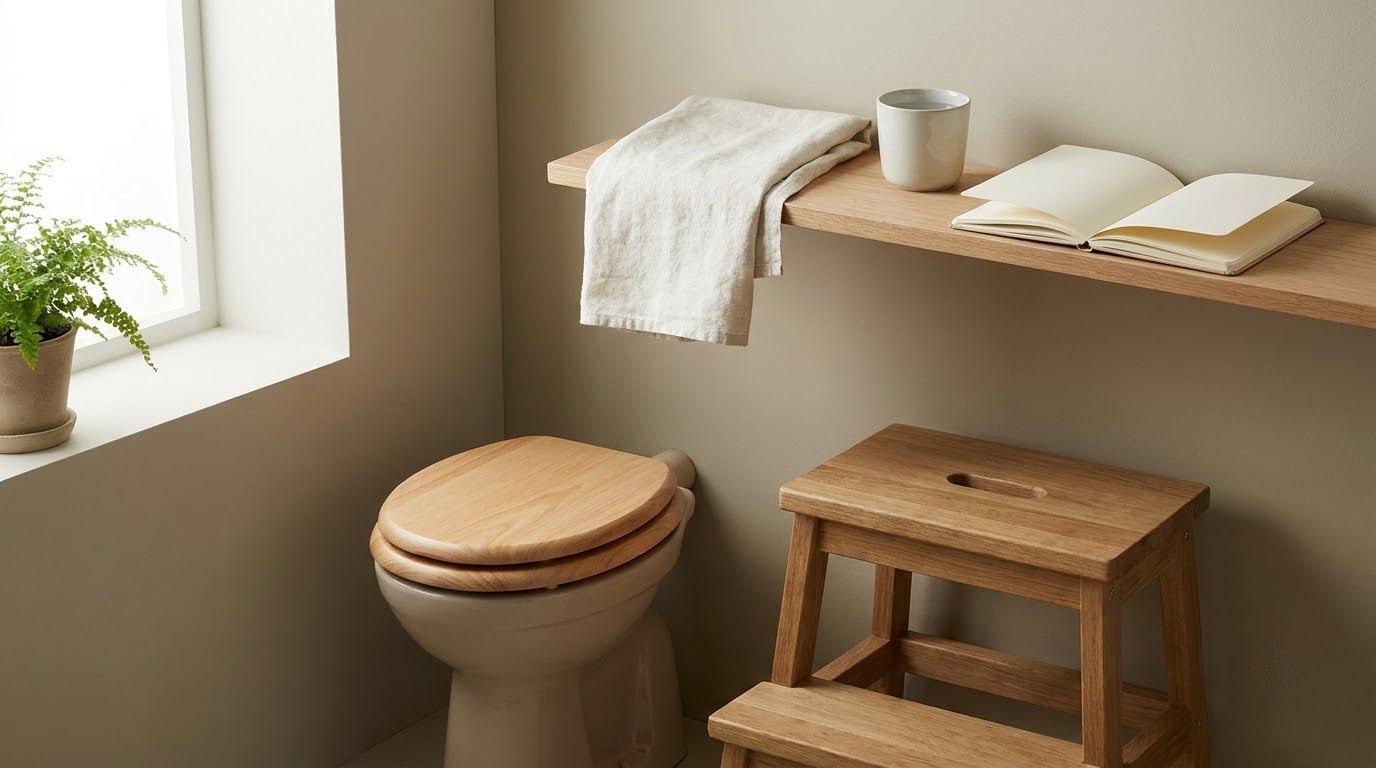
To help a child who withholds bowel movements, stay calm, stop all pressure, keep stool soft with fluids and enough fiber, and offer unhurried toilet time every day. Talk to your child’s pediatrician before starting any laxative or supplement, and sooner if there is pain, blood or vomiting.
Most of the time this is not defiance. It is a child who once had a painful bowel movement and has decided that holding it in is the safer option. Understanding how to help a child who withholds bowel movements means breaking that pain-avoidance loop without adding shame to an already stressful household.
This guide is educational and general. It is not a diagnosis, and it does not replace advice from your own clinician, who knows your child’s history and growth.
Table of Contents
What You Need
You do not need special equipment or expensive products. You need a few ordinary things and a plan you can repeat on a dull evening when everyone is tired.
- Protected bathroom time. Ten unhurried minutes, same time each day, on a schedule your family actually keeps.
- A comfortable child-sized seat or potty that puts your child’s feet flat on the floor. A small step stool or a squatty potty on an adult toilet fixes a lot of straining.
- Water within reach at meals and during the day, plus the drinks your child already likes.
- A food plan that adds fiber slowly, not all at once, built around foods your child will actually eat.
- A notebook or your phone for dates, stool appearance, pain, appetite and accidents.
- A pediatrician appointment before you start any laxative, enema or fiber supplement.
Skip anything punitive. Supervision from a doorway is fine, standing over your child asking questions is not.
Step-by-Step
Start With a Pediatrician Conversation
Book a visit before changing anything you swallow or put inside your child. Pediatricians see this constantly, most often in children aged two to four, and they can tell functional constipation apart from the smaller number of cases with an underlying medical cause.
Bring your notes. The most useful details are when the withholding started, what triggered it, what the stool looks like on the Bristol Stool Chart, whether there is pain, what your child eats and drinks, every current medication including supplements, and how toilet training has gone so far.
Create a Predictable Bathroom Routine
Put your child on the toilet or potty every day at the same times, and give them the same unhurried time even when nothing happens. Sitting for ten unhurried minutes after a meal is more useful than twenty minutes of nagging, because the body often naturally increases bowel activity after eating.
Keep the session boring and neutral. No counting, no racing, no counting out loud for how long they sit. When your child does their part, name that specifically: I see you went and sat, that took courage today.
Rewards should follow the visit rather than the result. A sticker for sitting on the toilet is achievable, a sticker for pooping is not in your child’s control, and an outcome-based reward teaches them that producing a bowel movement is a performance rather than something they can learn to relax into.
Timing around stress matters too. If your child has recently started school, moved house, gained a sibling or lost a routine, expect a flare and keep the routine going rather than starting over.
Make Stool Passage More Comfortable
The physical setup decides how hard the stool is to push. Feet need support, knees above hips, and a wide, stable seat. Sitting on a narrow ring with dangling feet makes an already difficult movement much harder.
A warm bath before bathroom time comes up again and again in parent communities as the thing that finally gets a movement started. It relaxes the whole body and it costs nothing.
Say the hard part out loud: going to the toilet hurt last time, and you are not in trouble. Naming a fear takes away some of its grip, and it tells your child that the fear was reasonable rather than silly.
Anything used inside the body, including suppositories, enemas or rectal medicines, is a conversation for your clinician first. Desensitising a rectum that has been stretched by hard stool takes time and works better with guidance than with a determined parent and a search result.
Review Fluids and Fiber Gradually
Increase fiber a little every few days rather than all at once. A sudden jump in fiber without matching fluid makes stool bulkier and harder, which makes the holding behaviour worse.
Think about what fits your child’s actual eating style. For a picky eater that might mean white foods with fiber added quietly, blended fruit in a favourite smoothie, or a supplement the pediatrician approves. Beans, lentils, oats, pears, kiwi, berries, whole grains and vegetables all count, but only the ones your child eats count.
Fruit juices such as prune or pear are commonly suggested for a reason, though they work better as part of a daily pattern than as a one-off rescue. Offer them alongside meals and keep water as the default drink.
Be honest about the limit here: diet alone rarely breaks an established withholding cycle. Once a child has been holding stool for weeks, the rectum is stretched and less sensitive, so food advice by itself is not enough. It is one part of a plan, not the plan.
Restrictive elimination diets are not a treatment for constipation, and cutting out food groups without pediatric guidance risks making the eating harder for no measurable gain.
Track Symptoms and Seek Help When Needed
Write down the date, whether there was a bowel movement, stool consistency, any pain, tummy swelling, appetite, and every accident. Patterns show up on paper that you cannot see in the moment.
Call your pediatrician promptly if you notice blood in the stool, severe or persistent abdominal pain, vomiting, a swollen belly, fever, weight loss or slowed growth, or a child who seems unwell rather than simply avoiding the toilet.
Ask about a referral to a pediatric gastroenterologist when constipation keeps returning after treatment, when your child needs medication for long stretches, or when pain is severe enough to affect sleep and daily life. Providers are used to the referral and it moves things faster.
Helping an Autistic or ADHD Child Who Withholds
Sensory aversion is a real driver of withholding, and many autistic children and children with ADHD withhold more often than their peers. Two things are often at work: difficulty sensing the internal urge, and specific sensory problems with the toilet itself.
Interoception is the sense of what is happening inside your body. Where a typical child feels pressure and thinks I need the toilet, a child with weak interoception may notice nothing at all until it is urgent and painful. Scheduled bathroom time matters much more here, because you cannot wait for a signal that is not arriving.
Sensory triggers are specific and worth listing. Noise from the extractor fan, cold seat, the splash of urine, being watched, a public bathroom with other children in it, or a school toilet with no lock all change the plan. Fix what you can: a quiet bathroom, a seat cover, a footstool, a visual schedule, and a clear signal from the adult who the child will listen to.
Never make a meltdown during the toilet routine a punishment scene. If the routine is escalating, shorten it, change the location, or drop it for the day and try again tomorrow. A child who melts down mid-sitting is telling you the plan is too hard right now.
Offer two acceptable options instead of one instruction: which room, which time, which book, which drink before. Choice lowers the pressure without lowering expectations.
Constipation-driven withholding and sensory or fear-driven withholding also look different. Constipation-driven withholding comes with hard, infrequent stool and often a bloated tummy. Sensory or fear-driven withholding shows up as a perfectly normal stool pattern and a very specific refusal. The second needs environmental changes first, and adding medicine on its own tends to fail.
Common Mistakes
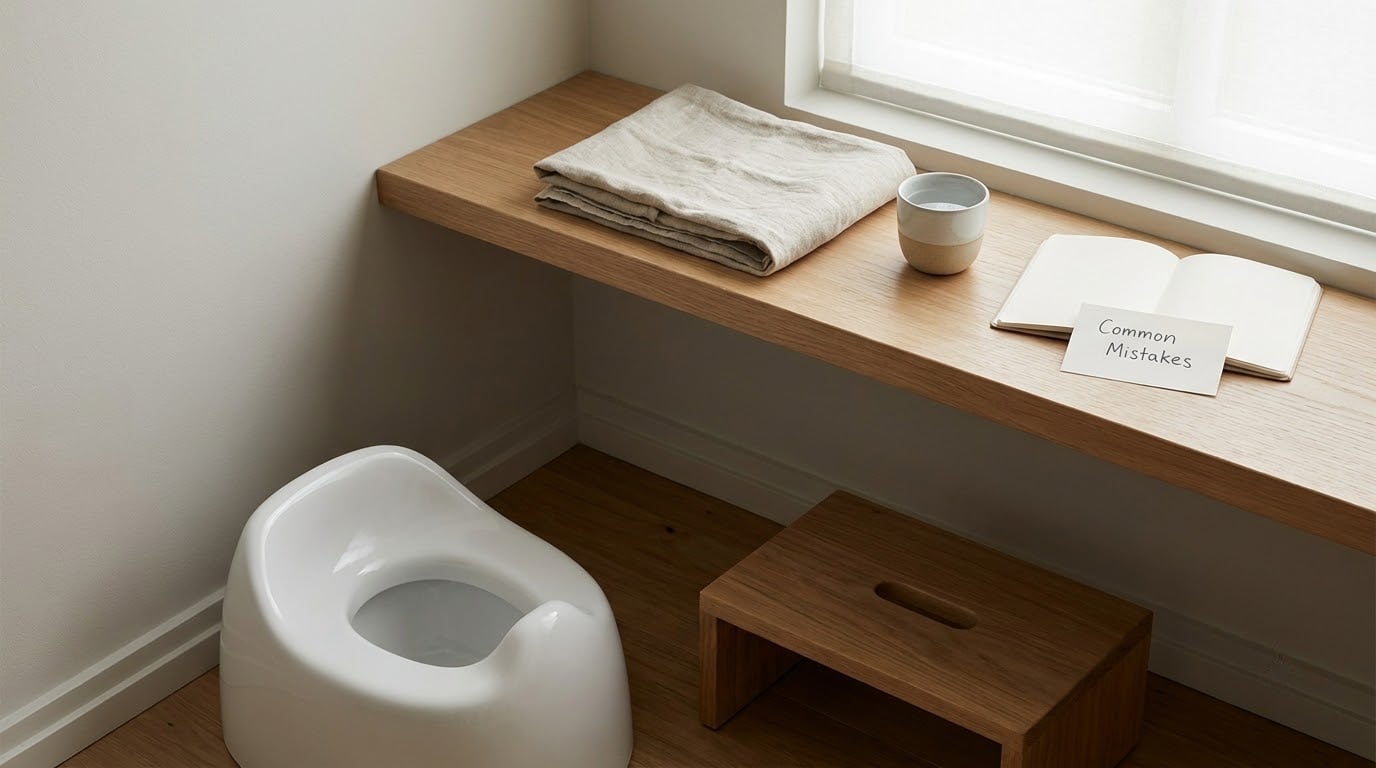
Most of what parents have already tried makes sense, because nobody hands you a manual for this. A few habits, though, reliably keep the cycle going.
Forcing long sits. Twenty minutes of waiting teaches your child that the toilet is where they get trapped. Try five to ten unhurried minutes instead, and end it neutrally even when nothing happened.
Showing anger or disappointment. Your frustration is a reasonable response to weeks of trying, but the child reads it as proof that the toilet is a place where feelings go wrong. Reset, and try again at the next scheduled time.
Starting a harsh laxative or a home remedy without advice. Over-the-counter stimulant laxatives and homemade mixtures are not the route for a child who is holding stool. Ask your pediatrician, and keep the conversation about the medicine itself rather than treating it as a test of obedience.
Stopping treatment the moment stools look normal. This is the single most common reason families relapse. The rectum stays stretched for months after the stool softens, so support usually continues well past the visible improvement, and it should be tapered with your clinician rather than by you.
Treating soiled underwear as the problem. Liquid stool leaking around a full rectum is overflow soiling, a sign of constipation rather than diarrhea. Chasing it with wipes or by restricting food misses the cause entirely.
Waiting through warning signs. Days of not eating, a swollen belly or visible pain are not a parenting problem. They are a call to the pediatrician.
Frequently Asked Questions
What should I do if my child is withholding poop?
Stop all pressure first, then keep stool soft with regular fluids and fiber added gradually. Offer unhurried, scheduled toilet time once or twice a day with feet supported, and praise the effort rather than the result. Book a pediatrician visit before starting any laxative or supplement, and go sooner if there is pain, blood or vomiting.
Does holding in bowel movements cause constipation?
Yes, and the two feed each other. Stool that sits in the colon loses water, so it becomes harder, larger and more painful to pass, which confirms the fear and leads to more holding. Over time the rectum stretches and becomes less sensitive, so the child stops feeling the urge at all and the withholding becomes the main cause of ongoing constipation.
Can Miralax be used to help with bowel cleanouts in children?
Polyethylene glycol, sold as MiraLAX, is commonly used in children, but dosing should come from your pediatrician rather than from an article. Treatment usually has two parts: a short cleanout to clear a large backlog, then daily maintenance therapy for weeks or months. Families often mix it into juice or another favorite drink, which parents report works far better than giving it straight.
Is holding poop a sensory issue, and can ADHD cause stool withholding?
It can be, and it often is in autistic children and children with ADHD. A child who cannot sense the internal urge, or who finds the toilet sensory, will delay a bowel movement without any physical cause. The plan differs: change the environment first, add scheduled bathroom time, reduce sensory triggers, and expect your clinician to check whether constipation is also part of the picture.
What is a red flag that we should call the pediatrician?
Call promptly for blood in the stool, severe or lasting abdominal pain, vomiting, a swollen or hard belly, fever, weight loss, slowed growth, or a child who seems generally unwell. Also call if your child has gone several days without a bowel movement and is clearly distressed. If symptoms keep returning after treatment, ask whether a pediatric gastroenterologist referral is worth making.
What to Do First
If you take one action today, take pressure off. No counting, no asking whether they went, no disappointed face. Then book the pediatrician appointment and start one predictable bathroom routine.
From there: water as the default drink, fiber added a little at a time, feet supported during bathroom time, and praise for showing up rather than for producing a result. Track what happens so you have real information instead of a feeling, and keep treatment going for as long as your clinician recommends instead of stopping the day stools look right.
Recovery is usually measured in months, not days, and relapses are common and normal. A child who withheld after one painful episode may hold for a week, which is startling but not unusual, and it is not a sign that you have done this wrong.
Your child is not being defiant. They are avoiding pain, in a body that is not telling them clearly what is happening. That is a solvable problem, and with the right support most children come out the other side of it.
Sources and further reading: HealthyChildren.org, the parenting resource of the American Academy of Pediatrics, and the constipation guidance from the National Institute of Diabetes and Digestive and Kidney Diseases. This article is for general education and does not replace individual medical advice.