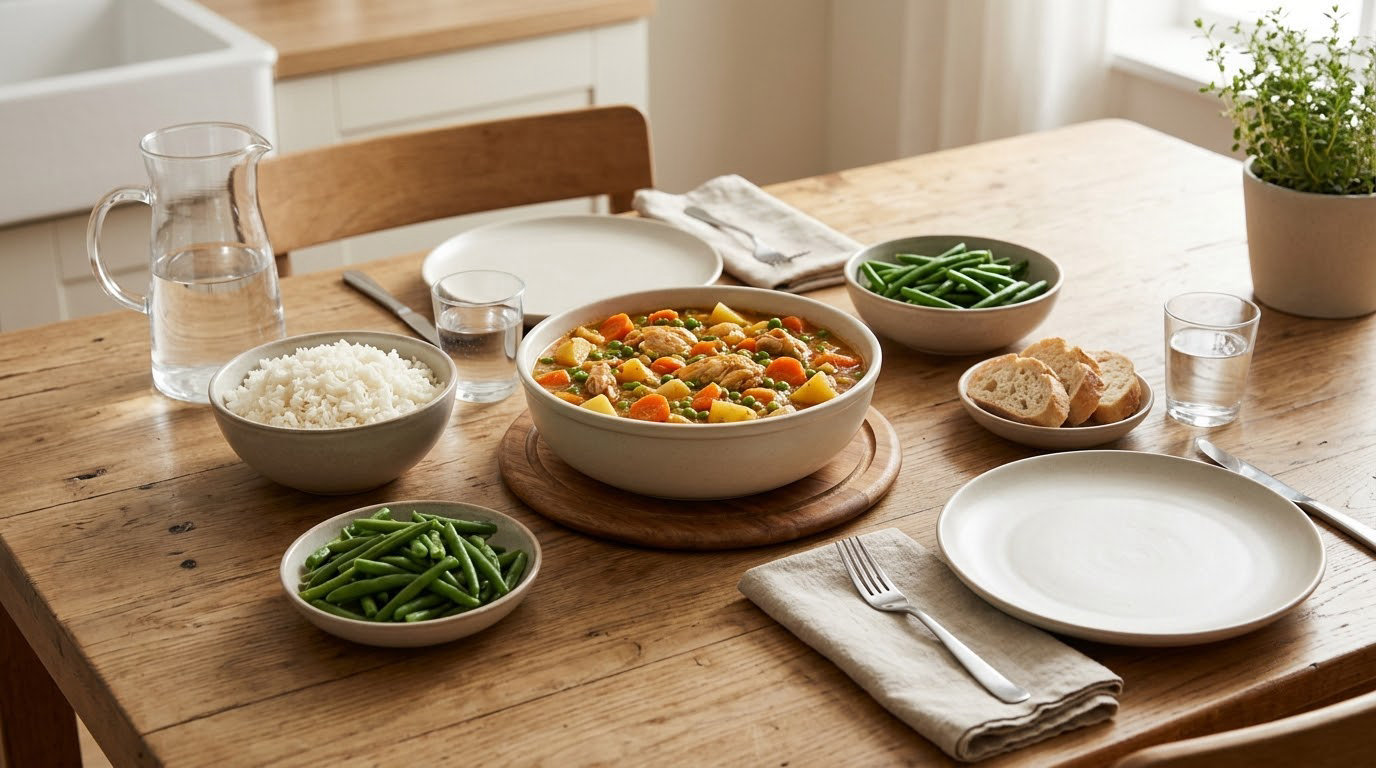
Short-order cooking is when you prepare a separate, child-specific meal at dinner every night because your child will not eat what the family is eating. You stop it by keeping what works predictable, adding one shared food at a time with zero pressure to eat it, and holding a backup meal nearby for a few weeks. Budget weeks, not days. Most families need eight to ten non-pressured offerings of a new food before anything changes, and the first month is usually about your own calm, not your child’s plate.
That timeline matters because the pressure to fix dinner tonight is part of what keeps the cycle going. Short-order cooking works in the short run. It buys you a meltdown-free evening and it protects a child from a genuinely distressing experience. What it quietly costs is your evening, your family’s sense of normalcy, and the slow expansion of your child’s safe food list that would eventually make separate meals unnecessary.
If you are cooking for two kitchens every night, you are not failing at anything. Your child is not being spoiled. Food selectivity in autistic children is common, it usually has sensory, medical or anxiety roots rather than being a power play, and it deserves a plan rather than a nightly negotiation.
Table of Contents
- What You Need
- Step-by-Step: How to Stop Short Order Cooking at Dinner
- Common Mistakes
- Frequently Asked Questions
- How can I stop cooking separate meals for my autistic child?
- What if my child refuses every new food at the table?
- How long should it take for my child to eat with the family?
- Should I keep a backup meal while we transition from separate cooking?
- How can I handle food allergies or medical diet restrictions during this process?
- When should I ask a pediatrician or registered dietitian for help?
- Conclusion
What You Need
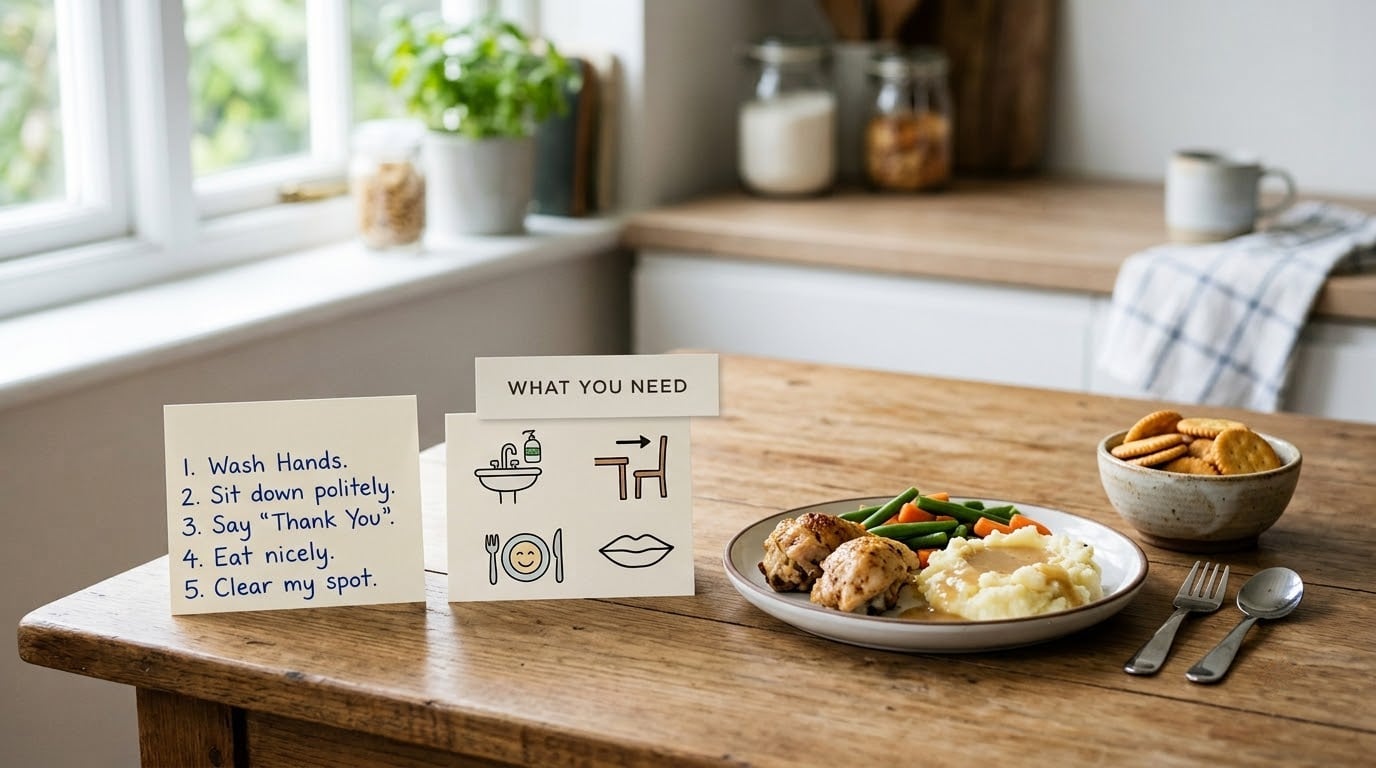
Before you change the dinner routine, gather four things. None of them are expensive and none of them require a new purchase.
A written baseline. Sit down for ten minutes and write out everything your child currently eats without a fight, meal by meal. Group it into proteins, starches, fruits and vegetables, plus the handful of brand-specific items that will not be substituted. That list is your floor, not your target.
One safe meal that always works. Pick the dish they reliably finish. Keep it available, keep it easy, and stop treating it as a failure of imagination. A safe food list is an adaptation, not a character flaw.
A backup food in the house. Something shelf-stable that requires no cooking and no negotiation when the evening goes sideways. This is a bridge, not a permanent fixture. You plan for its use and you decide together, ahead of time, when it applies.
A visual schedule. Five cards on the fridge is enough. Dinner at six, dinner foods, sit together, backup food if needed, clean up. Autistic children hold onto predictability far more tightly than the adults feeding them assume.
What you also need is time and a settled caregiver. Changing one variable at a time takes a season, not a weekend. If you are exhausted enough that a small change will feel like a catastrophe, make that the only change for two weeks.
Step-by-Step: How to Stop Short Order Cooking at Dinner
Step 1: Identify what must stay consistent
Pick three things your child relies on and freeze them. Common ones: the same cup, the same seat, the same order of foods on the plate, the same table lamp on during dinner, the same six o’clock start.
While these stay put, change one other thing. If you are trying to add a shared side dish, the seating does not move that same week. A child who feels the environment wobbling will use the food as the thing to push back on.
How to tell it is working: three consecutive dinners with no new distress about the place, the seat or the routine. If there are tears, move the new item back a week rather than pushing through.
Step 2: Introduce one shared food without pressure
This is the core move. Cook one dinner for the family, and put one of those same components in front of your child in a small portion, on a separate plate, with no comment attached to it.
The plate matters more than the food. A portion you would not serve an adult reads as a test, and most children treat it as one. Offer a real amount and let them ignore it.
Say something once, calmly, and then stop talking about it: “There’s corn on the table if you want it.” Do not ask if they want it. Do not praise them for putting it in their mouth. Do not comment when they push it around the plate or put it back.
How to tell it is working: the food sits on the table without a fight. That is the whole win for week one. Touching it, smelling it or moving it to another plate all count as progress.
Step 3: Let your child help choose the details
Give away the parts of dinner that do not affect nutrition. Which cup. Which napkin. Whether the shared food goes on their plate or sits beside it. Where they sit relative to you.
Two acceptable options work better than an open question. “Rice or corn tonight” gets an answer. “What do you want?” at six in the evening after a full day will get you nothing but a shutdown.
Choices are a good substitute for pressure, because they give your child control over the evening without giving them control over whether they eat a new food. Keep the food decision in your hands. Let everything else be theirs.
How to tell it is working: they answer the choice question without escalating. If every option is refused, narrow it to two choices that are only about the container, not the food.
Step 4: Use a visual dinner sequence
Put the dinner sequence where your child can see it before the evening starts. Photo cards work better than written words for many kids, and you can pull one item out at a time as each stage finishes.
The sequence should show what happens when they decline. That is the piece most parents leave out, and it is the piece that creates a power struggle. A card that reads “say no, then backup food” tells your child the backup is a planned step in the routine, not a defeat they won.
Keep the cards in the same order for two weeks before editing anything. Visual supports earn trust through repetition.
How to tell it is working: your child can tell you the order of the evening without being asked, or points to the card when something feels off. That is them using the tool instead of you narrating it.
Step 5: Keep one backup meal available
Define the backup meal before you need it. Sit down and decide together: if the shared food is refused and there is distress, the backup is available and nobody is asked to justify it.
Then keep it unremarkable. No sigh. No lecture about how many times it has happened. No bargaining in either direction. You do not trade the backup for one bite, because that turns a safety net into a currency and puts you back in the power struggle.
Run the backup for two or three weeks at the start, then narrow the conditions. Some families make it available only on weeknights. Some make it available after a set amount of time at the table, say fifteen minutes. What matters is that the rule exists before the meltdown and is not renegotiated mid-evening.
How to tell it is working: the backup comes out less often than the previous month. Not never. Less often.
Step 6: Practice and adjust one step at a time
Keep a simple log. Three columns is enough: what was shared, whether they interacted with it at all, and what the evening looked like on a scale of one to five.
You are looking for the trend, not the win. Some evenings will be worse than others and that is normal data, not a step backward. Most families see a change in interaction within a few weeks and a change in eating after months of steady, pressure-free exposure.
When two weeks in a row look calmer, add the next item. When two weeks look harder, go back one step. Going back is not failure. It is the method working.
How to tell it is working: more nights where the family sat down together and the backup did not come out, and where you finished the evening with something left in you.
Common Mistakes
Changing everything in the same week. A new schedule, a new meal and a new seating chart all at once means your child has no stable reference point. Pick one change and let it settle for two weeks.
Making the safe food conditional. If the backup only appears after one bite of something new, you have built a trade, and your child will correctly learn to hold out. The backup is not a reward for eating.
Arguing at the table. Every reason a food is unacceptable is an invitation to counter it. One neutral statement, offered once, then a genuine move on to something else. Adults at the table need a job too, and that job is being uninteresting about the food.
Withdrawing all supports too quickly. Dropping the separate plate, the special cup and the backup in one move removes the scaffolding before the skill exists. Supports come off one at a time, and only after the new step feels ordinary.
Treating setbacks as failure. A bad Thursday is a data point in a process measured in months. If you count every evening as a test, you will quit, and the cycle simply resumes on its own.
Losing the rest of the family in the process. Siblings notice who gets a different meal and why. Say out loud that the safe food is a sensory accommodation, not a preference ranking, and that everyone gets a say in what the family menu looks like. Children who are left out of the conversation build their own.
One more, and it is the big one: protect the cook. Grocery delivery and click-and-collect are legitimate access tools, not a failure of effort. A parent with their own executive dysfunction needs fewer decisions per evening, not more.
Frequently Asked Questions
How can I stop cooking separate meals for my autistic child?
Stop by keeping your child’s safe foods available while adding one shared family food at a time with no pressure to eat it. Keep the plate, cup, seat and start time consistent so only one thing changes. Offer the new food calmly, say nothing more about it, and expect several weeks of non-interaction before you see any eating. Use a written log of what was shared and how the evening went so you progress based on pattern rather than a single bad night.
What if my child refuses every new food at the table?
That is normal and it is not a setback. Most autistic children need eight to ten non-pressured offerings before they interact with a new food, and interacting comes long before eating. Keep offering the same food in a small portion on a separate plate, say nothing about it, and move on. If refusal comes with gagging, pain, vomiting or obvious distress, stop and talk to your child’s doctor, because that points to sensory, oral motor or medical causes rather than preference.
How long should it take for my child to eat with the family?
Treat this in months, not weeks. Change in willingness to sit with the family and interact with shared food often shows up within a few weeks of consistent pressure-free exposure, while actually eating a new food usually takes much longer and varies widely. Some children move quickly with food chaining, others take a year or more. Judge progress by reduced distress and reduced reliance on the backup meal rather than by a plate of finished food.
Should I keep a backup meal while we transition from separate cooking?
Yes, for the first few weeks. A backup meal reduces the chance of a meltdown and gives you a reason to stay calm, which matters more than the meal itself. Decide out loud when it applies, such as on weeknights or after fifteen minutes at the table, and keep that rule unchanged during the evening. Do not trade the backup for one bite of a new food, because that turns a safety net into a bargain and puts you back in the power struggle.
How can I handle food allergies or medical diet restrictions during this process?
Allergies and diagnosed medical diets are not the same as food selectivity and need clinical input, not a gradual exposure plan. Get a written plan from your child’s doctor or registered dietitian covering what must be avoided and what nutrients need replacing, then build shared family meals that already fit that plan. If your child needs supplements, fortified foods or monitoring, ask about blood work. Exposure work should only begin once the medical team confirms it is safe.
When should I ask a pediatrician or registered dietitian for help?
Ask early rather than at the point of crisis, because early support is easier for your child to accept. Book an appointment if your child is losing weight or failing to grow, eats so few foods that a whole food group is missing, gags chokes or struggles to chew or swallow, has constipation or reflux, or if you are depleted enough that the routine is affecting your own health. A feeding-trained occupational therapist, a dietitian and a feeding team can assess skills and nutrition far more accurately than home experiments.
Conclusion
Start tonight with the smallest possible version of this. Choose one reliable part of dinner that already works, put one shared food next to it on a separate plate with no commentary, and keep a backup meal within reach without drama. Write down what happened in two lines and repeat it for two weeks.
That is the whole method behind how to stop short order cooking at dinner without a nightly standoff: one dependable anchor, one small addition, and a parent who is not negotiating at six o’clock. The safe foods do not disappear, the pressure does not appear, and the separate kitchen has a clear end date. If your child is losing weight, gagging, in pain or growing poorly, talk to your pediatrician or a registered dietitian before changing anything.