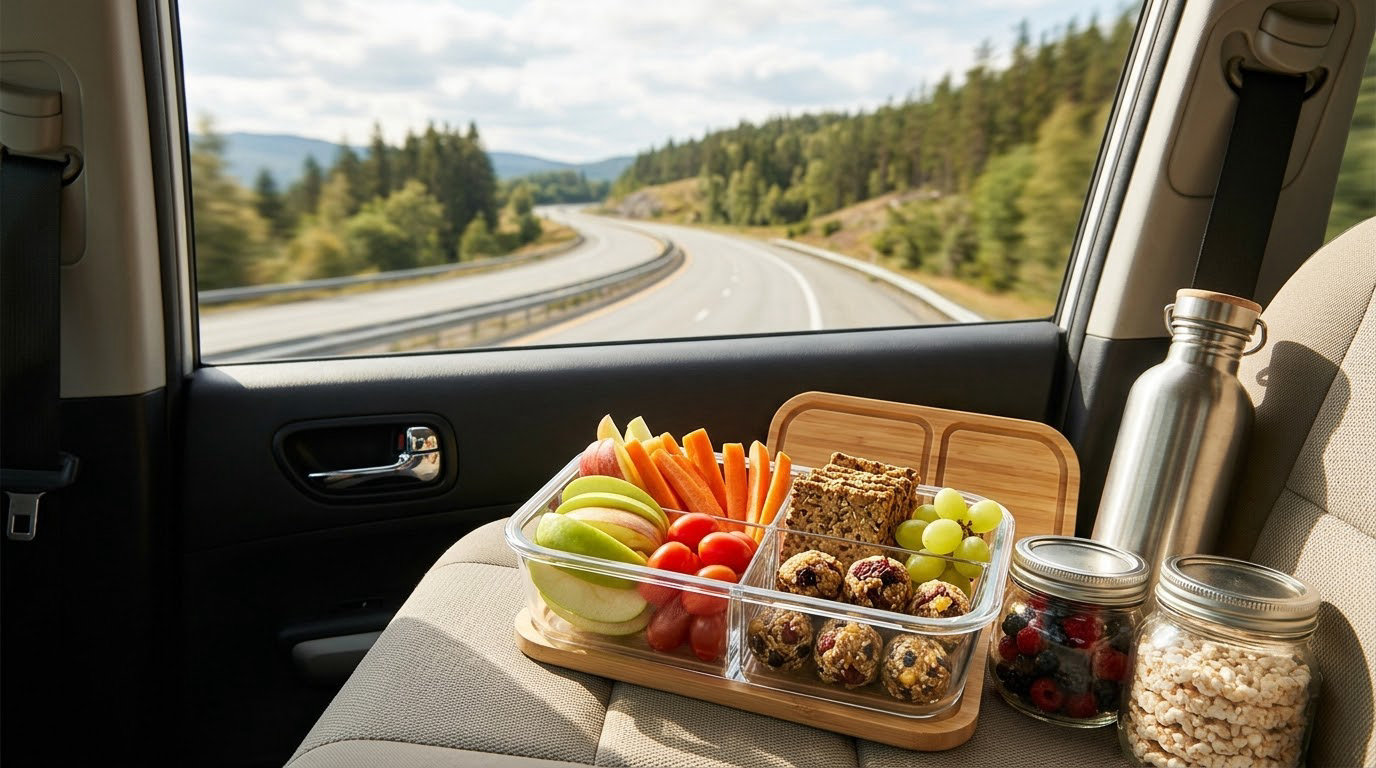
Packing food for a car trip with a child who has food allergies is a completely different job than packing for everyone else. These allergen free snack ideas for road trips all share three things: they hold up without refrigeration for hours, they can be eaten one-handed in a moving car, and you can confirm every ingredient and facility statement before you leave home.
The list below covers store-bought and make-ahead options for gluten-free, dairy-free, nut-free, top 9 allergen-free and sensory-sensitive eaters. I have written each one the way I would explain it to another caregiver: what to look for on the label, what to pack it in, and when it stops being a good idea.
If your child has a diagnosed allergy, their allergist or pediatrician should be the final word on any food you offer, especially when reactions have been serious before.
Table of Contents
- Allergen Free Snack Ideas for Road Trips at a Glance</
- 1. Apple Chips with Sunbutter Packets
- 2. Freezer Yogurt or Dairy-Free Yogurt Cups
- 3. Rice Crispy Treats Made with a Verified Allergen-Free Oats
- 4. Seed-Free Pumpkin or Sunflower Seed Butter Cups
- 5. Gluten-Free Fruit-and-Oat Energy Bites
- 6. Pretzels or Corn Tortilla Chips with a Safe Hummus
- 7. Shelf-Stable Nut-Free Butter Spackets on Crackers
- 8. Popcorn with a Single Allergen-Free Seasoning
- 9. Dehydrated Fruit or Individually Packaged Freeze-Dried Fruit
- 10. Allergen-Free Trail Mixes with Separate Components
- 11. Refrigerated Sandwiches or Wrap Alternatives
- 12. Safe Frozen Fruit Smoothies in Reusable Cups
- Frequently Asked Questions
- What are the easiest allergen free snacks to pack for a long car ride?
- How can I check packaged road-trip snacks for cross-contact?
- What snacks are safe to leave in a car during summer travel?
- Are fruit leather and dried fruit good choices for children with food allergies?
- How do I choose road-trip snacks for an autistic child who has strong texture preferences?
- Which gluten-free road trip snacks need no cooler at all?
- Conclusion: Build One Simple Road-Trip Snack Box
Allergen Free Snack Ideas for Road Trips at a Glance</
This table is the short version. Check every item against your child’s own allergen list before it goes in the bag, because “nut free” on the front of a package says nothing about wheat, sesame, soy or shared equipment.
| Snack | Allergens to verify | Storage | Best for |
|---|---|---|---|
| Apple chips with sunflower seed butter | Nut, seed, soy, shared line | Room temp, resealable bag | Long drives, kids eating one-handed |
| Yogurt or dairy-free yogurt cups | Milk, soy, corn, fruit, facility | Cooler, 40 F or below | Children who need cold food and a spoon |
| Rice crispy treats | Marshmallow ingredients, wheat, sesame | Rigid container, room temp | Sweet snacks that hold their shape |
| Seed butter cups | Seed, soy, milk, coconut, shared line | Room temp, individually wrapped | Peanut and tree nut avoidance |
| Fruit and oat energy bites | Oats certification, spread, dried fruit | Freezer or fridge, airtight tin | Make-ahead batches, older kids |
| Pretzels or corn chips with hummus | Wheat, sesame, soy, chickpea | Screw-top jar, cooler optional | Crunch plus a protein dip |
| Nut-free butter on crackers | Seed, wheat, milk, cracker facility | Room temp, rigid box | Classic combo, minimal prep |
| Plain popcorn with one seasoning | Kernel oils, seasoning blends, sesame | Wide-mouth jar, room temp | Sensory-sensitive travelers |
| Dehydrated or freeze-dried fruit | Added sugar, sulfites, facility | Sealed pouch, room temp | Fruit without juice or bruising |
| Trail mix with separate components | Every single ingredient plus facility | Small sealed cups, room temp | Choice, variety, portion control |
| Sandwiches or wraps | Bread and wrap labels, fillings | Cooler, 2 hour cold rule | Mealtime on the road for most eaters |
| Frozen fruit smoothies | Milk alternatives, thickeners, facility | Freezer, reusable cups | Smooth texture options for sensory needs |
1. Apple Chips with Sunbutter Packets
How to pick apple chips that pass the label check
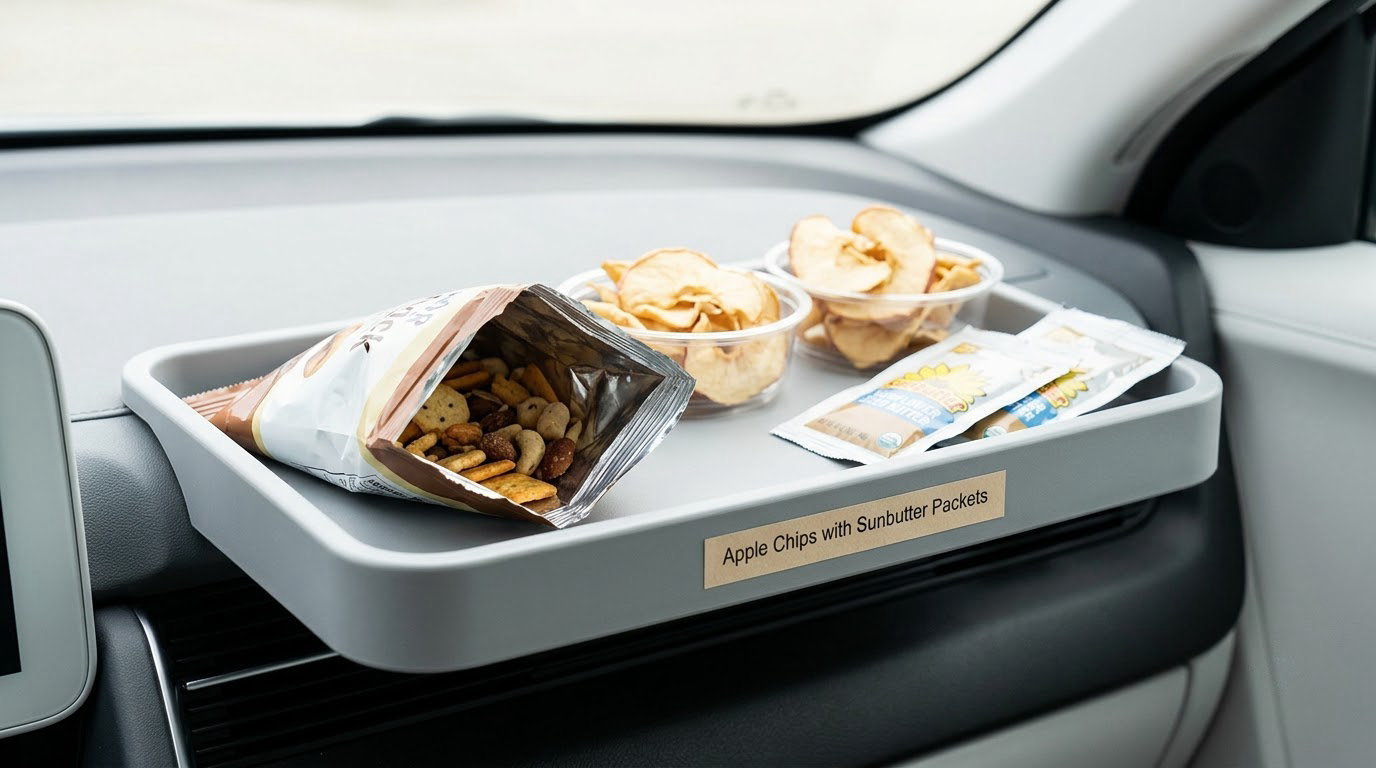
Thin, unsweetened apple slices dehydrate into chips that snap rather than bend, which means no juice down the child’s shirt thirty minutes into the drive. Look for a bag with a short ingredient list, usually just apples and a little sunflower or canola oil, and avoid anything with added sugar or natural flavor.
Now check the facility statement. Many apple chip brands are packed on shared equipment with peanuts and tree nuts, so a nut-free front panel does not rule out cross-contact. If the child’s allergy list includes seeds or soy, check those too.
Why this pairing works in a moving car
Single-serve sunflower seed butter packets open with one hand and do not need a knife, a jar, or a napkin afterwards. Two chips plus one packet is a portion most school-age children can manage on their own, which cuts down on the adults doing the handing-out.
Pack the packets loose inside a zip bag rather than in the outer box, and put the whole thing in a rigid container so nothing ends up ground into the seat fabric. My rule is one packet per child per stop, with two extra in the bag for the day it goes badly.
2. Freezer Yogurt or Dairy-Free Yogurt Cups
Yogurt is the snack most families forget to pack because it looks like it needs ice. It does, but a small cooler with a frozen gel pack around a dozen cups handles a full day, and the payoff is a snack that counts as a real dairy serving rather than a treat.
For a child with a milk allergy, read carefully. Many plant-based yogurts are thickened with carrageenan and processed on shared dairy equipment, and some contain soy, coconut, or fruit puree that triggers something other than milk. The dairy-free label covers the milk, not the rest of the panel.
Frozen yogurt cups can go in the cooler frozen and be handed over around the two-hour mark, which is often exactly when a child wants something cold. Give them a spoon that fits in a cup holder, or a spoon with a short handle, and expect to lose a few on the floor.
For a child with swallowing difficulty, serve the yogurt slightly thawed and check with their care team first. Thick and cold yogurt is a harder swallow than room temperature yogurt.
3. Rice Crispy Treats Made with a Verified Allergen-Free Oats
This is the snack I make the night before every long drive, because it survives the trip better than anything baked. Melt butter with marshmallows, stir in a crisp rice cereal, press into a buttered pan, and cut into squares.
The allergen work happens at the cereal and the marshmallows. Rice cereal is usually made from rice, sugar, and salt, but some varieties are processed in facilities that also handle wheat or peanuts. Marshmallows can contain gelatin, and vegan versions often add soy or coconut oil.
Texture is the part families fight about. Some children want the treat squished thin and chewy, others want it set firm enough to hold in one hand. Pressing it into a thicker pan gives you a denser, less crumbly square, which is easier for a child who dislikes crumbs in their fingers.
Cut squares travel best in a rigid container with a sheet of parchment between the layers. A zip bag will not stop them breaking into rubble, and a car seat is a poor place to eat crumbs.
4. Seed-Free Pumpkin or Sunflower Seed Butter Cups
Individual seed butter cups solve the peanut problem without creating a seed problem. They need no spoon, no refrigeration, and no preparation, and each cup is already one portion.
Read the ingredient list twice. Sunflower and pumpkin seed butters vary enormously: some are sweetened, some contain a milk protein concentrate added for texture, and coconut appears more often than people expect. Seed butters are also frequently made on equipment shared with tree nuts even when the product itself contains none.
For a child avoiding seeds as well as nuts, sunflower butter is the one most families land on, but check whether your child reacts to sunflower itself. That is rare and it is not something to test on a highway.
Pack them in a small insulated pouch rather than loose in the bag. Warmth softens chocolate coatings faster than you would expect, and a melted cup in a diaper bag is a memorable mess.
5. Gluten-Free Fruit-and-Oat Energy Bites
A small batch of energy bites made with certified gluten-free rolled oats, a thick fruit spread, and a nut-free binder travels well and freezes without turning into bricks. Pulse everything in a food processor, roll into balls the size of a walnut, and chill them for an hour.
The three things to verify are the oats, the spread, and the dried fruit. Certified gluten-free oats come from a dedicated supply chain, while ordinary rolled oats are frequently milled alongside wheat. Fruit spreads often contain grape or apple concentrate with a thickening agent, and commercial dried fruit is one of the more common places sulfites hide.
Portion control is easier than it sounds. Two small bites in a silicone cup travel without sticking to anything, and you can drop a whole cup on a café table without unpacking anything.
Freeze the finished bites in a single layer, then move them to an airtight tin. They thaw in about fifteen minutes at room temperature, which is long enough to cross a state line before the wrapper feels soft.
6. Pretzels or Corn Tortilla Chips with a Safe Hummus
A crunchy base with a cool dip gives you two textures and a protein hit in one snack, and it is the combination that lasts longest because the dip slows everything down. Plain pretzels work for a wheat-free version, and corn tortilla chips are simple enough that the ingredient list is usually two lines long.
Hummus is where people get surprised. Chickpeas are a legume, and sesame oil is in most traditional recipes, so a standard tub can rule out two things a child needs to avoid. Some brands are made without sesame or soy, and a few carry a dedicated-facility statement worth hunting for.
Buy a wide-mouth jar that screws shut, or portion it into small squeeze containers if you would rather not hand over the whole tub. Skip the single-serve dip cups that come with a built-in fork, since the plastic fork breaks more often than anyone expects.
If soy is also on the list, read the chips too. Some tortilla chips are fried in soybean oil even when the tortilla itself is corn only.
7. Shelf-Stable Nut-Free Butter Spackets on Crackers
Crackers with a nut-free butter spread is the combination most families already have in the pantry, and it works on the road for a simple reason: nothing has to be mixed or heated.
The crackers are the harder half of the equation. Most are made on shared equipment with wheat, milk, sesame and tree nuts, so look for a brand with a clear allergen statement or a third-party certification mark such as GFCO or Snack Safely. Rice cakes and plain rice crackers eliminate the wheat variable when you cannot find a certified cracker.
Storage is what ruins this snack. Put the crackers in the original inner bag or a rigid container so they arrive in shape, and keep the butter packets where a seatbelt cannot crush them. Fruit leather or a few pieces of freeze-dried fruit on the side add sweetness without another spread.
One more thing: never hand over the whole jar of butter even for a well-behaved child. Individual packets let the adult control the portions and keep the car interior clean.
8. Popcorn with a Single Allergen-Free Seasoning
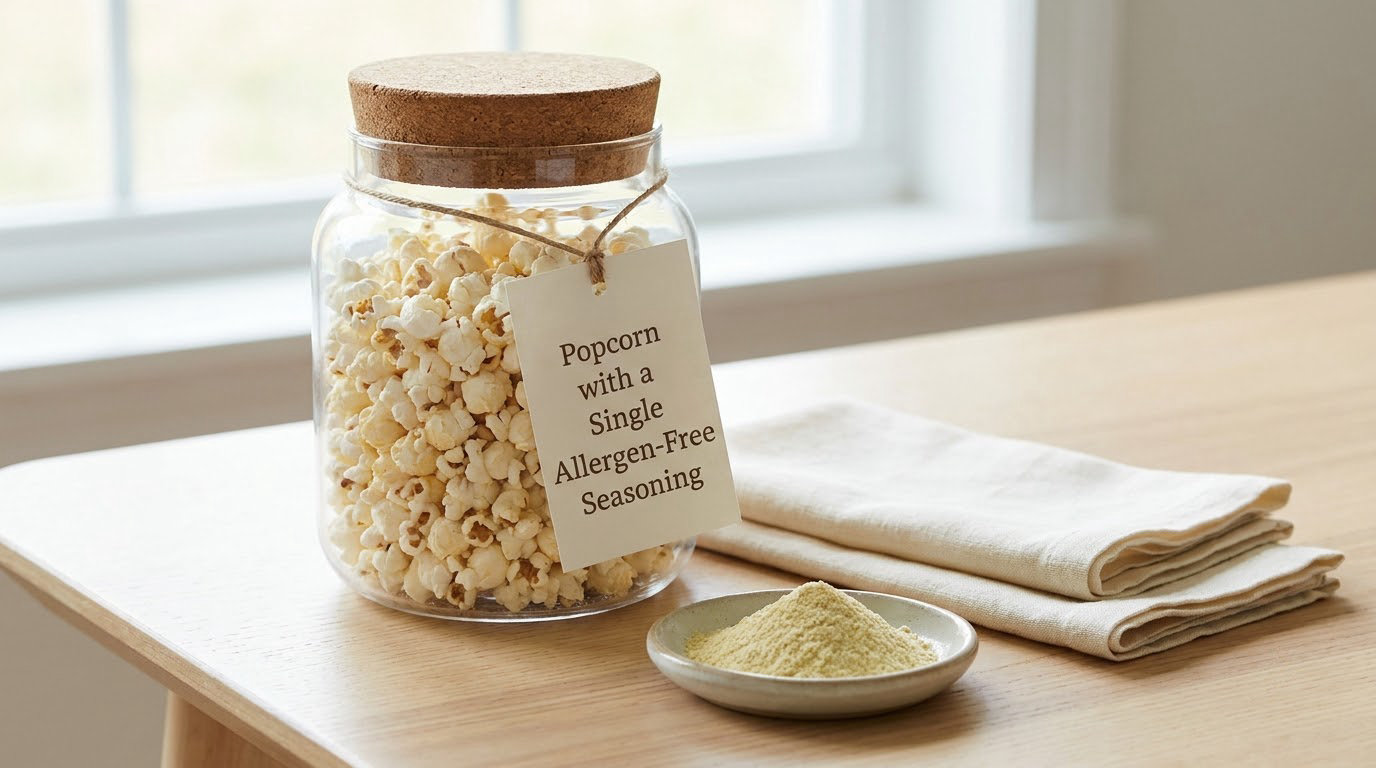
Popcorn is one of the few classic road trip snacks that is naturally free of the top 9 allergens, so it works for almost everyone before you add anything to it. The seasoning is where the risk enters.
Blend seasonings from a restaurant typically contain sesame, soy, dairy powders, and a long list of spices that nobody can check. Air-popped plain popcorn, or popcorn popped in a small amount of avocado or sunflower oil, stays clean and needs nothing added at all.
For children who prefer a flavor, pick one single seasoning in a sealed container: cinnamon, or nutritional yeast, or a plain salt blend that lists nothing but salt and spices. One flavor means fewer surprises and fewer hands reaching into a shared shaker.
Pack popcorn in a wide-mouth container with a tight lid. Shakers of loose kernels and a jar of oil do not survive a seatbelt, and nobody wants to vacuum popcorn at a rest stop. For sensory-sensitive children, a portion in a lidded cup avoids the sound and smell of the whole bag opening.
9. Dehydrated Fruit or Individually Packaged Freeze-Dried Fruit
Fresh fruit is the obvious healthy choice and the worst travel choice. Apples bruise, grapes roll under the seat, and sliced melon turns the bottom of a container into a soup.
Dehydrated slices solve the bruising and only partly solve the leaking, so keep them in the factory pouch or a rigid container rather than a zip bag. Freeze-dried fruit goes further: strawberries, bananas and mango hold their shape, weigh almost nothing, and come in single-serve pouches that are genuinely shelf-stable.
When you compare options, read for added sugars, preservatives such as sulfites, and the facility statement. Fruit snacks marketed to kids are frequently sweetened with apple juice concentrate, which some families need to avoid for reasons unrelated to the top 9 allergens.
Texture is worth a conversation. Freeze-dried fruit shatters into powder in the mouth, and some children with sensory sensitivities find that difficult. Dried slices that bend, or soft dried mango pieces, are usually the better first choice. If swallowing is a concern, ask the child’s care team before offering dried or crisp fruit, since both can be harder to manage than fresh.
Check your local labeling rules when you cross a border. The United States lists nine major allergens on packaged food, while the European Union requires fourteen, which means a snack safe in one country can contain something that is flagged in the other.
10. Allergen-Free Trail Mixes with Separate Components
Trail mix gets a bad reputation because the classic version is peanuts and raisins. A version you build yourself, from components you have individually verified, is a completely different food and it solves the boredom problem that comes with eating the same six snacks for three days.
Build it from a short list: a plain cereal or puffed grain, dried fruit of one kind, roasted seeds if seeds are allowed, and one safe crunchy item such as a rice cracker piece. Then pack each component in its own small sealed cup and let the child mix them.
Mixing at the moment of eating means no cross-contact between ingredients and it lets a sensory-sensitive child skip anything that is not sitting right that day. It also means a single bad ingredient can be swapped without throwing out a whole container.
Skip flavored nuts, chocolate coatings, and anything with a “may contain” line if the child’s allergies include nuts. Both of those turn a simple mix into a guessing game.
11. Refrigerated Sandwiches or Wrap Alternatives
A sandwich is what most kids expect to eat on a road trip, and it is worth the cooler space for the first few hours. Keep it simple: plain deli turkey or ham, cucumber, and a spread you have already confirmed is safe.
Read the bread label, not just the filling. Standard sliced bread carries wheat, and many loaves contain milk, sesame, or soy. Corn tortillas or safe wraps from a dedicated gluten-free bakery remove that variable entirely.
For USDA food safety, keep perishable fillings at 40 F or below in a cooler with plenty of ice around them, and treat anything that has been unrefrigerated for more than two hours as unfinished. In summer, when the car is above 90 F, that window shrinks to an hour.
Avoid soggy fillings. Put wet ingredients such as tomato, cucumber, and lettuce in a separate container and let your child build the sandwich, which also gives them something to do for ten minutes.
Plain turkey cooked at 165 F and cooled before packing is the safest option for a family that does not buy deli meat.
12. Safe Frozen Fruit Smoothies in Reusable Cups
A frozen smoothie cup is the single best sensory-friendly road trip snack, because you choose the texture completely before you leave. Blend fruit with a safe milk alternative, pour into reusable cups with lids, and freeze solid.
Let them soften in the cooler or in a bowl of warm water rather than on the dashboard, and expect to hand over a soft spoon because a frozen cup is not drinkable straight from the container.
Check every part of the blend. Plant milks vary widely in ingredients, thickeners like carrageenan or gums appear in many, and a juice concentrate added for sweetness is not an allergen free shortcut. If you use a nut butter in the blend, that becomes a nut ingredient.
For a child who prefers a uniform texture, blend fully and add a little more liquid. For a child who is wary of smooth foods, leave it slightly chunky and serve it in a cup rather than a transparent bottle so the texture is not visible before the first bite.
Frequently Asked Questions
What are the easiest allergen free snacks to pack for a long car ride?
The easiest options are ones that need no refrigeration, no utensils, and no preparation: plain rice crackers with individual nut-free butter packets, freeze-dried fruit in single-serve pouches, dehydrated apple chips, individually wrapped seed butter cups, and plain popcorn from a wide-mouth jar. Portion them into small containers the night before so nobody is opening a full-size package in a moving car.
How can I check packaged road-trip snacks for cross-contact?
Read the ingredient list first, then look for a Contains statement and a facility statement. Wording like processed in a facility that also handles peanuts tells you shared equipment, which matters even when the ingredient list is clean. A may contain line is a warning about the factory, not a guarantee. Third-party marks such as GFCO or Snack Safely add another layer, but they do not replace reading the label.
What snacks are safe to leave in a car during summer travel?
Room temperature shelf-stable snacks are the ones to keep in the passenger area: crackers, pretzels, corn chips, popcorn, dried and freeze-dried fruit, rice crispy treats, seed butter cups, and energy bites made with fruit spread instead of fresh fruit. Anything that needs a cooler should go in a cooler with ice or frozen gel packs, kept at 40 F or below. Do not leave sandwiches, cut fruit, or dairy in a hot car.
Are fruit leather and dried fruit good choices for children with food allergies?
They can be, once you check three things on the label: the fruit, any added sugar or juice concentrate, and the facility statement. Dried fruit is also one of the more common sources of sulfites. For texture reasons, soft dried mango and chewy fruit snacks are usually easier than brittle freeze-dried fruit. Because dried fruit can be tough or crumbly, check with your child’s care team first if swallowing is a concern.
How do I choose road-trip snacks for an autistic child who has strong texture preferences?
Let your child help build the box. Pack components separately so anything can be skipped without wasting the rest, choose textures you already know are accepted, and bring a familiar backup for when nothing else works. Plain popcorn in a lidded portion, soft dried fruit, and smooth frozen smoothies tend to land better than mixed or crunchy combinations. Predictable containers and a fixed snack schedule also cut down on the transitions that tend to derail a drive.
Which gluten-free road trip snacks need no cooler at all?
Most of them. Rice crackers and rice cakes, pretzels, corn tortilla chips, plain popcorn, roasted seeds, dried and freeze-dried fruit, shelf-stable nut-free butter packets, seed butter cups, energy bites made with dried fruit, and rice crispy treats all hold safely at room temperature for a full day of travel. Only dairy-based yogurt, cut fruit, sandwiches, and anything with fresh fruit or meat needs a cooler at 40 F or below.
Conclusion: Build One Simple Road-Trip Snack Box
Start with the list of allergens your child actually reacts to, not the full top 9. Then choose four things: one fruit option, one protein option, one crunchy option, and one familiar backup that has survived every previous trip.
Verify the label and the facility statement on every one of them, portion them into individual containers the night before, and pack two extra portions of the favorite. That extra portion has saved more road trips than any clever snack idea I have tried.
Allergen free snack ideas for road trips only work when you know exactly what is in the bag. Keep two auto-injectors within reach rather than buried in a suitcase, tell another adult in the car where they are, and check that they are in date before you leave.