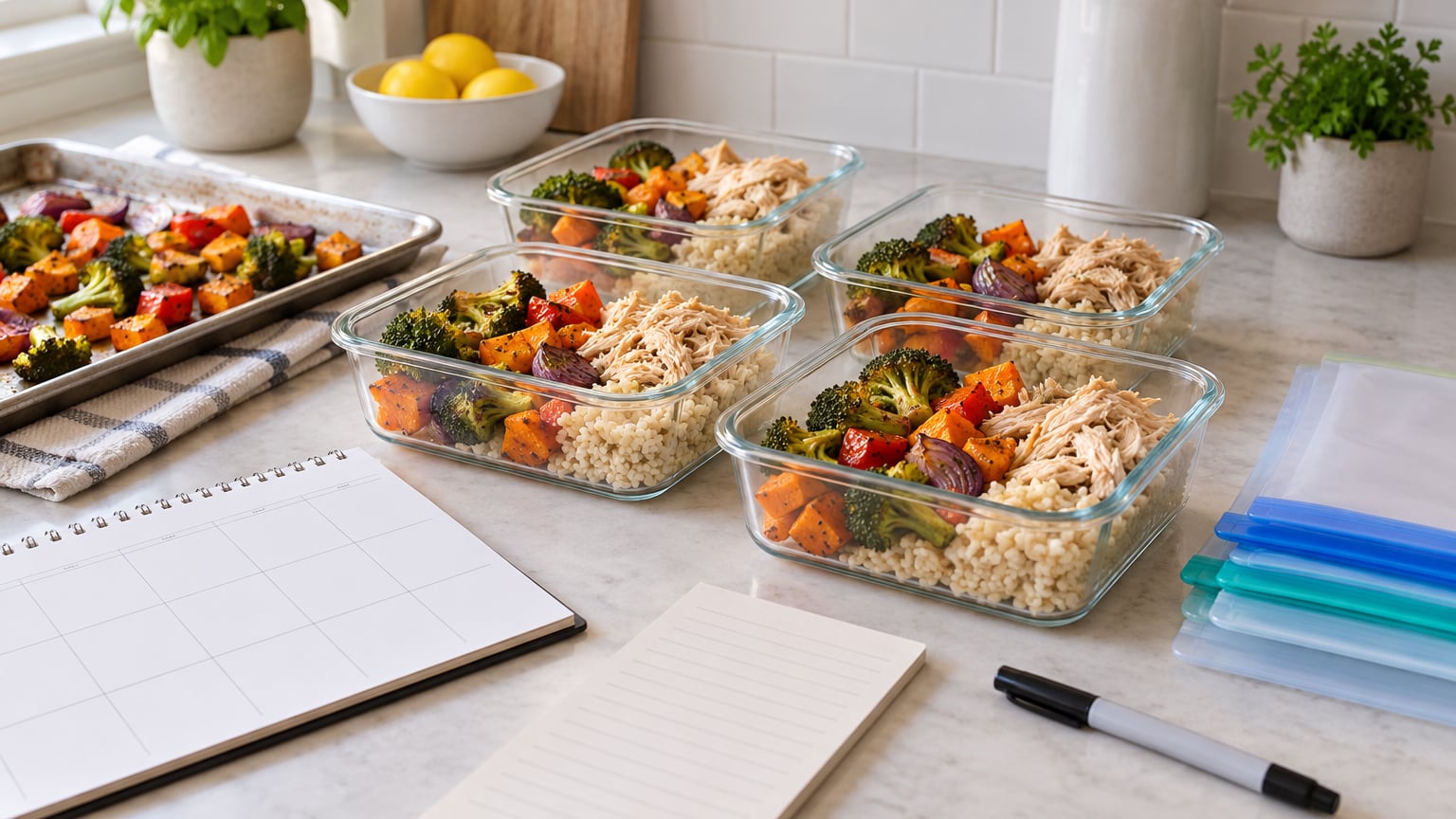
How to meal prep for a family on a budget comes down to three habits: cook one big batch of a flexible base meal, portion it out for whoever needs a different version, and freeze the surplus before it spoils. Set aside about two hours on a Sunday, and a typical week of lunches and weeknight dinners takes about 90 minutes of your time total.
The method works because it shrinks the number of decisions you make in a week. When the rice is already cooked and the chicken is already shredded, a Tuesday dinner is a reheat, not a project. That saved time is usually where family meal budgets quietly leak, because hungry people reach for whatever is fastest.
Here is the eight-step plan I use, built around unit prices, container systems and safe storage rather than expensive specialty items.
Table of Contents
- What You Need
- Planning tools
- Storage supplies
- Pantry basics that stretch the budget
- Step-by-Step: How to Meal Prep for a Family on a Budget
- Step 1: Choose Flexible Meals Everyone Can Adapt
- Step 2: Plan a Flexible Weekly Menu
- Step 3: Shop With a Reusable Grocery List
- Step 4: Cook One Big Batch, Then Use the Base Components
- Step 5: Portion for Adults, Children, and Dietary Needs
- Step 6: Label, Cool, and Store Meals Safely
- Step 7: Build a Freezer Backup for Busy Days
- Step 8: Reheat and Serve With Minimal Daily Effort
- Common Mistakes
- Planning too many distinct meals
- Buying convenience items you can make cheaper
- Storing portions incorrectly
- Cooking foods nobody in the house eats
- Treating leftovers as separate meals
- Forgetting the freezer inventory
- Frequently Asked Questions
- What is the 3-3-3 rule for meal prep?
- What is the 5 4 3 2 1 rule for groceries?
- What is a good monthly meal plan for a family on a budget?
- What is the cheapest meal to make for a family?
- How can I meal prep on a budget when I only have 30 minutes on a weeknight?
- Conclusion
What You Need
You do not need a meal planning app or a wall of matching containers. You need a place to write, a place to chill, a place to freeze, and a short list of pantry basics that turn into several meals.
Planning tools
A paper or phone calendar for the week, plus one note for the grocery list. Add a third note called the freezer list so you can see what you already have frozen before you plan another batch.
A simple spreadsheet or notebook page to track your weekly spending. Four columns is enough: planned amount, actual amount, biggest surprise, and what you will change next week. The fourth column is the one that actually keeps the budget steady.
Storage supplies
Glass or sturdy plastic containers that hold a serving plus a leftover portion, because you will want that second portion for lunch boxes. A set of uniform sizes does more work than a big mismatched pile.
Reusable freezer bags or a flat-sided container for soups, since bags stack flat and freeze faster. A masking tape roll and a marker for dating every portion before it goes in the fridge or the freezer.
One shallow sheet pan you can use for roasting vegetables, and a digital thermometer so you are not guessing when meat is done.
Pantry basics that stretch the budget
- Dried beans and lentils, which are among the cheapest protein per serving you can buy
- Rice, oats and pasta in whatever size bag fits your household best
- Canned tomatoes, broth and fruit, so a fresh vegetable is never the only ingredient in a dish
- Frozen vegetables, which cost less per pound than fresh and waste nothing
- Eggs, ground meat and bone-in chicken thighs, which are usually the cheapest proteins on the shelf
- Flour tortillas and cheese for turning leftovers into a completely different meal
- Flavor basics: garlic, onion, cumin, paprika, dried herbs and a hot sauce each person can add to their own plate
If someone in the house eats gluten free, dairy free or allergen free, keep their established dietary plan in view and substitute at the base level rather than cooking a separate meal from scratch. I have written about how to meal plan for a gluten free family, which covers building one plan several people can eat from.
Step-by-Step: How to Meal Prep for a Family on a Budget
Step 1: Choose Flexible Meals Everyone Can Adapt
The cheapest family meals are the ones where each person changes something small and the cooking stays the same. A taco bowl becomes a plain rice bowl for a child who refuses beans, a cheese quesadilla for someone avoiding the tomato salsa, and a loaded bowl for the adults.
Look for base meals with a grain, a protein and a vegetable that can be served apart:
- Taco bowls with rice, seasoned beans, shredded chicken and toppings kept separate
- Pasta bakes assembled in a pan so the noodles, sauce and cheese are layered, not blended
- Sheet pan dinners with protein and vegetables roasting together on one tray
- Soups and stews where beans or meat can be blended in for some bowls and left whole for others
- Grain bowls with a cooked grain base that works cold or hot
- Breakfast bake-ins like egg muffins, overnight oats jars and pancake-free oat bake
You will know a meal is flexible enough when everyone in the house can eat it with at least one small change and nobody is cooking a separate pot.
Step 2: Plan a Flexible Weekly Menu
Pick two or three base meals for the week, not seven. Families who plan every night end up cooking every night, and then abandon the plan by Wednesday.
Then repeat the safe ones. A taco bowl on Monday becomes leftover taco bowls on Wednesday, which is a different meal only because it happens at a different desk or table.
Leave two nights deliberately open for leftovers, a short-cooking dinner or takeout. A plan with slack in it survives a hard Tuesday. A plan with seven ambitious dinners does not.
One practical trick: schedule the batch cook on the weekend day with the most energy, and put it on the calendar like an appointment. Most plans fail because the cooking session was never on the schedule.
Step 3: Shop With a Reusable Grocery List
Build the list from the meals you chose, then check the pantry before you walk out the door. Most overbuying is buying a fourth jar of something already sitting on the second shelf.
Organize the list by store section so the trip takes one pass instead of three:
- Produce, sorted by what is in season and lowest per pound
- Protein, with the amount you need for the batch and the freezer backup
- Dairy and eggs, including eggs if they are cheaper by the dozen than loose
- Dry goods, checked against the pantry list
- Frozen section
- Household and storage supplies, only if you are low
Compare unit prices, not shelf prices. The bigger package is only cheaper if your family will actually eat it before the quality drops or the freezer gives up on you. Store brands on staples like rice, beans, pasta and canned tomatoes usually cost less and taste close enough that nobody notices.
Buy ingredients that serve two or more planned meals. A bag of chicken used in taco bowls and a sheet pan dinner is efficient; a single-ingredient purchase for one meal is not. On produce, frozen is often the cheapest option per serving and nothing goes in the trash.
Step 4: Cook One Big Batch, Then Use the Base Components

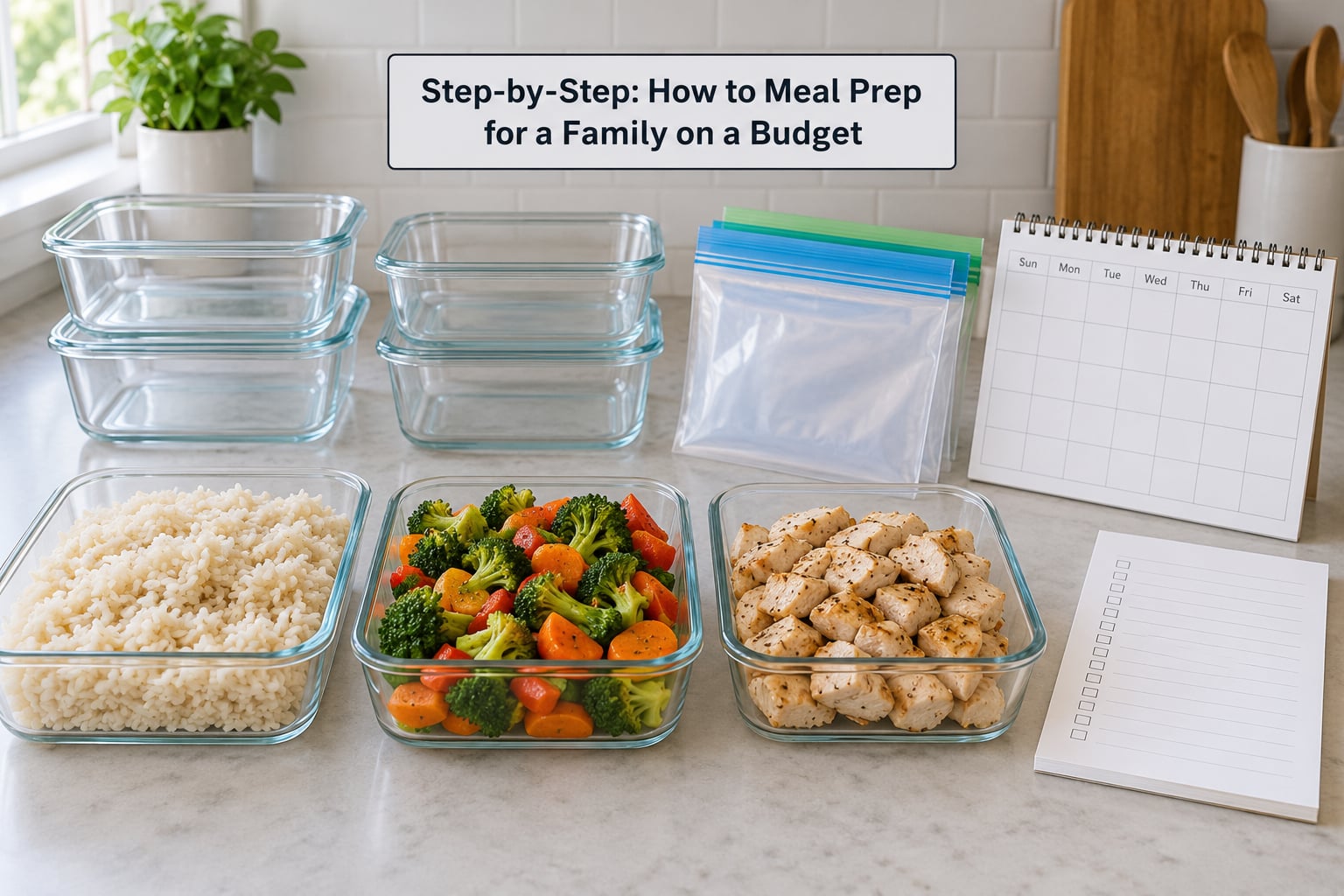
Batch cooking means you make the parts once and assemble different meals from them all week. Cook a pot of rice, a tray of roasted vegetables and a pan of shredded chicken, and you have the start of a taco bowl, a grain bowl, a soup and a wrap filling.
How to meal prep for a family on a budget gets much cheaper once you stop treating each dinner as its own recipe. One pound of chicken thighs, roasted at high heat, gives you enough for two dinners plus several lunches. Beans cooked from dry with a can of tomatoes give you enough for a bowl night, a soup night and a side dish at both.
Cook components in parallel rather than in sequence. Rice in the pot, vegetables on the sheet pan, chicken in the pan, and you are looking at roughly 40 minutes of active work instead of two hours.
Season in layers and keep wet ingredients out of the rice. Salt the cooking water for pasta and rice, season the meat separately, and put the sauce on at serving time. Food reheated three times in a row should not taste like it was reheated three times in a row.
Step 5: Portion for Adults, Children, and Dietary Needs
Portion as you pack, while the components are still separate on the counter. That is the whole trick to feeding a family with different needs from one batch of food.
- Give younger children a smaller portion of the same food, not a different recipe. Half a cup of rice and two spoonfuls of beans is the same dinner, scaled.
- Keep allergen-free and gluten-free portions separate and labeled from the moment they are packed. Store them on a higher shelf or in a separate bin so nothing transfers.
- For sensory needs, change texture rather than food. Mash beans for one person, leave them whole for another. Offer the same ingredients in the same container with a consistent look, because predictability matters more than novelty.
- Pack sauces, dressings, salsa and toppings in small separate cups. A meal that can be adjusted at the table gets eaten by more people than one that comes fully decided.
- Set aside one plain container with no strong seasoning, since strong smells are a common trigger at a table where other people are eating.
Write the portion sizes you used on the lid of each container. Next week you will be guessing, and guessing is how families end up with too much food and a fridge full of containers nobody opens.
Step 6: Label, Cool, and Store Meals Safely
Food safety is the part of budget meal prep where saving money is not worth it. A container that sits on the counter for two hours is a gamble, and leftovers that go bad are the most expensive kind of waste.
Follow the USDA minimum internal temperatures: poultry to 165 F, ground meat to 160 F, and whole cuts of meat or fish to 145 F. Use the thermometer in the thickest part, not near the bone or the edge of the pan.
Cool food fast. Spread it in shallow containers, or move a big pot into an ice bath, and get it into the fridge within two hours of cooking. A deep container stays warm in the middle for far too long.
Refrigerated cooked meals keep about three to four days. Freezer meals keep three to twelve months, and quality fades slowly after the first few months, so freeze what you will eat within three and eat what you will eat this month.
Label every container with the dish, the date and who it is for. A container marked Sunday that nobody ate by Thursday becomes trash, and that trash was your budget.
Step 7: Build a Freezer Backup for Busy Days
Freezer meals are the part of the system that pays for itself on the weeks when everyone is tired or the schedule falls apart. Build the backup on the same weekend you do your batch cook, using the surplus from the meals you already planned.
Double the batch on high-demand days: the birthday party week, the week school starts, the week someone is sick at home. You will not eat that extra volume in a normal week.
Choose what freezes well. Soups, stews, curries, marinated chicken, meatloaf, cooked rice, pancakes, unbaked casseroles and burritos all freeze without turning to mush. Salads, raw vegetables, cooked pasta in a heavy sauce, and anything with a creamy dressing do not.
Flatten containers or use freezer bags so they stack upright, and leave a little room at the top for the food to expand. A freezer packed in rows is easy to audit. A freezer packed in layers is an archaeology project.
Keep one visible inventory list on the door or the inside of the freezer door, and cross off an item the day you cook from it. Parents who freeze meals report the same thing again and again: the problem is never running out of freezer food, it is forgetting what is in there.
If freezer cooking is something you want to scale up, how to freezer cook for a special needs family goes deeper on making portions that stay recognizable after thawing.
Step 8: Reheat and Serve With Minimal Daily Effort
The system only pays off if the weekday version is boring. That means a reheating routine that takes five minutes and one small decision instead of ten decisions.
- Move the container from the freezer to the refrigerator the night before, or use the microwave defrost setting in the morning.
- Heat to steaming with a stir halfway through, covering loosely so the edges do not dry out.
- Add the sauce or topping at the table, which keeps the food from getting soggy and keeps each person in control of their own portion.
- Set out a flexible side, such as fruit, a salad or a piece of bread, so a bowl night is not just a bowl.
Let the kids handle one step that is safe for their age, such as filling their own container with the toppings they chose or stirring the cold components together. A child who assembled part of the meal eats more of it, and the caregiver stops being the only decision maker in the house.
If you are buying produce at all while doing this, how to shop organic on a tight budget has the habits that cut waste without tripling the bill.
Common Mistakes
Most budget meal prep fails for reasons that have nothing to do with cooking skill. These are the ones I see repeat, with the fix that worked.
Planning too many distinct meals
Seven different dinners means seven different shopping lists and seven chances for something to go wrong. Two or three base meals that transform into five dinners will cost less and get eaten more often.
Buying convenience items you can make cheaper
Pre-cut vegetables, seasoned rotisserie meat and single-serve sauces are priced for convenience, not value. The same vegetables roasted at home cost noticeably less per serving, and the chopping happens while the oven is already on.
Storing portions incorrectly
A deep, hot container going straight into the fridge cools too slowly in the middle, and an unlabelled container sits until it is waste. Cool shallow, label everything with the dish and the date, and freeze what you will not eat within three days.
Cooking foods nobody in the house eats
A meal the family rejects is the most expensive dinner you will ever make. Ask for one safe meal each person will eat, build the week around it, and let the other components be the flexible part.
Treating leftovers as separate meals
Leftover rice becomes a fried rice night, leftover roast chicken becomes a wrap, leftover vegetables become a soup. If a leftover does not have a next destination when you close the container, freeze it right away.
Forgetting the freezer inventory
Freezer food gets buried, and then it gets wasted. Keep the list on the door, cook from the oldest item first, and add two new items only when two old ones are gone.
Frequently Asked Questions
What is the 3-3-3 rule for meal prep?
The 3-3-3 rule is a simple weekly planning habit: plan three dinners, use three leftovers, and keep three flexible add-ins such as salad, bread or a quick sauce on hand. It exists so a family cooks three times a week instead of seven, and still eats a full week of meals. Leftovers get a scheduled home, so they do not turn into trash.
What is the 5 4 3 2 1 rule for groceries?
The 5-4-3-2-1 grocery rule is a planning template rather than a shopping list. Plan five main family meals, four quick or leftover nights, three breakfasts that can be prepped ahead, two snacks and one flexible meal. Using it stops a family from buying seven full dinners when five will get eaten, which is where most of the food waste and most of the overspending comes from.
What is a good monthly meal plan for a family on a budget?
A good monthly plan repeats a structure rather than inventing 120 different dinners. Pick three or four base meals, schedule them twice each week, add two or three freezer batches, and leave open nights for leftovers. Shop for the month in two or three trips, using pantry staples and frozen vegetables between them, and track spending at the end of each week so you adjust before the month is gone.
What is the cheapest meal to make for a family?
The cheapest meals are built on cheap per serving ingredients rather than complicated recipes: dried beans, rice, pasta, eggs, canned tomatoes and frozen vegetables. A pot of bean and rice soup or a sheet pan of chicken thighs with potatoes and carrots stretches one shopping trip across several meals. Cooking from scratch wins on cost, but only if the food gets eaten, so keep the flavors simple and let each person season their own plate.
How can I meal prep on a budget when I only have 30 minutes on a weeknight?
Move the cooking to the weekend and keep weeknight work to reheating and assembly. On Sunday, cook one grain, one protein and one tray of vegetables, then portion them into containers with sauces packed separately. A weeknight then takes five minutes in the microwave and one table decision. If Sunday is impossible, cook components in a slow cooker or pressure cooker while you are elsewhere in the house.
Conclusion
How to meal prep for a family on a budget is less about cooking a lot and more about cooking once. Two or three flexible base meals, one batch cook, careful portioning and a freezer you actually keep track of will carry most families through a normal week without the late-night scramble.
Start smaller than feels useful. Check the pantry tonight, pick two meals that everyone can eat with a small adjustment, and cook one batch on the weekend. Portion it for the adults, the kids and the dietary needs in your house, label the dates, and write down what the week actually cost. That one week of data usually tells you more about your food budget than any list.