
Learning how to get a picky eater to try vegetables works best when you lower the pressure, not raise it. You decide what is served, when, and where. Your child decides whether and how much to eat from it. That split between adult and child jobs is the most reliable approach pediatric feeding guidance uses.
Progress looks slower than most parents expect. Looking at the vegetable, moving it to the edge of the plate, smelling it, licking a fork, and taking one bite all count as steps. Children usually need repeated neutral encounters with a new food, often ten or more, before it becomes something they eat without a reminder.
This guide is written for parents and caregivers of young children, including autistic and sensory-sensitive eaters. No hiding, no bargaining, no clean-plate battles.
Table of Contents
- What You Need
- Step-by-Step: How to Get a Picky Eater to Try Vegetables
- Common Mistakes
- Frequently Asked Questions
- How long does it take a picky eater to try vegetables?
- What if my child refuses every vegetable but will eat fruit?
- How do I introduce vegetables to a sensory-sensitive child?
- Should I hide vegetables in food to get my child to eat them?
- What if my child is allergic to a vegetable or has a feeding problem?
- How can I handle vegetable refusal without arguing at meals?
- Start With One Small Change
What You Need
Nothing here requires special equipment. What it requires is a routine steady enough that your child can predict dinner before it starts.
- Familiar accepted foods. Two or three things your child reliably eats, such as bread, pasta, rice, yogurt, cheese, or eggs.
- One or two child-safe vegetables. Start with a single vegetable rather than a rainbow on the plate. Check any allergies or medical restrictions first.
- A comfortable place to eat. A table and chair at roughly the same time each day, with the meal kept short and predictable.
- Optional preferred dips. Hummus, ranch, yogurt dip, or a sauce the child already likes, kept in a separate container.
- Plain cooking tools. A steamer basket, a sheet pan for roasting, and a blender for smooth versions are enough.
- A side plate. One small plate or a folded napkin catches the portion that gets declined so you are not cooking the same food twice.
Step-by-Step: How to Get a Picky Eater to Try Vegetables
The steps below build on each other in order. Rushing ahead tends to undo the calm you built in the earlier ones.
1. Learn Which Vegetables and Sensories Are Acceptable
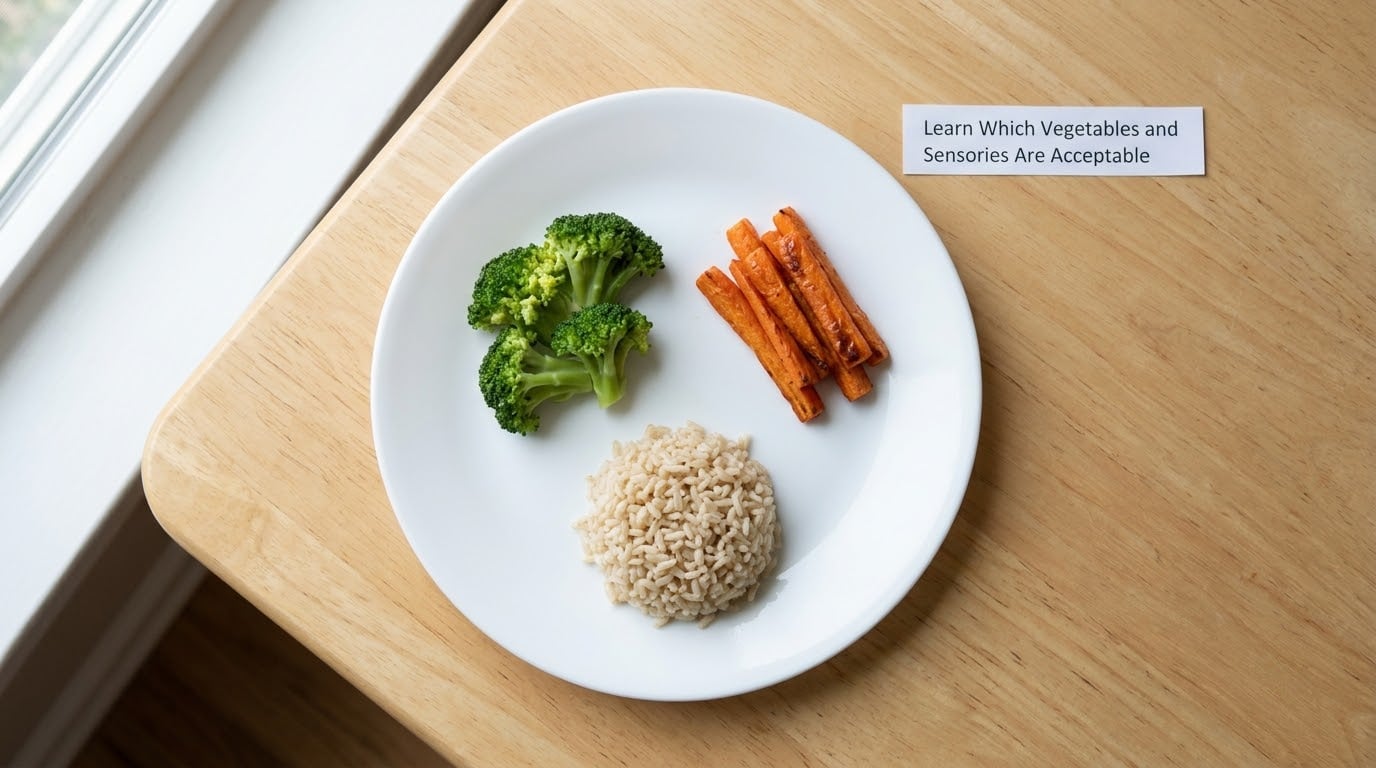
Start with what already works, not with the vegetable you want them to eat. List the foods your child eats without complaint, then look for the pattern underneath. Is it the color? The crunch? Warm food, cool food, food that is dry rather than saucy?
Vegetables are where the sensory differences show up most, because they carry strong smells and unfamiliar textures. A child who accepts crunchy raw cucumber may reject soft cooked zucchini. That is data, not stubbornness. Note which attributes are currently tolerable and start there.
Keep the list current. A food rejected last month may be tolerated now, and a food eaten last month may suddenly be refused. Update the list without commenting on the change out loud.
2. Keep Offering Without Pressure
Put a small, safe portion of the vegetable on the family table at regular meals, and say plainly that your child does not have to eat it. This is the step families skip when they get tired, and it is the one that does the most work.
Define success before dinner starts. On any given night, looking at it counts. Smelling it counts. Moving it onto the side plate counts. If your child eats nothing, the offer still happened.
Keep the portion small. A heaped pile reads as a demand. A teaspoon or a single small piece reads as an option.
3. Pair Vegetables With Familiar Foods
Serve the vegetable beside an accepted food rather than stirring everything into one dish. A mixed casserole with visible new pieces often triggers the exact worry you are trying to avoid.
A familiar dip in its own cup gives the child something to control. They can decide how much contact happens, and you keep the food on the menu. Ranch, hummus, and yogurt-based dips are common starting points.
Mixing is not always wrong. When a child already accepts a smooth sauce, finely diced vegetables folded into that sauce can add variety without a new category of food. Treat it as one strategy among several, not the default.
4. Use Repeated, Low-Pressure Tasting
When your child is calm and already eating something they enjoy, offer one tiny sample. A lick of the fork, a single bite-sized piece, a spoonful of puree from a shared dish. Then move on and talk about something else.
Keep it brief and neutral. Long negotiations at the table give the vegetable more attention than it deserves, and they teach your child that refusing earns discussion.
Notice what you praise. Curiosity gets acknowledgment, not celebration. A comment like, you touched it, is plenty. Too much praise for eating one bite tends to make the food feel like a test with consequences.
5. Change One Variable at a Time
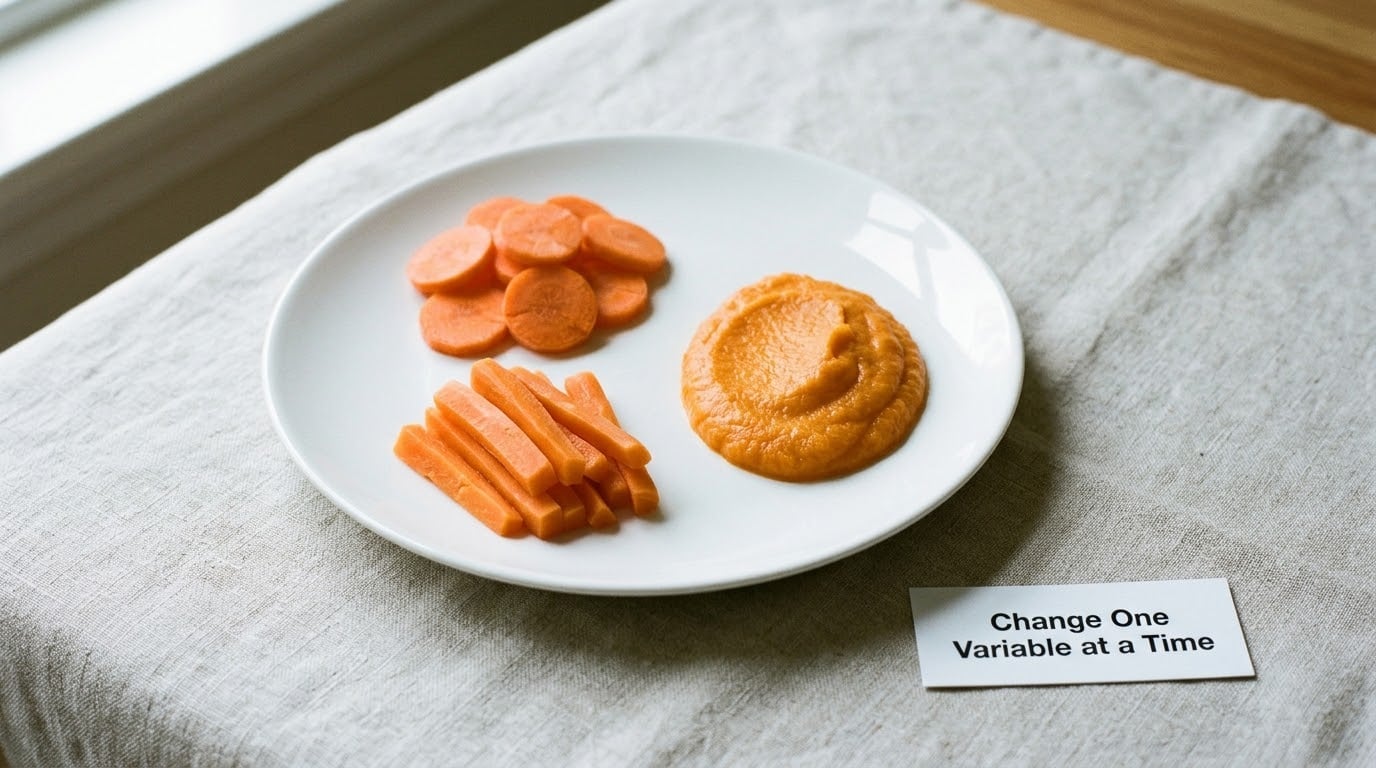
Most progress comes from changing a single attribute at a time rather than introducing a different vegetable every dinner. Try raw versus cooked, chopped versus pureed, warm versus cool, smooth versus crunchy, or soft versus firm.
Roasting is popular with parents because it caramelizes and brings out sweetness, which changes both flavor and aroma. A roasted carrot and a steamed carrot are two different foods to a sensitive eater.
Give your child whatever control is safe. Let them choose the fork, move the portion, or decide which of three preparations goes on their plate. A small amount of real control lowers the stakes considerably.
6. Make Vegetable Meals Predictable
Put the accepted vegetable inside a familiar meal at a time that does not change. Pasta night stays pasta night. Adding the vegetable to the usual structure means your child knows what is coming, which lowers the effort of deciding whether to be brave.
Include dessert alongside the meal rather than withholding it. Keeping dessert attached to dinner preserves its meaning as a routine part of eating instead of a payment for vegetables.
Avoid bargaining for a separate food. Promising a specific snack if your child takes a bite sets up the next meal as a transaction, and transactions are hard to keep neutral.
7. Track Interest Instead of Pressure
A simple weekly record helps you see the slow progress that meals hide. Note only four things: looked, touched, tasted, ate. A column per food on a sheet of paper stuck to the fridge is enough.
Ten to fifteen exposures is a common benchmark for a new food, though individual timelines vary widely and there is no deadline your child is failing to meet. Marking down exposures also helps you decide when to keep going quietly and when to call someone for advice.
If the pattern worries you, or eating is causing distress, speak with your pediatrician or a registered dietitian about your specific child. They can look at growth, nutrient intake, and development in a way no general article can.
Common Mistakes
Forcing or insisting on a clean plate. Pressure raises the stakes and tends to make refusal worse. Fix: serve it, say nothing further, take the leftovers away when the meal ends.
Hiding vegetables in food the child has not agreed to. Deceptive recipes can work short term, but they cost trust at the table once discovered. Fix: offer the same vegetable visibly and let the child build the relationship first.
Requiring the whole serving to be finished. That turns a vegetable into a test with a pass mark. Fix: let the child decide the amount, including none.
Offering endless substitutes. Asking for anything else instead of the vegetable makes it the most important food on the table. Fix: serve one or two accepted items alongside and take those requests off the menu.
Praising only the eating. Praise tied to swallowing keeps the pressure on. Fix: acknowledge curiosity, interest, and effort at the table.
Introducing several new vegetables at once. Your child cannot tell which one caused the reaction, and you lose the thread. Fix: one vegetable at a time until it is neutral or accepted.
A few practical habits help the rest. Serve the vegetable first while the child is hungriest, then follow with the rest of the meal. Use a consistent portion so the amount never feels arbitrary. And eat the vegetable yourself with no commentary, because what parents do at the table matters more than what they say about it.
If other adults feed your child, keep the message short and identical: this is served at meals, we do not negotiate, we do not pressure. Mixed messages between households create more difficulty than the vegetable does.
Frequently Asked Questions
How long does it take a picky eater to try vegetables?
Most children need ten to fifteen calm, repeated exposures before a new food moves from the edge of the plate into their accepted list, and that often takes several weeks rather than a single meal. Timelines vary widely, and pressure tends to slow the process down. Track looking, touching, tasting, and eating in a simple weekly note so you can see movement that daily meals hide.
What if my child refuses every vegetable but will eat fruit?
Fruit acceptance is genuinely useful, because it shows the child can tolerate produce, sweetness, and produce-adjacent textures. Look for what the accepted fruit has in common and find vegetables that share it, such as apple-like fruit matched with a mild vegetable that is also crisp or sweet. Start there rather than starting with the least liked vegetable on the list.
How do I introduce vegetables to a sensory-sensitive child?
Begin with the least sensory version available. Cold, raw, or lightly cooked forms often carry weaker aroma and a softer texture than steamed or overcooked ones. Offer a tiny portion beside a familiar food, allow the child to move or touch it without any requirement, and change only one variable at a time. A pediatric occupational therapist can guide this when sensory concerns are significant.
Should I hide vegetables in food to get my child to eat them?
Finely diced vegetables in an accepted sauce is a reasonable option for a child who already trusts that dish. Blending vegetables into a favourite food without telling your child works short term, but it costs trust once they notice and can affect how they approach other foods. Serving vegetables visibly, with no pressure, is the approach most feeding guidance recommends building on.
What if my child is allergic to a vegetable or has a feeding problem?
Ask your pediatrician or a registered dietitian for individualized guidance rather than working from general advice. With a known allergy, avoid that vegetable entirely and confirm what is safe with the clinician. If eating causes distress, gagging, vomiting, or a very narrow range of accepted foods, a feeding evaluation is worth scheduling sooner rather than later.
How can I handle vegetable refusal without arguing at meals?
Offer the vegetable, state once that your child does not have to eat it, and stop talking about it. Answer repeated refusals with the same calm sentence each time rather than a new one. Keep the meal short, avoid follow-up requests and bargaining, and let leftovers be removed when everyone finishes. Consistency across adults matters more than the wording you choose.
Start With One Small Change
Pick one vegetable your child tolerates right now, put a small portion beside a familiar food at dinner, and say nothing about it. That is the whole first step, and it needs no equipment, no recipe, and no convincing.
Consistent, pressure-free exposure does more than any single trick. Knowing how to get a picky eater to try vegetables is really about keeping the offer steady and letting your child decide how close to get to it.