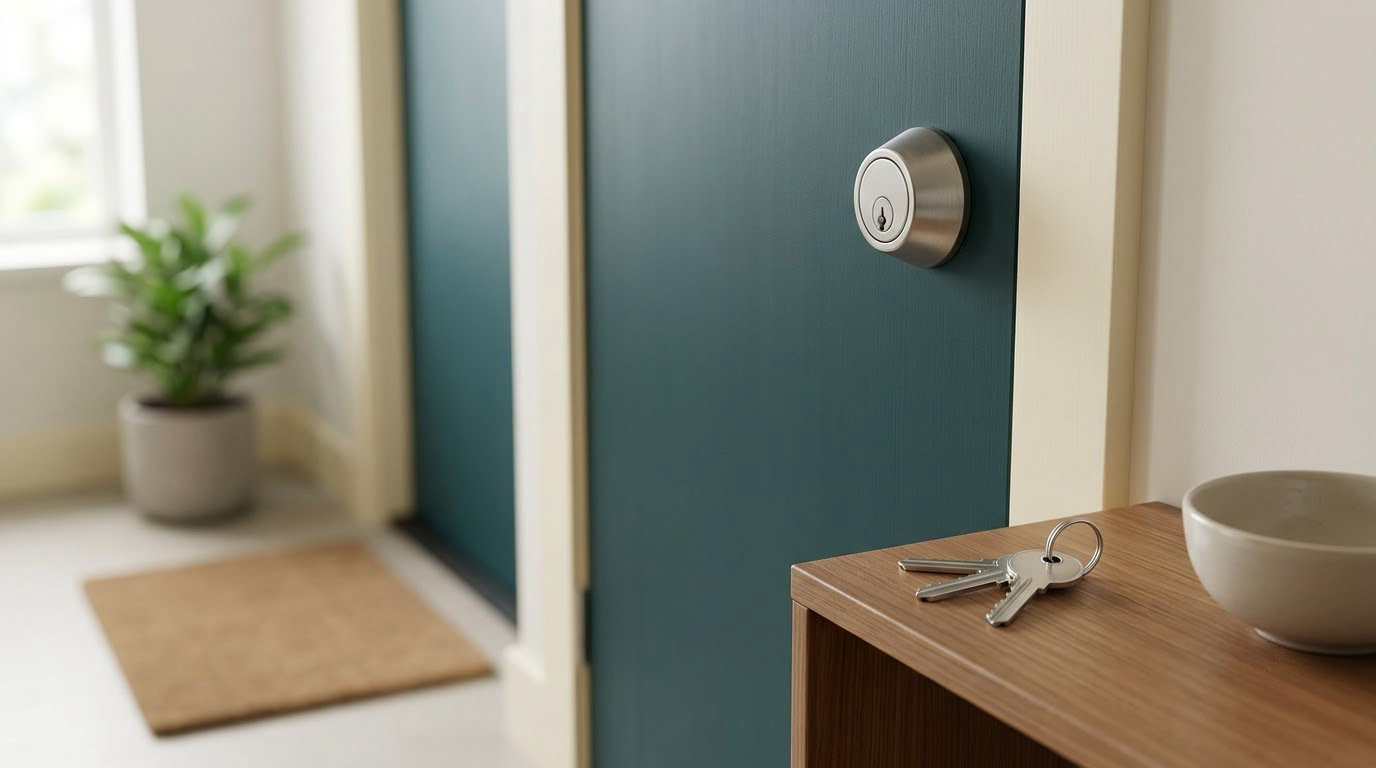
Wandering, or elopement, means a child leaving a safe or supervised place without permission and usually without understanding the danger they are in. If you are wondering how to prevent wandering in autistic children, the answer is layered, not single: know the triggers, block the exits, add water barriers, carry identification, use a tracker, and tell everyone around your child what to do. Most of this work takes a few focused weeks to set up and then a monthly review.
The numbers explain why families treat this as urgent. A Pediatrics prevalence study found that about 49% of autistic children had tried to leave a safe place after age four, and 26% were gone long enough for someone to worry. In the same research, 46% of autistic children ages 4 to 7 had a history of elopement, compared with 11% of their neurotypical peers. Drowning accounts for roughly 71% of deaths tied to wandering.
Wandering is also usually goal-directed rather than random. That is good news, because a child who heads somewhere predictable can be planned for.
Table of Contents
- What You Need Before You Start
- How to Prevent Wandering in Autistic Children, Step by Step
- Step 1: Identify When and Where Wandering Actually Happens
- Step 2: Build a Predictable Routine Around High-Risk Times
- Step 3: Teach One Simple Safe Response
- Step 4: Add Supervision Where Your Child Needs It Most
- Step 5: Reduce Escape Routes and Environmental Triggers
- Step 6: Use ID, Alerts, and Trusted Contacts Together
- Step 7: Practice the Plan and Review It Regularly
- Common Mistakes That Make Wandering Worse
- Frequently Asked Questions
- What should I do if my autistic child wanders?
- How can I prevent wandering during transitions and appointments?
- Does a GPS tracker help prevent wandering in autistic children?
- How can I teach my child what to do if they become separated?
- How do I make a wandering safety plan for school?
- When should I ask a doctor or autism specialist about wandering?
- Conclusion
What You Need Before You Start
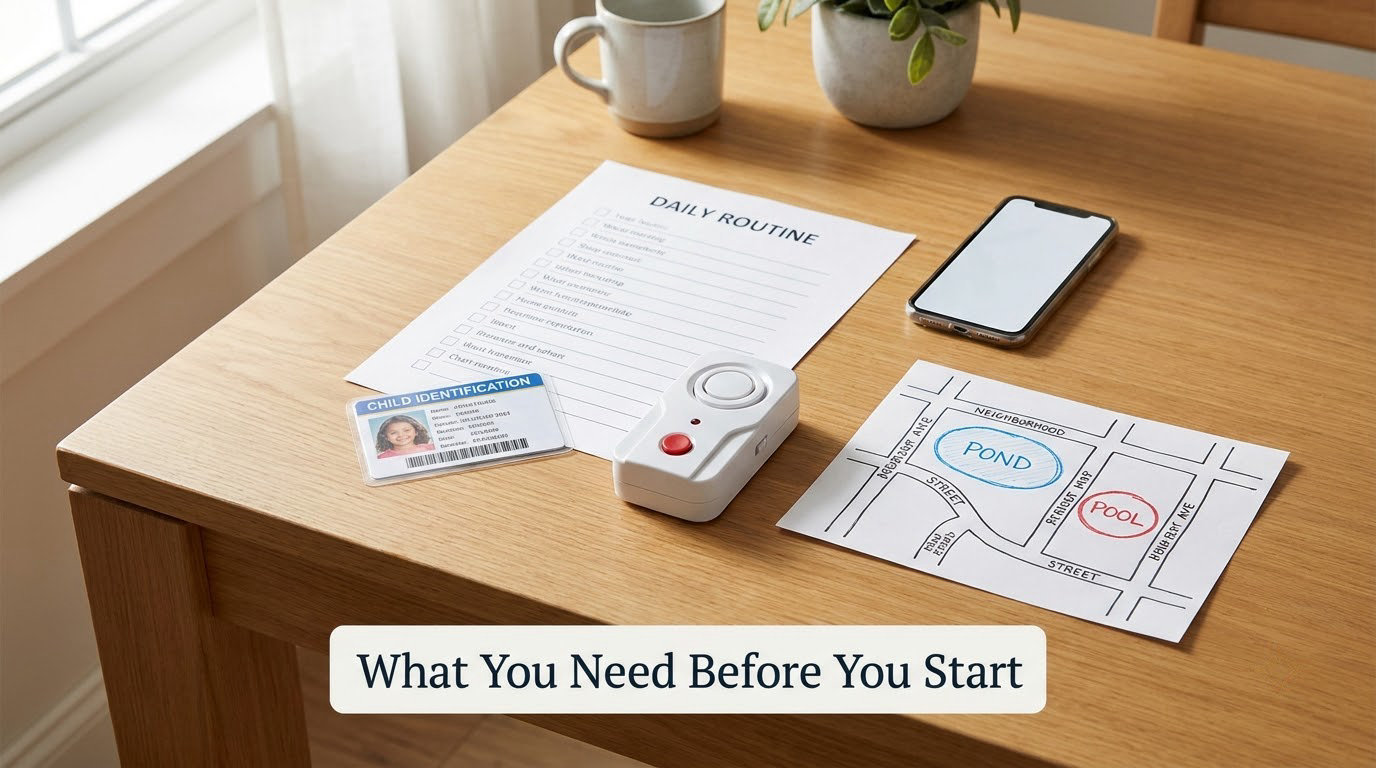
You do not need to buy everything on this list at once. Gather the information first, because most prevention work depends on what you already know about your child.
- A trigger log. A notebook or notes app. You are recording time of day, what happened just before, where the child went, and how fast. Two to three weeks of honest entries is usually enough to show a pattern.
- A written one-page plan. Printed copies for the teacher, the bus driver, the aide, grandparents, and respite workers. One page, because nobody reads a binder at 8 a.m.
- Emergency contacts and identifying details. Name, date of birth, a recent photo, a diagnosis summary, medications, and two phone numbers that ring at night.
- Identification for your child. A medical ID bracelet or necklace, a shoe tag, an iron-on label inside clothing, a temporary tattoo for beach days, or a laminated card in a backpack.
- Barriers and alerts for your home. Door alarm or entry chime, a second lock high on exterior doors, window stops, a self-latching gate, and working vehicle door locks.
- Water barriers. A fence around any pool or pond, plus covers on every water feature. A four-foot fence with a self-latching gate is the standard pediatric recommendation.
Put the written plan somewhere you can grab it fast, and keep a copy in your car. When your child is missing, nobody has time to hunt for paperwork.
How to Prevent Wandering in Autistic Children, Step by Step
Step 1: Identify When and Where Wandering Actually Happens
Most parents can name a trigger but not a pattern. Write down the specific conditions instead: the time of day, the location, what your child was doing ten minutes earlier, and where they ended up.
Clinicians call this ABC data, and a board-certified behavior analyst can help you read it. Common triggers cluster into four groups: running or exploring, escaping anxiety or a demand, fixating on a special interest, and escaping sensory overload. A child who bolts from noise at 4 p.m. every weekday is a different case from one who slips out at 7 a.m. on a weekend.
Also note the pace and the route. A child who walks to the same corner every time gives you a much better plan than one who bolts in any direction.
Step 2: Build a Predictable Routine Around High-Risk Times
Most elopement clusters around transitions: waking up, before school, after a meltdown, at bedtime, and during changes in caregiver. Predictability lowers the odds that your child bolts mid-shift.
Put the day’s sequence on a visual schedule your child understands, and give a warning before each transition in the form they process best, whether that is a two-minute countdown, a picture card, or a verbal cue. Use a social story for the parts that are new, like a birthday party or a doctor’s visit.
Step 3: Teach One Simple Safe Response
Rules work better in small numbers. Instead of a list of prohibitions, teach one replacement behavior: stay with an adult, wait at the door, or hand over a request card that means break. Practice it five minutes at a time, on a good day, until it is familiar.
Reinforce the replacement every single time it happens, even when you are exhausted. This is the step that eventually reduces the bolting, and it only works if it is not mixed up with consequences for the wandering itself.
Step 4: Add Supervision Where Your Child Needs It Most
Supervision gaps cause most incidents. Adults at parties, gatherings, and school dismissal all assume someone else is watching, and then nobody is.
Pick a named adult for your child, not a general crowd. For family gatherings, use a verbal handoff every hour, so each adult says out loud who has eyes on the child right now. Watch transitions hardest: coming off the bus, changing classes, playground time, and fire drills.
Transport is the riskiest window of all. A no-show at the bus stop or a refusal to board is where a parent panics. Ask the driver or aide to call you the moment boarding fails, and agree in advance what happens next.
Step 5: Reduce Escape Routes and Environmental Triggers
Work from the outside in. Start with the exit alarm or chime so you hear a door before you see it. Add a second lock, such as a slide bolt or flip latch, placed high enough that your child cannot reach it. Note that interior escape hardware and covered egress routes are regulated by local fire code, so check with your fire department before you add hardware that blocks a quick exit.
Then windows: stops on the lowest-floor and street-facing windows, plus secure screens. Cover or fence every pool, pond, and open water. Check vehicle door locks, and never leave keys in a parked car. Put a self-latching gate at the top of any stairs or deck.
Trim the environment too. Fewer open doors, fewer visitors at the trigger time of day, and a quieter room available for decompression. Trigger reduction is prevention, not a backup to a lock.
Step 6: Use ID, Alerts, and Trusted Contacts Together
No single layer works alone. Wearable trackers such as AngelSense, Jiobit, or a Bluetooth tag placed in a backpack each solve a different problem, and the right pick depends on whether your child will tolerate wearing it. Introduce it at home in short stretches, treat it as a comfortable item, and never use it as a threat or a punishment.
Programs sit alongside the hardware. Project Lifesaver and similar county locator programs use trained teams and radio-frequency equipment, and some are funded through Kevin and Avonte’s Law grants or Medicaid waivers, so ask your county or state about eligibility. AWAARE, the National Autism Association’s safety initiative, offers wandering-response training that includes a session on what police should look for.
Then tell people now, not later. Neighbors, the school office, after-school staff, the bus driver, and your local police non-emergency line should all know your child’s name, what wandering looks like for them, and that you want to be called immediately rather than having the child handed back. Parents on autism parenting forums repeatedly report that the written plan given to school staff, the driver, and grandparents is what changed outcomes.
Step 7: Practice the Plan and Review It Regularly
A plan nobody rehearses fails at the worst moment. Walk the route from the classroom to the bus stop. Test the alarms. Role-play a search with your co-parent so nobody is deciding what to do for the first time while panicked.
Review the plan on a schedule, and sooner after any incident or near miss. Talk about what happened without shame. Note whether the tracker is still worn, whether a new transition appeared, whether puberty or a move changed the risk picture, and whether your child’s communication grew.
Roughly a quarter of autistic children still elope at age eight, so do not treat kindergarten as the finish line. This plan needs updating as your child grows.
Common Mistakes That Make Wandering Worse
Punishing the child after the fact. A consequence does not teach the skill you are missing, and it can make the next attempt quieter and harder to notice. Fix: respond to the bolting with a calm search and a low-key rehearsal of the replacement response once things are calm.
Building a rule list nobody can remember. Ten rules collapse into none. Fix: keep one, and repeat it for weeks.
Waiting for an incident before you act. The best time to install a fence is before warm weather. Fix: pick two items this week and start with water if you have any.
Ignoring sensory and communication triggers. If elopement follows loud rooms or demands your child cannot refuse, you are treating the exit instead of the cause. Fix: track the antecedent, then offer a break card, a quiet room, or a supported request.
Putting all responsibility on the child. A five-year-old cannot reliably decide to stay. Fix: shift the weight to adults and the environment, and ask a behavior analyst for a functional behavior assessment that feeds into the IEP behavior plan.
Relying on one layer. A tracker without ID, or a lock without an alarm, gives you a single point of failure. Fix: pair every layer with the one before and after it.
Frequently Asked Questions
What should I do if my autistic child wanders?
Call emergency services right away if you cannot find your child within a few minutes, then search the nearest body of water first, since drowning is involved in most wandering deaths. Describe what your child looks like, what they are wearing, their diagnosis, and any known route or trigger. Use stop, seek, and stay: stop, seek assistance from police, and stay until they arrive.
How can I prevent wandering during transitions and appointments?
Anchor the riskiest parts of the day with a visual schedule and a clear warning before each transition. Build in a quiet decompression space, and offer a break card or supported request your child can hand to an adult instead of bolting. Wait rooms, parking lots, and clinic hallways deserve the same plan as the school hallway.
Does a GPS tracker help prevent wandering in autistic children?
A tracker shortens the search rather than stopping the wandering, and it only works if your child wears or carries it. Introduce it at home in short, calm stretches so it becomes a neutral item rather than a threat. Pair it with identification, a written plan, and trained responders, because devices fail and signals get blocked.
How can I teach my child what to do if they become separated?
Teach one behavior, not a list. Many families practice stopping, standing still, and looking for the nearest adult in uniform or an adult holding a child. Rehearse it in short sessions at home and rehearse it again as a real game outside. A request card that means help or break gives pre-verbal children a way to signal.
How do I make a wandering safety plan for school?
Ask for elopement risk written into the IEP or the behavior plan, and name the adult responsible at recess, dismissal, fire drills, and transitions. Request an added functional behavior assessment if none exists. Give the classroom teacher, the aide, the bus driver, and the office a copy of your one-page plan with contacts and photos.
When should I ask a doctor or autism specialist about wandering?
Ask early, even before the first incident, especially if your child runs toward water or traffic, has difficulty understanding danger, or is non-speaking and cannot give their name. A pediatrician can review risks, medications, and referrals, while a behavior analyst can build a functional behavior assessment and replacement-behavior plan.
Conclusion
Start with the four things that matter this week: log when wandering happens so the pattern becomes visible, put up water barriers and door alarms, get identification on your child, and tell your neighbors, school, and police non-emergency line before anyone needs it. Then practice one safe response until it is automatic and review the whole plan monthly.
You are learning how to prevent wandering in autistic children by building a plan around your child’s actual triggers rather than a worst-case list. If elopement is happening now, or your child runs toward water or traffic, ask your pediatrician for a referral to a qualified autism professional or a board-certified behavior analyst. Individualized guidance beats any checklist, including this one.