
To start a gluten free casein free diet, talk to your child’s pediatrician or a registered dietitian first, record a baseline food and symptom journal for two to four weeks, then remove gluten and dairy with a clear start date and a planned review. Plan on a few rough weeks at the beginning, and treat the first month as an experiment you are measuring, not a verdict.
I know how heavy that sounds before you start. Families often arrive at this question after months of watching their child struggle with constipation, sleep, or sensory distress around food, and the internet offers confident answers in every direction. This guide walks through the practical mechanics of a transition you can actually keep up: what to gather, what to buy, how to read a label, how to handle cross-contact, and when to ask a professional for help.
One thing to hold onto. A gluten-free diet is essential treatment for celiac disease. For autism, ADHD, and other neurodevelopmental or gastrointestinal concerns, the evidence does not support presenting this diet as a proven treatment, and anyone who promises a cure is selling something. You are allowed to try it as a structured dietary change with your clinician watching alongside you.
Table of Contents
- What You Need Before You Start
- Step-by-Step: How to Start a Gluten Free Casein Free Diet
- Common Mistakes
- Frequently Asked Questions
- How long should my child be on a gluten free casein free diet?
- Can my child still eat grains and dairy on this diet?
- How do I prevent gluten and dairy cross-contact at home?
- What should I do if my child becomes sick after starting the diet?
- How can I make the diet affordable and realistic for the whole family?
- Your First Two Weeks
What You Need Before You Start
Starting this without preparation is the most common reason families quit in week two. Here is what to gather first.
A clinician appointment. Book time with your child’s pediatrician, and ask whether a registered dietitian who works with children is available. The clinician can confirm whether celiac disease or a true milk allergy needs specific testing first, and can flag symptoms that need investigating before any diet change.
A baseline symptom picture. Before removing anything, write down what is happening now: typical bowel habits, sleep pattern, skin condition, appetite, and any behavior you would describe as a concern. Without a “before,” you cannot tell whether anything changed.
A two- to four-week journal. A notebook or a simple note on your phone works. Write down everything eaten, approximate portions, reactions, bowel patterns, sleep, and notable behaviors.
A current medication and supplement list. Some tablets, capsules, and even gummy vitamins contain gluten or milk-derived fillers, and liquid formulations sometimes carry lactose. Do not stop anything prescribed without medical advice. Take the list to your clinician so they can check what your child is already getting and what the diet may change.
Label resources and a grocery list. Download the ingredient apps or site tools you trust, and write your first week’s shopping list before the first grocery trip. Impulse buying is what ends elimination diets.
Support from someone in the household. If you cook alone for a picky eater, ask for help with the first two weeks. Consistency is easier with two people than one.
If your child has a diagnosed condition such as celiac disease or a milk allergy, that changes the conversation from a trial to a medical necessity, and your clinician should direct the plan. If you are exploring a diet for behavioral or gut symptoms without a diagnosis, keep the clinician looped in from the start.
Step-by-Step: How to Start a Gluten Free Casein Free Diet
Set a Clear Reason and Start Date
Start by writing down one sentence about why you are doing this. “Support my son’s celiac diagnosis” and “test whether dairy is making my daughter’s mornings worse” are very different projects with different timelines.
Then pick a start date you can actually hold, ideally one where the next two weeks are calm. Not the week of a birthday party, a holiday, or a schedule change at school. You will know it worked if you can point to the journal entry from the day before you started and say clearly what you were hoping to see change.
Write down your baseline before that date: typical meals, bowel habits, sleep, skin, appetite, and any concerns that warrant medical assessment on their own timeline. Some symptoms, like blood in the stool, ongoing vomiting, unexplained weight loss, or a major sleep disruption, deserve a doctor’s appointment rather than a diet experiment.
Build a Two-Week Food Journal
This journal does two jobs. It gives you a baseline to compare against later, and it turns up the hidden gluten and casein you would otherwise never find.
Record the time, the food, and a rough portion. Then add the reaction, the bowel pattern that day and the next, the night’s sleep, and anything notable in behavior. Include things that seem obvious, like the sauce on the pasta or the bread in the meatballs, because “hidden sources” almost always turn out to be a savory item nobody thinks of as a grain.
Be careful with conclusions. A better week might be the diet, or it might be a growth spurt, a calmer school week, or a mild illness. Keep the journal neutral and let the pattern speak. Write what happened, not what you think caused it.
Learn to Read Labels and Check Hidden Sources
Read the ingredient list, not the front of the package. Marketing language on cereal boxes is not a label claim, and terms like “wheat-free,” “no added sugar,” and “multigrain” say nothing about gluten.
Gluten sources to check for: wheat, barley, rye, malt, malt vinegar, brewer’s yeast, semolina, durum, farina, spelt, and oats unless they are specifically certified gluten-free. Watch for modified food starch and hydrolyzed vegetable protein, which are sometimes wheat-derived. Soy sauce, marinades, gravy, and some candies are common carriers.
Casein and milk protein sources to check for: milk, cheese, yogurt, cream, butter, custard, ice cream, whey protein, casein, caseinate, sodium caseinate, and lactose-free milk, which is often still a dairy product with the lactose removed. “Non-dairy” creamers usually contain casein. Margarine and some breads contain whey.
When an ingredient list is unclear, contact the manufacturer using the phone number or email printed on the package and ask specifically whether the product is produced in a facility that handles wheat or milk. Photograph the answer. Ingredient lists change, so record the date too.
Look for cross-contact language such as “made in a facility that processes wheat and milk.” For a child with celiac disease or a confirmed allergy, that line matters a great deal. For a family running a dietary trial, it is useful context but not automatically a reason to clear the pantry.
Plan Seven Days of Simple Meals and Snacks
Plan one week before you shop. Build meals from foods that were already gluten-free and casein-free, rather than from substitutes pretending to be the thing you removed. Rice, quinoa, buckwheat, millet, potatoes, eggs, meat, fish, fruit, vegetables, nuts, seeds, olive oil, and coconut aminos give you a full kitchen without shopping for specialty products.
Where you want bread, cereal, or pasta, start with items labeled gluten-free rather than improvised substitutes from the first week. Flours and mixes fail more often than people expect, especially with texture, which matters enormously to a child with sensory food aversion.
Safe swaps worth stocking:
- Milk: unsweetened plant-based milk, checking that it is fortified with calcium and vitamin D and contains no casein or whey.
- Yogurt: coconut yogurt or a plant-based yogurt with no milk-derived thickeners.
- Cheese flavor: nutritional yeast, which adds a savory note to popcorn, potatoes, and pasta sauces.
- Butter: coconut oil or a dairy-free spread for baking and toast.
- Sauces: tomato and salsa made without malt vinegar, plus homemade salad dressings so you control the ingredients.
- Snacks: fruit, rice cakes, popcorn, nuts, seed crackers, boiled eggs, and yogurt-free dips.
Keep the first week boring. Novelty is expensive in effort when your child may already refuse a fixed set of foods.
Remove High-Risk Items and Prevent Cross-Contact
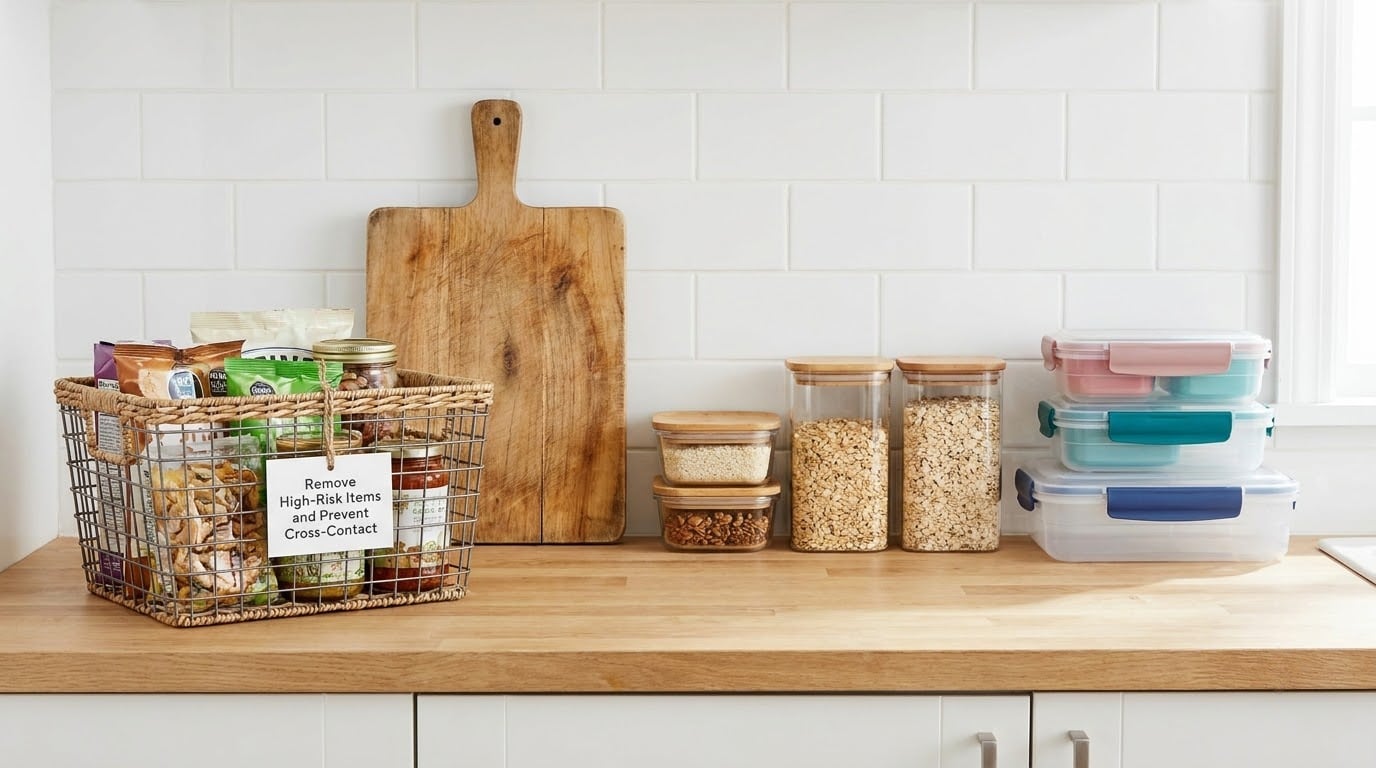
Decide what leaves the house and what stays in a labeled bin for other family members. Removing someone else’s food can turn into a household war, and mixed shelves defeat the point. A separate basket or shelf that everyone understands works better than a rule nobody keeps.
Work through the kitchen in this order: pantry, refrigerator, cooking surfaces, utensils, toaster, and the dining routine. Check the toaster and toaster oven, since shared slots and crumbs are the most common cross-contact route in a home kitchen. Give your child a dedicated toaster if the trial goes long or a diagnosis is confirmed.
For prep, use a separate cutting board, and think about whether crumbs and shared utensils are a realistic problem for your household rather than assuming the worst. Wash hands and wipe surfaces between batches when you are cooking a mixed meal. Keep shared condiments in squeeze bottles or separate spoons so nobody double-dips.
Label shared or homemade foods with the date, and label anything prepared without gluten or dairy for clarity at school and daycare. And be careful with the wording: you can make a kitchen that is careful about cross-contact, but you cannot make it medically allergen-free for everyone. Individual medical needs still matter.
Start Gradually or All at Once With Professional Guidance
There are two different situations here, and mixing them up causes problems. A prescribed gluten-free diet for diagnosed celiac disease is not a gradual experiment. It starts immediately and stays indefinitely, because continued exposure damages the intestine regardless of how a person feels.
A planned elimination trial for other concerns is a different task. If you remove gluten and dairy in the same week, and something changes, you cannot say which one mattered. That ambiguity is why parents on forums often recommend testing one protein at a time, taking three to four weeks over each, and then reintroducing one at a time to see what happens.
Which approach fits depends on your reason for starting. If symptoms are significant and a clinician wants an answer quickly, a full removal with a clear review date may be their recommendation. Ask them directly, and follow their plan rather than a plan you found online.
Track Symptoms and Review the Plan
Set a review date before you start and write it somewhere visible: two to four weeks out, whichever your clinician suggested. At the review, put the journal side by side with the baseline. Look at bowel patterns first, since they are the most objective thing you are recording, then sleep, then behavior.
Decide in advance what counts as a reason to keep going, what counts as a reason to modify, and what would make you stop and go back to your clinician. Deciding before the emotional low of week one is much easier than deciding during it.
The first one to two weeks are often the hardest. Parents report irritability, disrupted sleep, and constipation in that window, and it is easy to read a rough patch as proof the diet is failing. Contact your doctor promptly for warning signs such as persistent vomiting, blood in the stool, significant weight loss, signs of dehydration, marked lethargy, or a child who stops eating. Do not change or stop prescribed medication because of a diet change. And avoid anyone who claims this diet will cure autism, ADHD, gastrointestinal disease, or another condition. Ask your clinician about diet changes alongside ABA, occupational therapy, or any sensory work already in place rather than stacking changes without their knowledge.
Common Mistakes
Mistake: treating partial elimination as a real test. A biscuit in the school snack and a splash of whey in the cereal bowl add up. If the trial is meant to produce a clear answer, decide together as a family what counts as allowed, and note the packages you are unsure about. Fix: keep a running list of questionable items and check them with the manufacturer.
Mistake: trusting the front of the package. “Multi-grain,” “made with honey,” and “no artificial colors” are marketing lines. Fix: read the full ingredient list every time, and check the allergen statement for milk and wheat.
Mistake: overlooking hidden ingredients in savory foods. Families often clear out bread and cereal and keep the soy sauce, the bouillon, the gravy mix, and the salad dressing. Fix: audit sauces, marinades, spice blends, canned soups, and deli meats during your first label-reading pass.
Mistake: presenting the diet as a cure. It is a dietary change being tracked over time, not a treatment with a promised outcome. Fix: describe it to family, school staff, and your child as a trial with an end date and a review.
Mistake: changing too many things at once. Switching diet, adding a supplement, changing bedtime, and starting a new therapy in the same month produces a month you cannot interpret. Fix: change one major variable at a time unless your clinician directs otherwise.
Mistake: shrinking the menu into something unsustainable. Very restrictive lists invite refusal and grow more restrictive under stress. Fix: anchor the menu on familiar whole foods, keep the food group variety broad, and treat any new food as an addition rather than a replacement.
Mistake: ignoring nutritional adequacy. Removing dairy without replacing it removes the main calcium and vitamin D source in many diets, which matters most for growing children. Fix: talk with a registered dietitian about calcium, vitamin D, iron, fiber, and protein sources and about whether a supplement is appropriate. Do not start a supplement on your own if your child takes prescribed medication, since some interact.
Frequently Asked Questions
How long should my child be on a gluten free casein free diet?
It depends entirely on why you started. With a diagnosed condition such as celiac disease or a confirmed milk allergy, the diet is indefinite and is stopped only on medical advice. For a trial exploring symptoms such as constipation or sleep disruption, most parents and clinicians look at three to four weeks before drawing any conclusion, and some run longer. Decide the review date with your child’s clinician before you start, and re-evaluate at that point rather than week to week.
Can my child still eat grains and dairy on this diet?
Grains are fine as long as they are gluten-free: rice, quinoa, buckwheat, millet, corn, and certified gluten-free oats all work. Dairy is the part that goes, because casein is the main protein in cow’s milk, and it appears in milk, cheese, yogurt, butter, cream, ice cream, whey, and caseinate. Lactose-free milk is still dairy and still contains casein. Plant-based milks and dairy-free yogurts take the place, provided you check the ingredients.
How do I prevent gluten and dairy cross-contact at home?
Start with a dedicated toaster and toaster oven, use a separate cutting board, and store gluten-free and dairy-free items on their own shelf or in a labeled basket. Keep condiments in squeeze bottles or with their own spoons, and wash hands and surfaces between batches. Label anything you prepare for school so staff can identify it. For a child with celiac disease or a confirmed allergy, ask your clinician how strict your household needs to be, since individual medical requirements differ.
What should I do if my child becomes sick after starting the diet?
Contact your child’s doctor promptly if there is persistent vomiting, blood in the stool, diarrhea lasting more than a day or two, signs of dehydration, noticeable weight loss, or unusual sleepiness. Keep the food journal going so you can describe what changed and when. Do not give new supplements or stop prescribed medication in reaction to a diet change without medical advice. Mild irritability or disrupted sleep in the first two weeks is common in parent reports, but check with your clinician rather than assuming.
How can I make the diet affordable and realistic for the whole family?
Build meals from foods that were already gluten-free and casein-free, such as rice, potatoes, eggs, meat, fish, fruit, vegetables, and nuts, instead of buying specialty substitutes for everything. Use gluten-free bread and pasta as the main purchased items rather than specialty baking mixes and cookies. Cook one meal the whole family eats, with the dairy and gluten served on the side when needed, so you are not making two dinners. Ask a dietitian about cost-conscious planning if cost is a real barrier.
Your First Two Weeks
Start by confirming the reason and getting your clinician’s guidance on the plan, including the review date. Then open a journal and record two weeks of baseline eating, bowel habits, sleep, and anything that concerns you, because that record is what will tell you later whether anything actually changed.
Choose a small set of familiar foods your child already eats, learn the label shortcuts for the main sources of gluten and casein, and set up one shelf and one toaster so the household rules are simple. Then start on the date you picked, and give yourself permission to expect a rough first two weeks.
Nothing about this needs to be permanent on day one. Review what you recorded, bring it to your appointment, and decide the next step with a professional who knows your child.