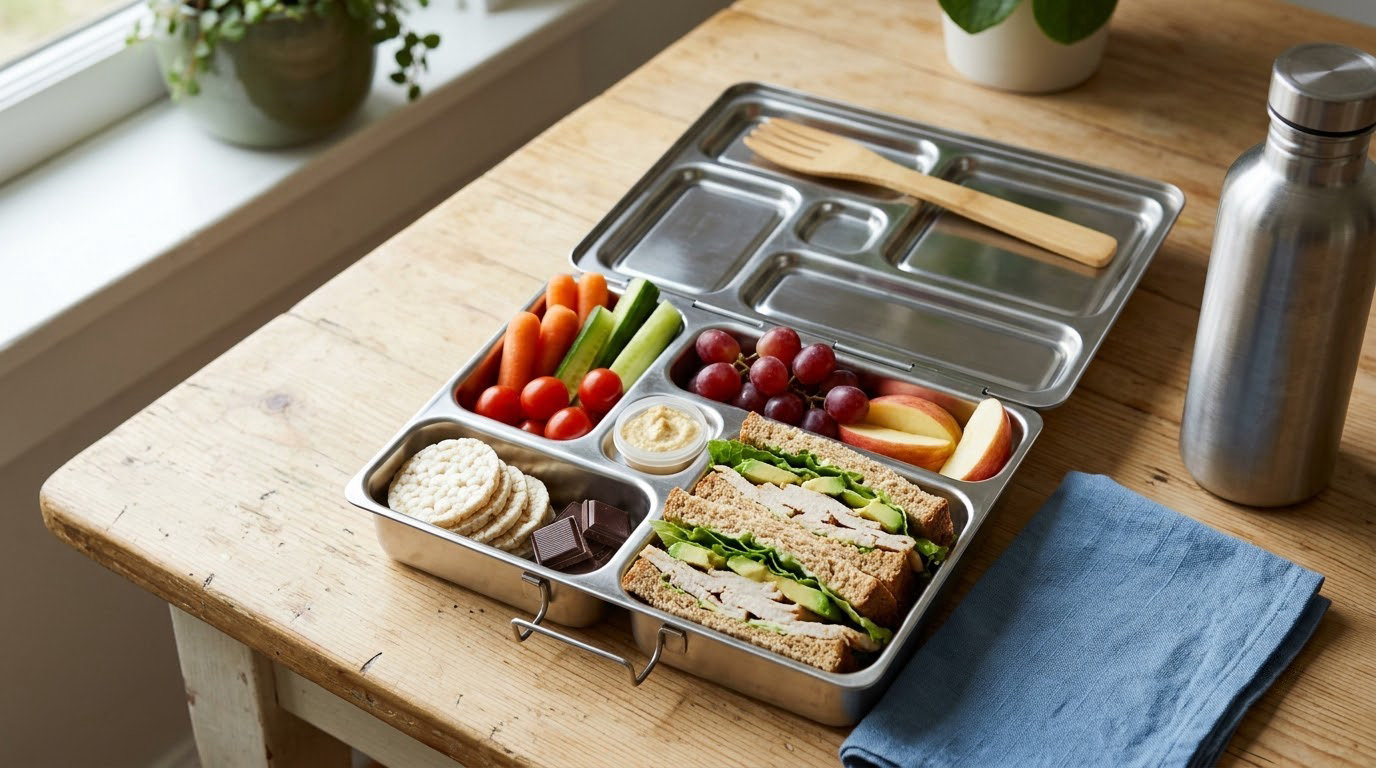
Dairy free lunchbox ideas for school are packed meals and snacks built with no milk ingredients at all, no casein, whey, lactose, cheese, yogurt, butter, or ghee, while still covering protein, produce, grains, and one fun extra so a child gets through a full school day. Most families build these from the same four-part formula: a protein centerpiece, a grain or carb base, two fruits or vegetables, and a treat.
Who this is for varies. A child with a cow’s milk allergy needs strict avoidance and a written allergy plan. A child with lactose intolerance can often handle hard cheese and butter in small amounts. Some households simply eat this way. The packing rules are different in each case, and I will flag that where it matters.
The list below covers ten lunches I actually pack, in the order I rotate them through the week. Each one includes what goes in, why it works, and the practical note that stops it from turning into a lunch the child sends home untouched.
Table of Contents
- Dairy Free Lunchbox Ideas for School at a Glance
- 1. Turkey and Hummus Pinwheel Wraps
- 2. Dairy-Free Sunbutter and Fruit Sandwiches
- 3. Chicken and Avocado Snack Wraps
- 4. Oatmeal Breakfast Bars
- 5. Dairy-Free Pasta Salad Cups
- 6. Tuna and White Bean Snack Boxes
- 7. Mini Dairy-Free Pizza Muffins
- 8. Fruit, Vegetable, and Cheese-Free Snack Boards
- 9. Dairy-Free Sushi Rolls
- 10. Yogurt-Free Parfait Cups
- Frequently Asked Questions
- How can I make dairy free lunchbox ideas for school that will not spoil?
- Are these lunch ideas safe for children with a milk allergy?
- What should I pack if the school does not refrigerate lunches?
- Can I prepare dairy free lunchbox ideas for school the night before?
- How can I make dairy-free lunches appealing to children who dislike vegetables?
- What labels should I check when buying dairy-free foods?
- Where to Start With Dairy-Free Lunches This Week
Dairy Free Lunchbox Ideas for School at a Glance
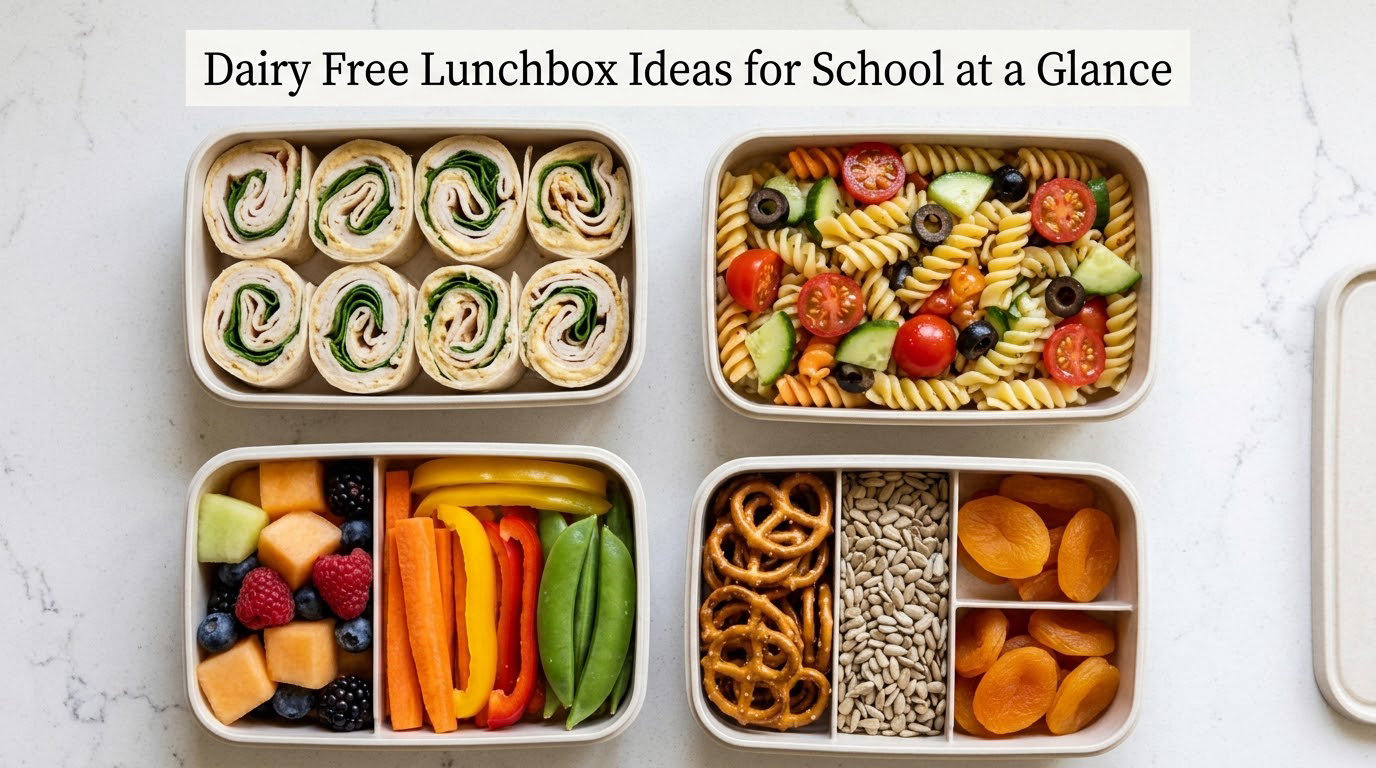
Every idea below works cold or travels in an insulated bag. The allergy column flags the ones that commonly trip a second restriction, which matters if your school also runs a nut-free or sesame-free rule.
| Lunch idea | Best for | Main ingredients | Texture | Prep effort | Allergy notes |
|---|---|---|---|---|---|
| Turkey and hummus pinwheels | Kindergarten and first days | Turkey, hummus, lettuce, cucumber, tortilla | Soft, rollable | 10 minutes | Hummus is sesame-based, so swap it if sesame is restricted |
| Sunbutter and fruit sandwiches | Nut-free classrooms | Sunflower seed butter, banana, sandwich bread | Soft, spreadable | 5 minutes | Check the bread for milk and whey |
| Chicken and avocado wraps | Protein-heavy mornings | Cooked chicken, avocado, cucumber, tortilla | Soft with a creamy center | 10 minutes | Tortillas often contain milk solids |
| Oatmeal breakfast bars | Grab-and-go days | Oats, dates, seed butter, honey | Chewy, holds together | 30 minutes, then slices | Seed butter is nut-free but not always sesame-free |
| Pasta salad cups | Lunches eaten cold | Chilled pasta, olive oil, cucumber, dairy-free pesto | Soft, no reheating | 15 minutes | Many cheeses contain casein, check pesto carefully |
| Tuna and white bean boxes | Breadless lunches | Canned tuna, white beans, lemon, crackers | Soft, spreadable mix | 10 minutes | Crackers vary widely, check for whey |
| Mini pizza muffins | Kids who miss pizza | Eggs, tomato sauce, dairy-free cheese or none | Soft, muffin-shaped | 25 minutes to bake | Egg and wheat are the usual limits |
| Snack boards | Sensory-sensitive eaters | Fruit, veggie sticks, pretzels, olives, dip | Mixed, separated | 5 minutes | Easy to strip nuts or gluten per item |
| Dairy-free sushi rolls | Finger-food lunches | Nori, cucumber, avocado, tofu or shrimp | Firm, chewy | 30 minutes | Sushi rice is often prepared with vinegar, not dairy |
| Yogurt-free parfaits | Kids who want a sweet main | Coconut yogurt, berries, granola, seed butter drizzle | Cold, layered | 5 minutes | Coconut is a tree nut for some allergy programs |
1. Turkey and Hummus Pinwheel Wraps
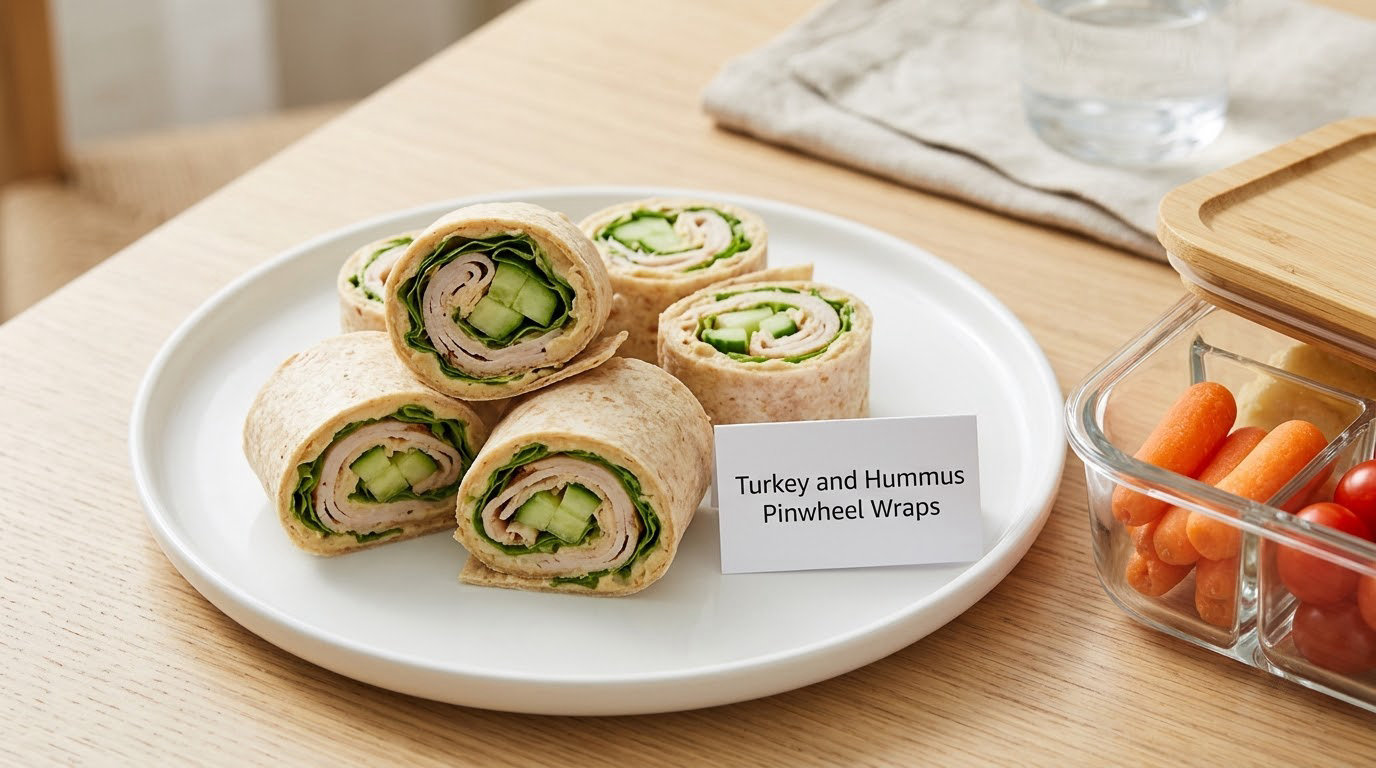
Turkey and hummus pinwheels are the single most reliable lunch in our rotation. A soft tortilla gets a thin spread of hummus, two slices of dairy-free turkey, a lettuce leaf, and a couple of cucumber strips, then it rolls tight and gets sliced into rounds. Five minutes of assembly, and most kids eat them with their hands standing up.
How to keep the pinwheels from going soggy
The sogginess problem comes from moisture, not from the wrap itself. Pat the cucumber dry before it goes in, spread the hummus only on the half closest to the center, and keep the lettuce as a barrier between the hummus and the tortilla surface. Slice with a sharp serrated knife rather than pressing down, and the rounds hold together.
Cut to a size that suits the eater. Thin rounds work for kindergarten and for one-handed eating. Older children do better with fatter segments, which stay put when the box tips over on a tray.
Two small fixes changed how this went here. I stopped packing pinwheels with tomatoes, because they release water within about an hour. And I switched to a thicker, softer tortilla, because thin flour tortillas tear when you roll them tightly and many of them contain milk solids anyway.
2. Dairy-Free Sunbutter and Fruit Sandwiches
Dairy-free sunbutter and fruit sandwiches take five minutes and solve the nut-free classroom problem in one move. Sunflower seed butter has a mild, slightly sweet flavor that works on most sandwich bread, and the fruit does the rest. Thinly slice banana and lay it on the spread butter, or use apple slices brushed with a little lemon juice so they do not brown.
Sliced strawberries work too, though they bleed juice into the bread after a couple of hours. If the lunch sits until noon, put the fruit on top rather than between the slices, or pack it in a separate cup and let your child assemble it.
Read the bread label every time. Many standard sandwich breads contain milk, whey, or nonfat dry milk, and manufacturers change recipes without notice. I keep one loaf in a labeled bin at the top of the fridge so I stop grabbing the wrong one out of habit.
Cut the sandwich into triangles, a star with a cookie cutter, or small squares. Finger food shape matters more than most parents expect, especially with children who eat better when food is not a sandwich shape.
3. Chicken and Avocado Snack Wraps
Chicken and avocado wraps are the answer when you need protein that will not dissolve by lunchtime. Shred cooked chicken breast, mash half an avocado with a squeeze of lime, and spread it on a tortilla. Add cucumber matchsticks, roll it up, and slice it in half. Cold cooked chicken straight from the fridge is fine for a dairy-free packed lunch.
Step-by-step, so the wrap actually holds
- Warm the tortilla for ten seconds so it bends without tearing.
- Spread the mashed avocado only across the middle third, leaving the far edge clean.
- Lay the chicken down in a single layer, then add the cucumber in one line rather than scattered.
- Fold the two sides in before rolling, which stops the filling from migrating out the ends.
- Roll tightly and slice on a slight diagonal so each half is easy to pick up.
On sprouts: they are a common suggestion and a common trigger. If your child avoids them, shredded carrot, thin bell pepper, or even chopped romaine works in the same spot. Keep the fillings to three. More than that and the wrap gets wet and the child eats the outside layer and puts the rest back.
Avocado browns quickly once cut. Either pack the mash in a sealed cup with lemon juice on top, or use the whole half wrapped in plastic so you can slice it at lunch. For an allergy check, most flour tortillas contain milk or milk solids, so read before you buy a new brand.
4. Oatmeal Breakfast Bars
Oatmeal breakfast bars are the make-ahead answer. A sticky oat bar made with dates, sunflower seed butter, and a little honey or maple syrup cuts into squares, holds together in a lunchbox, and survives a dropped bag better than most sandwiches. The whole batch takes about half an hour, and the slices last the week.
For storage, let the bars cool completely on a lined tray before you cut them. Store them in an airtight container at room temperature for up to three days, or freeze them and pull one slice out each morning. Freezing is what makes this a real time saver in the 2026 school year.
Portion by age. Cut thick wedges for kindergarteners so the bar is one-handed food, and thin bars for older kids who eat fast. Wrap each slice in parchment or a silicone cup so it does not stick to the bottom of the box and pull everything else in with it.
If your child prefers something soft, make it as a baked oatmeal square rather than a baked bar. Same base, less pressing, and it holds together better in a divided compartment.
5. Dairy-Free Pasta Salad Cups
Dairy-free pasta salad cups are the answer for days when there is no microwave. Cook small pasta shapes, rinse under cold water until they stop steaming, and toss with olive oil, cucumber, cherry tomato, and a little lemon. Keep the dressing on the side in a leak-proof pot so the pasta does not turn to mush by noon.
Dairy-free pesto works if you find one made without caseinate, which many are. A cheaper route is olive oil, lemon, and a spoonful of seed butter thinned with water. For children who will not eat anything green, mash the pesto into the pasta warm and let it cool; the flavor distributes instead of sitting in green blobs.
Texture matters more than flavor here. Small elbows and rotini stay good cold and hold dressing better than long shapes. Cut cucumber into short half-moons so they fit through a fork, and skip the grapes, which turn soft and slide around the cup.
Pasta salad travels well in the cold part of the day and does not need an ice pack unless the weather is hot. If it needs reheating for a hot lunch, pack the noodles and the sauce separately and have the school staff add them together.
6. Tuna and White Bean Snack Boxes
Tuna and white bean boxes are a breadless protein lunch for days when nothing else gets eaten. Drain canned tuna, mash a can of rinsed white beans into it with a squeeze of lemon, a little olive oil, and dried dill or chopped herbs. Pack it in a small cup with two spoons, and let the beans do the work that cheese would normally do.
The fill sits next to dairy-free crackers, a few olives, cucumber rounds, and a handful of roasted chickpeas. Everything is finger food, everything is cool, and nothing needs reheating. It is also the lunch that travels best in a bag, since nothing breaks.
Watch three things. Many brands of tuna and crackers contain whey or milk solids, so check both. Roasted chickpeas can be a choking concern for younger children, so skip them below about age four. And pack the mix in a cup rather than a sealed container, because tuna packed too tightly for hours turns into a dense, salty brick.
There is no rule against swapping in canned salmon or canned chicken in place of tuna. Some families run them on alternate weeks so the tuna does not become the lunch your child quietly stops eating.
7. Mini Dairy-Free Pizza Muffins
Mini pizza muffins turn pizza into a one-handed school lunch. Beat two eggs with a cup of tomato sauce and a splash of olive oil, pour it into a greased mini muffin tin, and top each cup with a small spoonful of shredded dairy-free cheese and a pepperoni or two. Bake at 350 degrees until the tops set, about 20 minutes.
The texture is the whole trick. Mini muffin cups come out soft and slightly set, which is what makes them usable in a lunchbox. A slice of cold pizza is fine, but it is a two-handed, flaky, messy proposition, and pizza usually sits next to nothing else in the box.
How to make the version with no cheese at all
Skip the cheese and add chopped olives, diced bell pepper, or a spoonful of finely grated zucchini. The egg and tomato base still sets into a muffin, so the result holds together. It also works for children who avoid a food group by smell before they ever taste it.
Serve two or three per child depending on size. Freeze the rest in a single layer on a tray, then move them to a container once solid, and thaw them in the refrigerator overnight so they are ready to pack the next morning.
Keep in mind that eggs and wheat are the limits in this one. For a nut-free classroom, buy a cheese substitute produced in a facility that also makes nuts, or skip the topping and go with the vegetable version.
8. Fruit, Vegetable, and Cheese-Free Snack Boards
Fruit, vegetable, and cheese-free snack boards are a do-it-yourself lunch, and they work better than they sound. Use a divided container and fill the compartments with two fruits, two vegetables, a crunchy item, and a dip. Kids who are pickier eat more when they assemble the box themselves, and it takes almost no time if you wash and cut on Sunday.
Good crunchy options include pretzels, dairy-free crackers, rice cakes, plain popcorn, and apple chips. Good dips include hummus, guacamole, a seed-butter thinned with water, and dairy-free ranch. Cut every piece under an inch for younger children, and skip whole grapes, raw carrot sticks, and hard apple pieces, which are common choking risks.
Keep wet and dry apart. That is the one rule for this one. A compartment box with two lids, or two small pots inside the main container, stops the cucumber from going soft and the crackers from going soft in the tray.
For children who will not touch foods touching each other, this layout is the fix rather than a workaround. Nothing shares a corner, nothing is mixed, and the child can see all of it before deciding.
9. Dairy-Free Sushi Rolls
Dairy-free sushi rolls are the answer for a child who will eat nothing that resembles a school lunch. Cook sushi rice, season it with a little rice vinegar and sugar, and let it cool to room temperature. Spread it on a sheet of nori, add cucumber sticks, avocado, and either cooked shrimp or baked tofu, then roll and slice into eight rounds.
Avocado alone or cucumber alone is a perfectly good roll. Do not force the combination; building from what the child already eats is how new foods get added over weeks rather than all at once.
Cut the rolls thinner than you would for yourself, so a round is one bite and does not fall apart when picked up. For younger children, cut it into smaller rounds, or serve the fillings loose from a spoon, which removes the rolling-and-unrolling step that many young eaters find difficult.
Keep it cold with a small ice pack, since rice is a cooked starch and holds at room temperature poorly. Pack soy sauce in a screw-top pot rather than the packets, which leak, and check the nori and the seasoned rice mix for added milk ingredients, which some brands include in their seasoning blends.
California rolls and tofu-heavy kim-bop style rolls are the two versions that get eaten without a fight around here. The cucumber and tofu combination is the least argued-over of the whole category.
10. Yogurt-Free Parfait Cups
Yogurt-free parfait cups are the one idea on this list that needs the school to cooperate, and when it does, they are usually the first lunch finished. Layer coconut yogurt, berries, and a crunchy topping in a small jar or cup, then add a thin drizzle of seed butter on top for sweetness without dairy.
To stop leaks, use a container with a real lid and set the yogurt on the bottom so nothing wet sits above anything dry. Skip granola and add it at the last second instead, or it goes soft by noon. A spoon and a small microfiber cloth inside the lid keeps the rest of the box clean.
Handle the school side early. Ask the office whether refrigerated lunches are stored on a shelf or kept with the milk cartons, and whether the refrigerator is a shared space. If it is shared, label the cup with your child’s name and allergy information in a spot that is easy to find.
On coconut: it is the standard dairy-free yogurt base and it is a tree nut under US labeling rules. If your child has a tree nut allergy or your school treats coconut as a nut, use a soy-based yogurt alternative instead and read for other allergen warnings.
Frequently Asked Questions
How can I make dairy free lunchbox ideas for school that will not spoil?
Most of these lunches are designed to travel cold and eat cold, which removes the risk entirely. For anything perishable, pack an insulated lunch bag with a frozen gel pack and a separate leak-proof pot for dips and dressings. Keep cooked poultry at or above 140 degrees F or under 40 degrees F, and toss anything perishable that sat at room temperature for more than two hours.
Are these lunch ideas safe for children with a milk allergy?
They are built with no milk ingredients, which fits a cow’s milk allergy, but only if you read every label including bread, tortillas, crackers, and condiments. Check for casein, whey, lactose, and nonfat dry milk, and look at shared facility warnings. Bring an allergy management plan to the school office and confirm which staff can help if an exposure happens.
What should I pack if the school does not refrigerate lunches?
Build from the shelf-stable half of the list: sunbutter and fruit sandwiches, pinwheels made with cooked deli meat, snack boards, breakfast bars, crackers with olives, and dry pasta or rice served with a cold dressing packed separately. Add a shelf-stable drink such as an oat or soy beverage in a small carton, and use an insulated bag with a frozen pack if the day is warm.
Can I prepare dairy free lunchbox ideas for school the night before?
Yes, with a few adjustments. Pinwheels, snack boards, oatmeal bars, and sushi rolls all hold up overnight in the refrigerator. Pack the dressing, dip, or wet fruit in a separate container so the dry food stays dry. Do not slice the avocado the night before; pack the half uncut with plastic wrap and slice it in the morning so it is still green at lunch.
How can I make dairy-free lunches appealing to children who dislike vegetables?
Change the form before you change the vegetable. Cucumber and carrot inside a pinwheel disappear into the wrap. Avocado mixed into pasta salad reads as a sauce. Shredded bell pepper folded into egg muffins is invisible to most kids. Cut vegetables thin, keep them cold, and always pair them with something the child already likes rather than making them the centerpiece of the box.
What labels should I check when buying dairy-free foods?
Read the full ingredient list every time, not the front of the package. Look for milk, casein, caseinate, whey, whey protein, lactose, lactalbumin, lactoferrin, ghee, butter, nonfat dry milk, and casein-derived sodium caseinate. Also check natural flavoring and artificial flavoring lines, which can carry milk derivatives, and note any shared facility warning before you buy.
Where to Start With Dairy-Free Lunches This Week
If you only make two things this week, make the sunbutter and fruit sandwich and the snack board. Both take under ten minutes, neither needs refrigeration if you pack the dips separately, and neither depends on a specialty product. Add the pinwheel once you know your school’s sesame rule.
Then build from there, one main at a time, rather than trying to change everything in a single week.