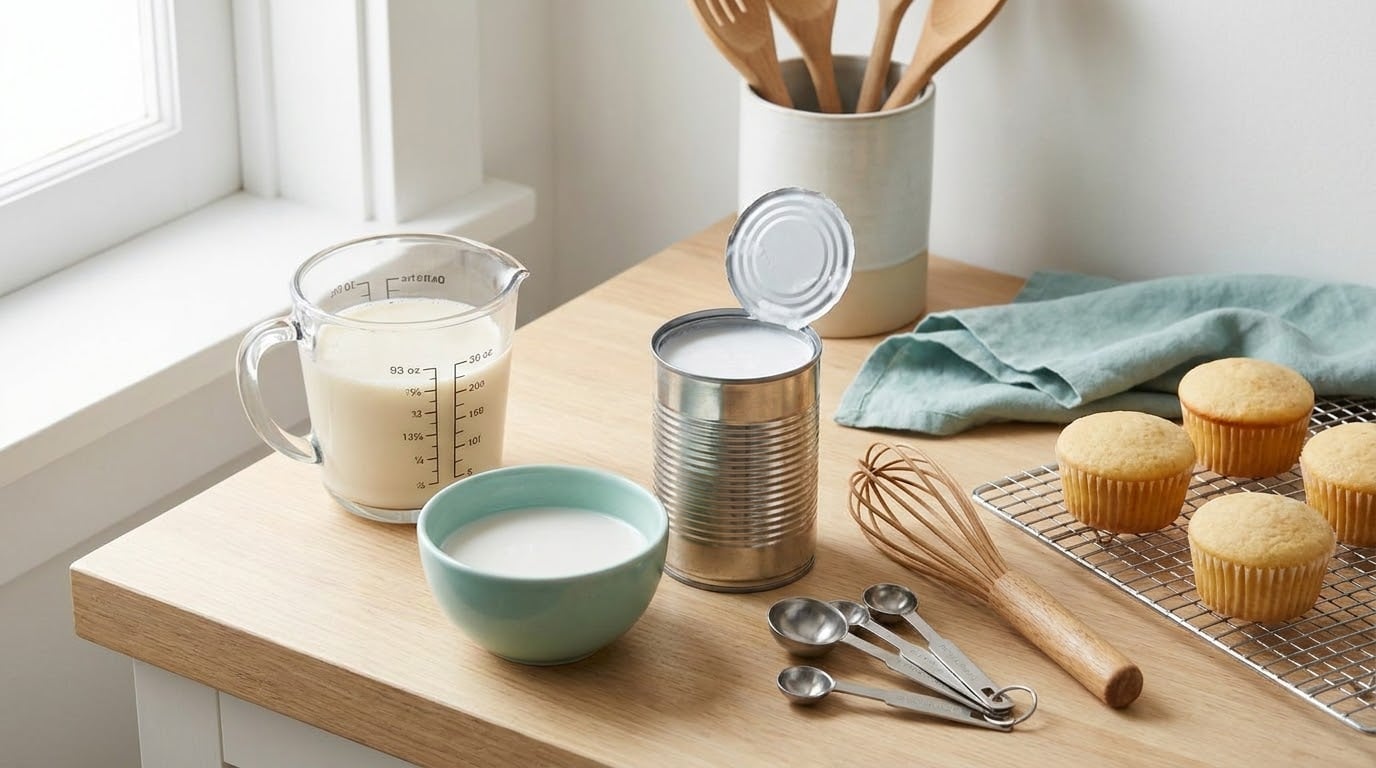
For most cakes, muffins, cookies and quick breads, unsweetened soy milk or unsweetened oat milk is the best dairy free substitute for milk in baking: swap cup for cup, no recipe changes. Reach for something thicker when moisture is the point, and adjust sugar whenever the milk you pick is sweetened.
Dairy free baking usually fails for boring reasons. The cake comes out gummy because the substitute had almost no protein to build structure. The cookies spread into thin discs because the batter got thinner. The loaf burns on the outside while the middle stays raw because plant milk browns faster at the same temperature.
None of that means plant milk doesn’t work. It means the swap is a swap, not a magic trick, and a little knowledge about what dairy actually does goes a long way. This guide covers ten substitutes, what each one is genuinely good for, and the moment you need to change something else in the recipe.
Table of Contents
- Dairy Free Substitutes for Milk in Baking at a Glance
- 1. Oat Milk for Baking Cakes and Muffins
- 2. Almond Milk for Cookies and Light Batters
- 3. Soy Milk for Richer Baked Goods
- 4. Coconut Milk for Moist Cakes and Bars
- 5. Rice Milk for Gentle, Simple Substitutions
- 6. Cashew Milk for Smooth Creamy Batters
- 7. Dairy-Free Buttermilk for Quick Breads
- 8. Aquafaba for Egg-Free and Whipped Applications
- 9. Homemade Almond or Oat Milk for Control
- 10. Dairy-Free Evaporated Milk for Creamy Pies
- Frequently Asked Questions
- Conclusion: Choose the Substitute by the Recipe
Dairy Free Substitutes for Milk in Baking at a Glance
Milk does four jobs in a baked good: it hydrates the flour, adds fat for tenderness, contributes protein for structure, and browns through the Maillard reaction. Every substitute below scores differently on those four, which is why one works beautifully in cookies and falls apart in a cake.
| Substitute | Flavor and texture | Fat | Protein | Best baking use | Main limitation |
|---|---|---|---|---|---|
| Oat milk | Mild, creamy, slightly sweet | Low to medium | Low, roughly 2-3 g per cup | Cakes, muffins, quick breads, oatmeal cookies | Sweetened varieties overshadow the recipe sugar |
| Almond milk | Thin, faintly nutty | Very low | Low, under 1 g per cup | Cookies, pancakes, muffins, lighter cakes | Too thin for delicate or layered cakes |
| Soy milk | Neutral, fuller bodied | Low to medium | Highest, roughly 7-8 g per cup | Cakes, breads, custards, puddings, anything needing structure | A serious soy allergy rules it out entirely |
| Coconut milk (beverage) | Tropical, light | Low | Low | Cakes and bars where moisture matters | Flavor reads strongly in chocolate bakes |
| Coconut milk (canned, full fat) | Rich, thick, creamy | High, roughly 20 g per cup | Low | Moist cakes, bars, frostings, cream sauces | One cup is closer to heavy cream than to milk |
| Rice milk | Very mild, thin, sweet | Very low | Low | Muffins, quick breads, simple cakes | Needs added starch for delicate structure |
| Cashew milk | Thick, creamy, neutral | Medium | Low | Cakes, puddings, creamy batters, frostings | Tree nut allergy and a higher shelf price |
| Plant milk plus vinegar or lemon | Thin, tangy after resting | Matches the plant milk | Matches the plant milk | Biscuits, scones, muffins, quick breads | Only works where the recipe already uses buttermilk |
| Aquafaba | Thick, foamy when whipped | None | Low | Meringues, marshmallows, whipped cream, egg-free bakes | Not a general milk replacement |
| Dairy-free evaporated milk | Rich, concentrated, stable | High | Varies | Pies, custards, creamy fillings, caramel | Brands vary widely, so check the label |
Read the fat and protein columns as the deciding factor. Structure-driven bakes like cakes and custards want protein. Tenderness-driven bakes like brownies and quick breads want fat.
1. Oat Milk for Baking Cakes and Muffins
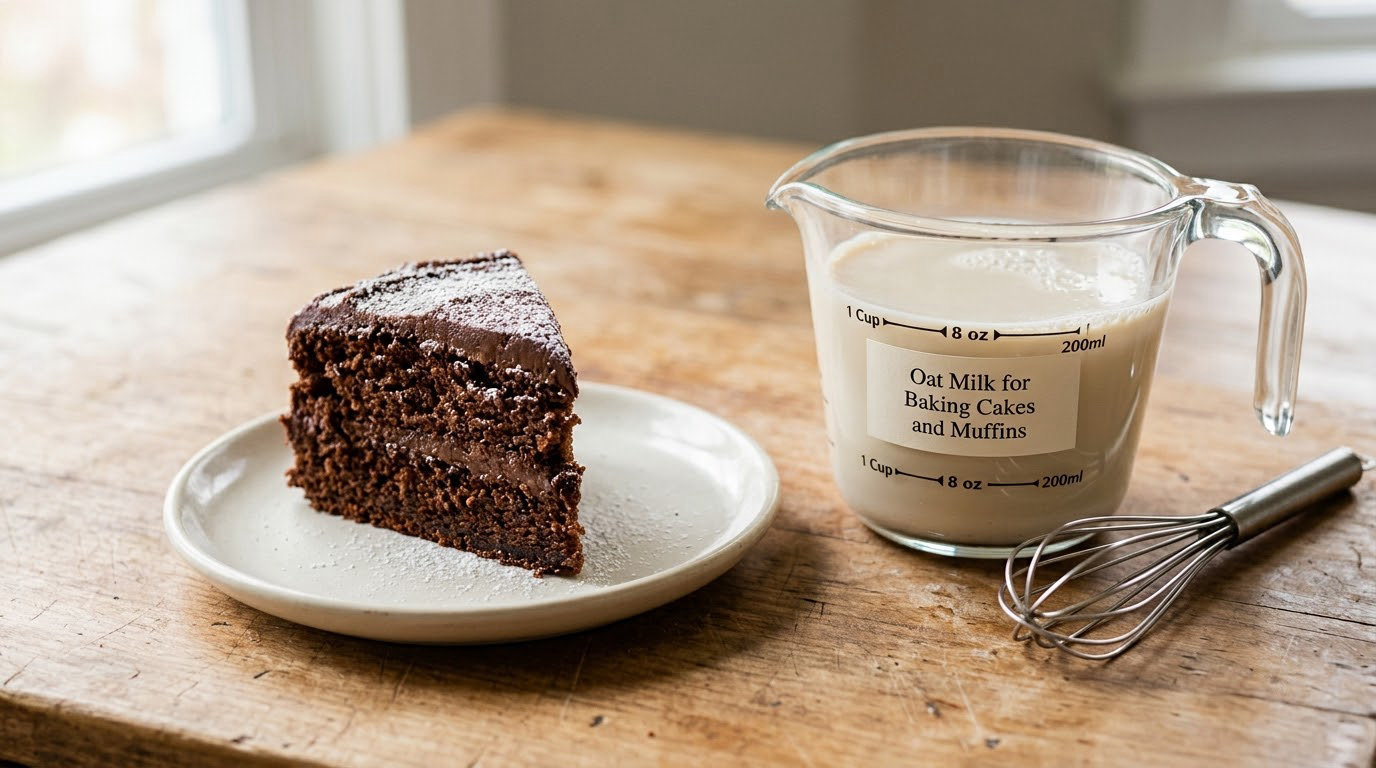
Oat milk is the most forgiving dairy free substitute for milk in baking because its texture is already close to dairy and the flavor stays out of the way. Swap it 1:1, cup for cup, with no adjustment to the rest of the recipe.
What makes oat milk useful is the way it behaves in the oven. Cakes stay tender, muffins come out with a moist crumb, and cookies keep a soft center instead of turning brittle. The starches in oats give the batter a little more body than nut or rice milk provides.
How to use oat milk in cakes and cupcakes
Use plain unsweetened oat milk in cakes, cupcakes, quick breads, banana bread, pancakes and oatmeal cookies. For the best crumb, pick a variety labeled barista or extra creamy, since those include emulsified oils that keep the texture even.
Two adjustments are worth knowing. Oat milk has a faint natural sweetness, so if your cake recipe already has plenty of sugar, drop the sugar by about a tablespoon per cup of milk. And it browns faster than dairy milk, so if your cakes are dark or bitter around the edges, tent them with foil for the last ten minutes or lower the oven temperature by 15 degrees Fahrenheit.
One more note for gluten-free households. Oats are naturally gluten free but are frequently milled alongside wheat, so choose a certified gluten-free oat milk if cross-contact matters to you.
For an easy starting point, a plain pound cake or banana bread takes oat milk with zero changes and comes out reliably moist.
2. Almond Milk for Cookies and Light Batters
Almond milk is the right pick for cookies, pancakes, waffles and any batter you want to stay light, and it swaps 1:1 without fuss. Choose the unsweetened plain variety, not the vanilla one.
The tradeoff is body. Almond milk is the thinnest of the common plant milks, with almost no protein and very little fat, so anything that relies on structure for its shape can struggle. A layer cake, a soufflé or a custard is a stretch. A cookie or a muffin is not.
Unsweetened almond milk also has a faint nutty note that can read as almond flavor in a recipe with no other almond in it. Most people stop noticing after the first bite, but if you are sensitive to that flavor, oat or soy is a quieter choice.
If a batter looks thin after you swap, do not reach for more flour automatically. Give it a minute: almond milk often separates a little in the carton and smooths out once it hits the mixing bowl.
Vanilla almond milk is a trap in cookies and cakes. It usually carries 5 to 8 grams of added sugar per cup, which is enough to make cookie dough spread and a cake sweet.
3. Soy Milk for Richer Baked Goods
Soy milk is the closest plant-based stand-in to dairy milk in baking, and it is the one substitute that works in almost any recipe at a straight 1:1 swap.
The reason is protein. A cup of plain soy milk carries roughly 7 to 8 grams, several times what nut or rice milk provide, and those proteins set when heated much the way casein does. That is why soy works in custards, curds, custards-style puddings and cakes where the crumb has to hold up.
Flavor is neutral and the fat content sits close to dairy, so the crumb stays tender and browning behaves more like the real thing. Unsweetened varieties are the only ones to use in baking. Sweetened soy milk in a baked good is a dessert inside a dessert.
The limitation is non-negotiable for some households: soy is one of the top allergens, and it is not a substitute for anyone with a soy allergy. In that case, sunflower seed milk or pea milk are the next step up, since both bring a little protein and a neutral taste without the soy.
Soy is also the one to reach for when a dairy free custard has split. Its proteins thicken and set the mixture where nut milk leaves it loose.
4. Coconut Milk for Moist Cakes and Bars
Coconut milk works when the recipe wants moisture and richness, but the two products sold under that name are not interchangeable. Canned full-fat coconut milk is a cooking ingredient. Coconut beverage is a milk substitute.
A cup of full-fat canned coconut milk contains around 20 grams of fat, which puts it closer to heavy cream than to a glass of milk. It thickens brownie and bar batters, keeps a cake moist for days, and whips into frostings that hold their shape.
The catch is flavor and weight. Coconuts carry a noticeable taste that gets louder in chocolate bakes, and that much fat makes a cake denser rather than fluffier. If you swap a full cup of dairy milk for a full cup of canned coconut milk in a sponge cake, expect a rich, heavy crumb.
Coconut beverage is a different tool. It swaps 1:1 like any plant milk, adds a light richness that almond and rice do not, and works well in banana bread, carrot cake and coconut-flavored muffins. It will not thicken anything on its own.
For the fussiest bakes, full-fat coconut beverage made for baking has added thickeners and behaves more like oat milk.
5. Rice Milk for Gentle, Simple Substitutions
Rice milk is the gentlest option available: no nuts, no soy, usually no coconut, and a flavor most people describe as barely there. It swaps 1:1 in muffins, quick breads, pancakes and simple cakes.
It is also the thinnest, and thinness is what causes the flat cookies and sad cupcakes people complain about. Rice milk has almost no protein and very little fat, so it gives a batter no lift and no richness on its own.
The fix is a small one. Whisk a teaspoon of cornstarch into the milk and let it sit for five minutes before you add it to the bowl. That thickened milk behaves more like the original and gives delicate cakes a crumb worth eating.
Rice milk is genuinely the most allergy-friendly choice in the list. If someone in the house reacts to tree nuts, soy and coconut, rice milk or a sunflower seed blend usually keeps the household baking together.
Its natural sweetness is mild but real. In a cookie recipe, cut the sugar by a tablespoon for every cup you add.
6. Cashew Milk for Smooth Creamy Batters
Cashew milk is the creamiest of the shelf-stable nut milks, and it is the one to pick when you want a dairy free substitute for milk in baking that behaves like whole milk in a cake or pudding.
Because the nuts are soaked and blended, cashew milk carries more body than almond milk and less sweetness. Cakes, puddings, custards, frosting and creamy batters all come out smoother with it, and it needs no starch to hold structure.
Unsweetened cashew milk has a faint nut note, similar to almond milk but usually softer. Vanilla varieties are sweetened, so read the label before pouring one into a cake.
The obvious limitation is that cashews are tree nuts, which makes this option off the table for a nut allergy. It also tends to cost more per carton than the almond and oat options, which matters in a household that bakes most weekends.
A homemade cashew version, soaked overnight and blended with water, gets you the same texture without the carton and keeps the sugar under your control.
7. Dairy-Free Buttermilk for Quick Breads
You can make a dairy free buttermilk substitute in five minutes: stir one tablespoon of lemon juice or distilled white vinegar into one cup of unsweetened plant milk, let it stand for five to ten minutes, then use it exactly as you would the real thing.
Oat or soy milk works best here because the acid gives them a little more body than almond milk does. After ten minutes the mixture should look slightly thicker and smell pleasantly tangy. That is the reaction doing its work, not a sign anything has gone wrong.
Use it in biscuits, scones, muffins and quick breads where the recipe calls for buttermilk or milk plus vinegar. The acid reacts with the baking soda to lift the batter, which is why these bakes come out tall and tender instead of dense.
Do not use this swap in cakes. The acid changes the way baking powder behaves and adds a sourness the cake was not designed for. The same goes for chocolate recipes, where the acidity dulls the cocoa flavor.
One tablespoon of acid per cup is the standard ratio. Some recipes that use a full cup of buttermilk call for more, so make a full batch of the substitute before you start.
8. Aquafaba for Egg-Free and Whipped Applications
Aquafaba is the liquid you drain from a can of chickpeas, and it is the most useful substitute in this whole list for egg-free baking. It whips into a meringue that holds peaks for a surprisingly long time.
Use it for meringues, marshmallows, whipped cream substitute, macarons, brownies that call for egg white, and lemon meringue pie. Those are the applications where dairy-free egg-free bakers were previously stuck.
For baking, a common starting point is one third of a cup of aquafaba in place of one large egg in a brownie or cookie recipe. Treat it as a starting point rather than a rule, since some formulas need more.
Whipping takes patience. Beat the liquid with an electric mixer for five to eight minutes, longer than you expect, and stop when you see stiff glossy peaks that hold when you flip the bowl.
Aquafaba is not a milk substitute and does not work as one. It has no fat and no sweetness, so it cannot stand in for the liquid volume in a cake batter.
9. Homemade Almond or Oat Milk for Control
Homemade plant milk is worthwhile when your household bakes often or reacts to additives. One cup of raw almonds soaked overnight, blended with three to four cups of filtered water and strained through a nut bag yields about one quart.
The big advantage is control. You decide how much sweetener goes in, and you leave out gums, stabilizers and any emulsified oils that sit in the shelf-stable versions. For families avoiding thickeners, that matters more than the convenience.
The big disadvantage is consistency. Homemade milk separates within an hour and has no stabilizers, so it will not behave like a carton in a layered cake or an ice cream base. Fresh homemade milk is thinner than oat milk and thinner than most shelf-stable varieties.
Best uses are smoothies, oatmeal, coffee, creamy sauces and batters where you are happy to whisk the milk in with the dry ingredients. For an ice cream or custard, strain it through a fine sieve and add a tablespoon of cornstarch.
Homemade oat milk follows the same method with a half cup of rolled oats and about a quart of water, blended until smooth and strained only if you want a very thin result. It is milder than the homemade nut version.
Any homemade milk lasts three to four days in the fridge. Treat it like raw dairy and do not taste-test after three days.
10. Dairy-Free Evaporated Milk for Creamy Pies
Dairy-free evaporated milk is the substitute for recipes where the evaporated milk is doing structural work rather than adding moisture, most often pumpkin pie, no-bake pies, custards, caramel sauce and creamy fillings.
The concentrated formula is the point. Evaporated milk is milk with most of its water removed, so it thickens a custard and sets a cream filling the way regular plant milk cannot. Shelf-stable versions, usually made from pumpkin protein, coconut or a blend, hold up in a pie the same way dairy does.
Use it 1:1. Do not dilute it to mimic evaporated milk from a carton of regular milk, and do not substitute plain plant milk for it in a pumpkin pie without thickening the filling with cornstarch, or the slice will slump on the plate.
The reason this is on the list and not higher is the variance between brands. Protein-based and coconut-based versions behave differently in a custard, so if you have a favorite, stick with it. If you are picking one cold, read the ingredients rather than the front of the carton.
For a homemade stand-in, simmer one cup of any unsweetened plant milk with two tablespoons of cornstarch over medium heat until thick, then cool it before using. It will not be as rich, but it will set.
Frequently Asked Questions
What is the best dairy free substitute for milk in baking?
Unsweetened soy milk and unsweetened oat milk are the safest general swaps, both used cup for cup with no recipe changes. Soy has the most protein and behaves closest to dairy in cakes and custards. Oat is the neutral-tasting default for people avoiding soy. For moisture-driven bakes like brownies, add full-fat canned coconut milk instead.
Can I use almond milk instead of milk when baking?
Yes, for cookies, pancakes, muffins and lighter cakes, swapping 1:1 with no adjustment. Almond milk is very thin and nearly protein free, so skip it for layer cakes, souffles and custards where structure matters. Choose unsweetened plain, since vanilla varieties carry enough added sugar to change the sweetness of the finished bake.
Do I need to adjust the recipe when using plant milk?
For a neutral, unsweetened milk in a cake, muffin, quick bread or cookie, no. Change things when the recipe is rich, the structure is delicate, or the substitute is sweetened. Reduce sugar by about a tablespoon per cup for sweetened varieties, add a teaspoon of cornstarch to thin rice or almond milk in delicate bakes, and cut fat when using canned coconut milk in place of milk.
Why is my dairy free cake gummy?
Almost always a structure problem, and the usual cause is a low-protein milk such as almond or rice. Casein in dairy milk sets as the batter heats and holds the crumb up. Switch to unsweetened soy milk, or add an egg if the recipe has none, and check that you did not overmix once the flour went in.
Which dairy free milk has the most protein?
Plain soy milk, at roughly 7 to 8 grams per cup, well ahead of oat at 2 to 3 grams and almond at under 1 gram. Pea protein milk is the other high-protein option, which matters when dairy, soy and nuts are all off the table. Protein is what gives custards and cakes their set, so it is the number to check when structure fails.
Can I use plant milk to make custard?
Yes, and soy milk is the one to use. Its proteins coagulate with heat much like dairy casein, so the mixture thickens instead of staying loose. Stir constantly over low heat and stop the moment it coats the back of a spoon, since plant-based custards go from right to split quickly. Rice and almond milk rarely set without added cornstarch.
Conclusion: Choose the Substitute by the Recipe
Start with unsweetened oat milk for cakes, muffins, quick breads and cookies, and unsweetened soy milk whenever structure matters, such as custards, breads and layer cakes. Both go in cup for cup with no other changes.
Move away from the default when the recipe asks for something specific. Canned full-fat coconut milk carries the fat for moist bars and brownies, rice or sunflower seed milk keeps nut and soy allergies out of the kitchen, and dairy-free evaporated milk is what sets a pumpkin pie.
Check two things on the carton before you pour. If the milk is sweetened, cut the recipe sugar by roughly a tablespoon per cup. If the recipe depends on protein to rise or set, either pick soy or plan on adding an egg or a spoonful of cornstarch.
And when you change a favorite family recipe for the first time, bake a small test batch. A single cupcake tells you in twelve minutes whether the crumb is right, which is far cheaper than finding out about the whole tray after an hour.