To handle regression in potty training, you first rule out pain or illness, then rebuild one predictable routine and take the pressure off. Accidents that come back months after a child was dry are common, usually temporary, and rarely a sign that you did anything wrong. Most families are back to steady within a few weeks of getting the basics consistent again.
The tricky part is that regression looks different depending on the child. A verbally speaking toddler might just stop announcing it. A child who uses few or no words may not have a way to tell you at all, so the adults around them have to carry the whole routine. That is where most of the general advice falls short, and where a slower, more deliberate approach pays off.
This guide walks through what to gather first, then a six-step sequence to handle regression, the mistakes that drag it out, and the signs that mean you should call the pediatrician instead of pushing through.
Table of Contents
- What You Need
- How to Handle Regression in Potty Training, Step by Step
- Common Mistakes
- Frequently Asked Questions
- How long does potty training regression last?
- Should I go back to diapers during a regression?
- When should I call the pediatrician about potty accidents?
- What are the red flags that something medical is going on?
- How do I support a child who cannot tell me they need to go?
- What is the 10, 10, 10 rule for potty training?
- Conclusion
What You Need
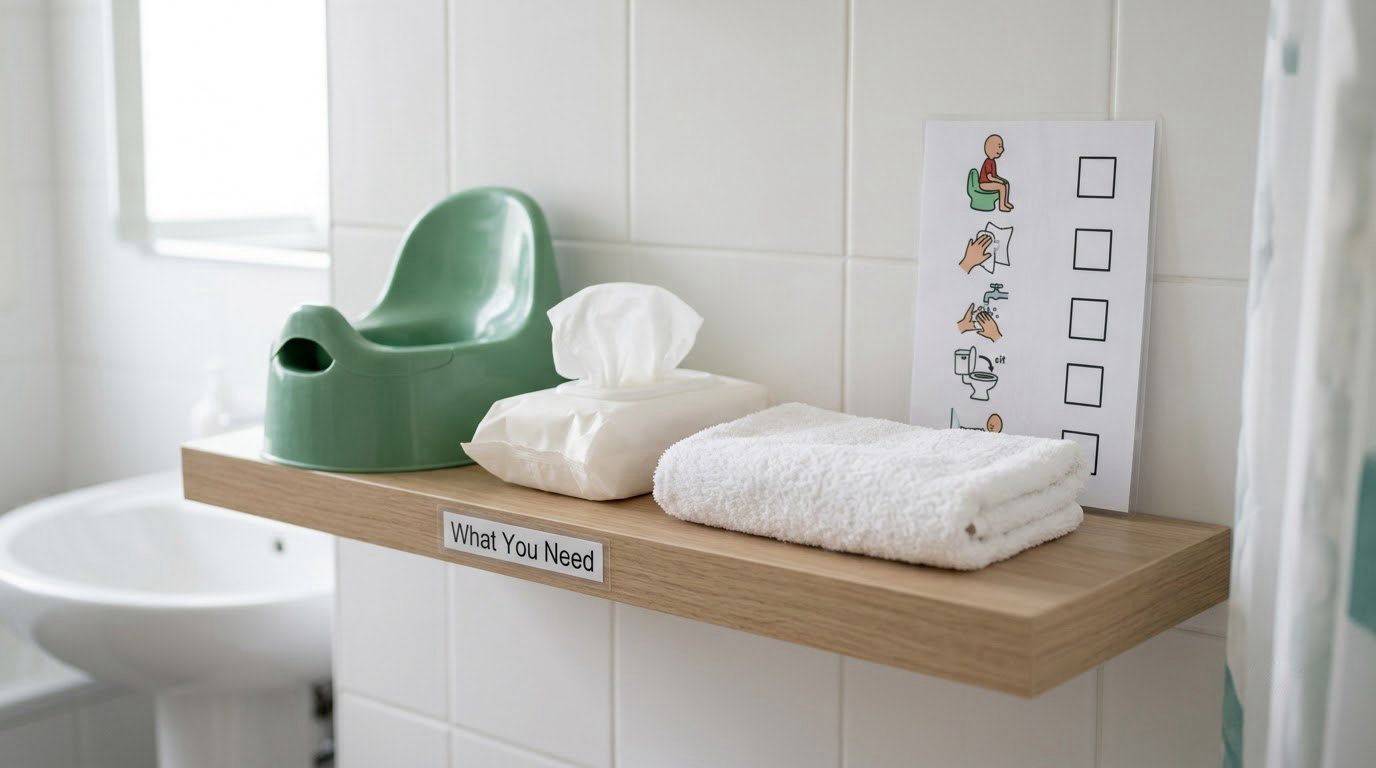
Before you change anything about the routine, get these four things in place. Everything else is optional.
The setup they already know
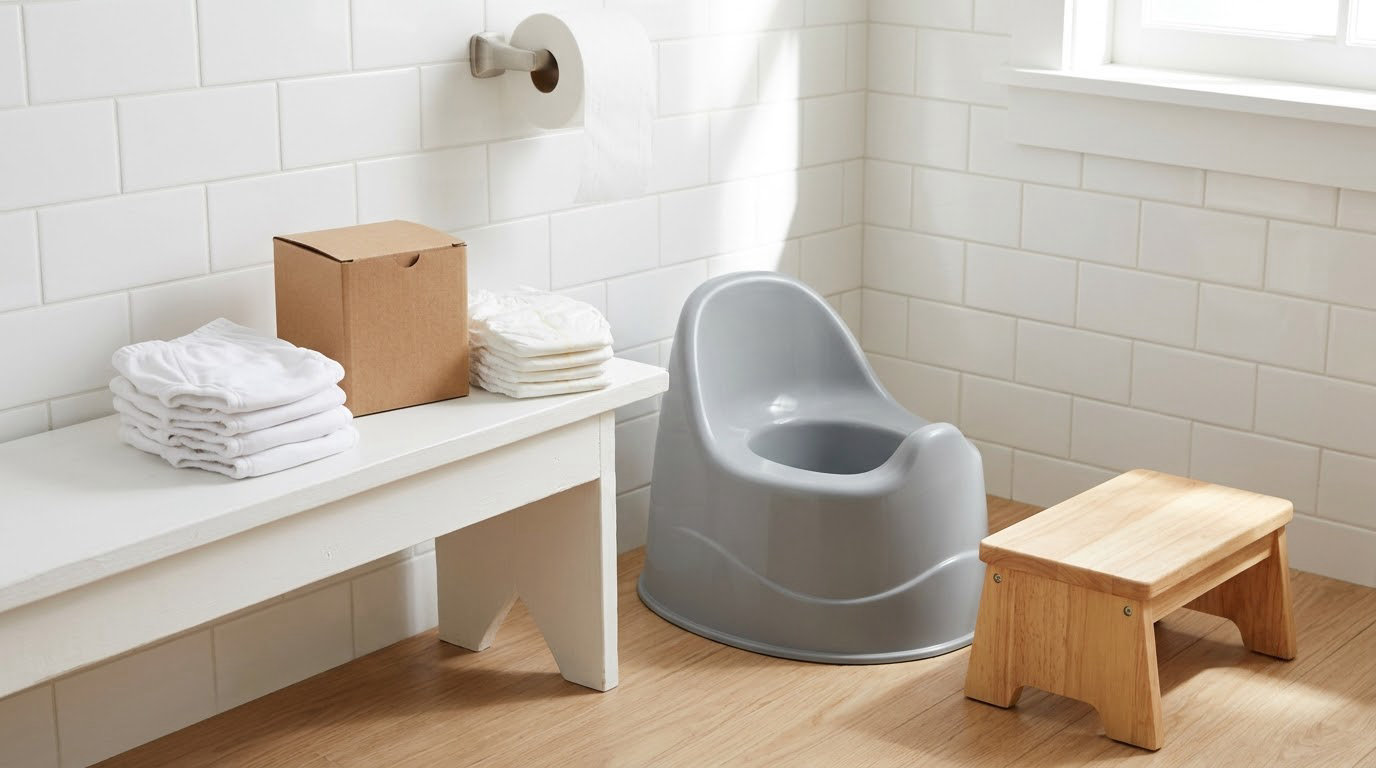
Put the child back on whatever they were successful with before. If that was a training potty on the bathroom floor, use the training potty. If it was a reducer seat on the toilet with the little step stool they had before, put that back exactly where it was.
Changing the toilet, the seat, and the rules at the same time makes it impossible to tell what is working. For a child with autism or a strong routine memory, swapping out familiar equipment adds a second problem on top of the regression.
One routine, written down
Write out the schedule in short, plain steps on paper or a visual chart: wake up, toilet, get dressed, breakfast, play, toilet before nap, bath, toilet, bed. Five or six scheduled sits a day is plenty. Checkboxes that a child can mark themselves help more than a reminder you say out loud.
A short log
Keep a simple notebook or note on your phone with four columns: date, time of day, dry or wet, and anything unusual that day. That last column is where you spot patterns, like accidents clustering after daycare or only happening before bedtime.
Three or four days of notes usually tells you more than a month of guessing. Once you can see the pattern, the decision about what to change makes itself.
Words, signs, or a schedule in their language
Whatever the child already understands is your tool. That might be the words toilet and potty, a sign, a picture card, a sound or symbol on a talker, or a single fixed routine they can follow without being told.
Do not introduce a brand new communication system in the middle of a regression. That is one more thing to learn at the exact moment they have the least capacity for it.
Cleanup that does not need you to hurry
Have wipes, a change of underwear, laundry soap, and a waterproof mattress cover or sheet protector where you can reach them without leaving the child alone. When cleanup is fast, you avoid the frantic tone that children pick up on instantly. If night accidents have restarted, the layer goes on the bed first, not the child.
How to Handle Regression in Potty Training, Step by Step
Step 1: Notice the Change Without Blaming
Write down when the accidents started and what was happening in the two weeks before. New sibling, new house, new caregiver, starting daycare or preschool, a change in sleep, a parent traveling for work, a switch in school, even a furniture rearrangement. Regression after a change in routine is so common that pediatric guidance treats it as the default explanation once medical causes are ruled out.
Also note what changed in the child. Stopped asking, started hiding, began going right after undressing, or seems uncomfortable sitting. A child who used to announce it and now says nothing has not forgotten how to go. They have stopped telling you.
Step 2: Check for Common Physical Triggers
Before you change your approach, make sure the body is not the problem. Call the child’s pediatrician if any of these show up.
- Constipation. Hard, painful bowel movements are a leading and very commonly missed cause. Children often hold stool, which stretches the bowel, which leads to overflow accidents that look like diarrhea.
- A urinary tract infection. Fever, a burning or painful urination, foul-smelling or cloudy urine, or suddenly frequent or urgent urination. This needs a urine test.
- Painful bowel movements or changes in stool. Loose, frequent stools from a stomach bug, a food change, or a medication.
- A medication change. Some drugs increase or decrease urination or bowel movements. Ask the prescriber rather than guessing.
- Sudden increase in drinking. Parents on forums frequently notice heavy water drinking alongside accidents, and it is worth mentioning at the appointment.
Ongoing stool accidents in a child who was previously dry have a medical name, encopresis, and it deserves its own evaluation. That is a conversation with the pediatrician, not a behavior plan. Nothing in this guide is medical advice, and any of these signs means a phone call rather than more reminders.
Step 3: Use One Predictable Routine to Handle Regression
Regression is mostly a signal problem. The child cannot read the internal cue of a full bladder the way an adult does, so the adults have to supply it. Bring back scheduled sits and keep them boringly consistent: same times, same words, same order, roughly the same amount of time.
Offer the toilet every 30 to 60 minutes while awake, plus before and after naps, after eating, before leaving the house, and before bed. Sit with them or stay within sight. Most of the sitting takes under two minutes, and if nothing happens after a couple of minutes, wrap it up calmly and move on.
Watch for the cue many children give right before they go: wiggling, crossing legs, suddenly very interested in something else, or going still. When you catch it, say the same neutral cue you always use. A child who has learned to associate that word with the toilet will often respond faster after a break than before it.
What worked before is your best evidence. If the family used a timer or a song during successful training, that is a reasonable thing to restart, though many parents find a fixed schedule easier to sustain than an alarm every 20 minutes.
Step 4: Remove Pressure and Shame
This is the part that changes the most for children with developmental disabilities. Pressure, pleading, and scolding reliably make toileting harder, because a child under pressure cannot focus on the sensations they need to notice.
Say less. Replace demands with invitations: I need to go, then go, then come with me, instead of go potty right now.
Handle accidents without a scene. Say matter-of-factly, that is okay, this happens, clean it up, then move to the next scheduled sit. No sighing, no long look, no wait until Daddy gets home.
Never make the child change a dirty diaper they could have avoided, and never treat wet clothes as a punishment to sit in. Talk to them while cleaning up, about something else entirely.
If the stress is building for you, that is a real problem worth naming. Regulation support for the adult is part of the plan, not a detour from it. Our guide to how to handle autism meltdowns at home has grounding steps you can use between attempts.
Step 5: Use Reinforcement the Child Understands
Find out what your child actually finds rewarding, because generic sticker charts only work if the child cares about stickers. A child motivated by music might get a special song after a successful sit. A child who likes helping might get to be the one who wipes the counter.
Deliver it right away, right after the sit, and keep it small so you can do it every time. Big rewards train children to expect big rewards, and then ordinary praise stops working.
Skip food rewards unless a healthcare professional has specifically recommended them for your child. Everyday treats devalue treats and can crowd out regular meals, which is a problem when eating is already a battle.
Track success, not accidents. A chart that only marks dry mornings teaches a child that the chart is about something they did wrong. Mark the days that went well instead, and let the visual record do the encouraging.
Step 6: Adjust the Goal and Track Progress
Watch your log for about two weeks. You are looking for one good day at a time, then two, then a run of good days, not instant independence.
If accidents are spreading across the whole day after a change of method, put the last method back. If days are stable but nights are wet, treat them as two separate goals, since daytime dryness does not guarantee nighttime dryness and there is no shame in keeping both as separate projects.
Some things are simply not ready. Insisting on underwear when the bladder is not mature yet gives you nothing but laundry. If there is no progress after several weeks of a consistent routine, ask the pediatrician about a developmental evaluation and ask whether an occupational therapist or a toileting specialist in your area does these plans.
Common Mistakes
Starting over from zero
Going straight back to full underwear and no reminders feels like holding a line, but it removes every support at once. Stay in the routine you had. Add layers back gradually instead.
Adding new rules at the same time
New rules, a new reward chart, and a new bedtime all at once gives a struggling child no stable ground. Change one thing, and give it a week.
Comparing the child to a sibling or classmate
Parents of twins and siblings hit this hard, especially when one child is dry and one is not. Development is not a race, and comparison adds pressure that works against the exact skill you want.
Withholding bathroom access or playtime
Asking a child to earn access to a toilet sets up the wrong lesson. Keep the bathroom available, because the child should never have to negotiate for it.
Treating accidents as deliberate
Some accidents are intentional, and some are not. Assume a physical or emotional reason first, then address the behavior separately once you know the cause. Guessing wrong makes everything harder.
Punishment, or making the child clean up
Shame and lost privileges slow learning and cost you your child’s willingness to tell you when they need to go. Pull-ups can be a reasonable tool for sleep or travel, but using them to hide a daytime problem only removes your information.
Waiting weeks for a red flag to resolve itself
Fever, pain, or a stool change is not a phase. Call the pediatrician. There is no downside to a urine test, and finding an infection early is far easier than treating a week of pain.
Frequently Asked Questions
How long does potty training regression last?
Most regressions settle within a few weeks once the routine is consistent again, and some run a couple of months when a life change is still in progress. Judge progress by trends in your log rather than by single days. If nothing is improving after three to four weeks of steady, low-pressure scheduled sits, check in with the pediatrician.
Should I go back to diapers during a regression?
You can, and it is not failure, but use pull-ups strategically rather than as a cover-up. For sleep, travel, and situations where accidents would derail the day, they reduce stress for everyone. During daytime at home, keep the scheduled routine going so you can still see what is happening. Going back to diapers permanently hides the information you need.
When should I call the pediatrician about potty accidents?
Call when accidents come with fever, pain during urination, cloudy or foul-smelling urine, painful or infrequent bowel movements, a noticeable change in how often your child urinates, or ongoing stool accidents. Also call if you see distress around using the toilet, or if several weeks of consistent routine produce no improvement at all. These can point to infection or constipation that needs treatment.
What are the red flags that something medical is going on?
Watch for fever, burning or pain when urinating, sudden urges or very frequent urination, and constipation signs such as hard stools, arching, or withholding. Ongoing stool accidents in a previously dry child deserve an appointment too. A child who was dry and suddenly wets heavily during the day, especially with increased thirst, should be evaluated rather than retrained.
How do I support a child who cannot tell me they need to go?
Go back to scheduled sits every 30 to 60 minutes rather than waiting for a request, and stay nearby. Watch for body cues like wiggling, crossing legs, going still, or sudden distraction. Pair the same visual or sign cue with every sit so it becomes predictable. Reducing clothing that is hard to get down also shortens the whole process when the time comes.
What is the 10, 10, 10 rule for potty training?
It is a loose guideline suggesting your child might be ready for toilet training around 10 months, in many cases somewhere between 10 and 18 months, with most children landing closer to the 30 month mark. It is a rough readiness idea, not a deadline, and readiness signs matter more than the number. Many families who started early ended up training later.
Conclusion
Three things first. Take the pressure off today, in the words you use and the tone you carry. Look for a trigger, starting with pain or illness, because that is the fastest thing to rule out and the easiest to miss.
Then rebuild one routine you can actually keep for two weeks, using whatever setup and communication your child already knows. Track the good days, not the wet ones. If you see fever, pain, painful or infrequent bowel movements, or ongoing stool accidents, call the pediatrician rather than adding more reminders. That is how to handle regression in potty training without turning a temporary phase into a long fight.