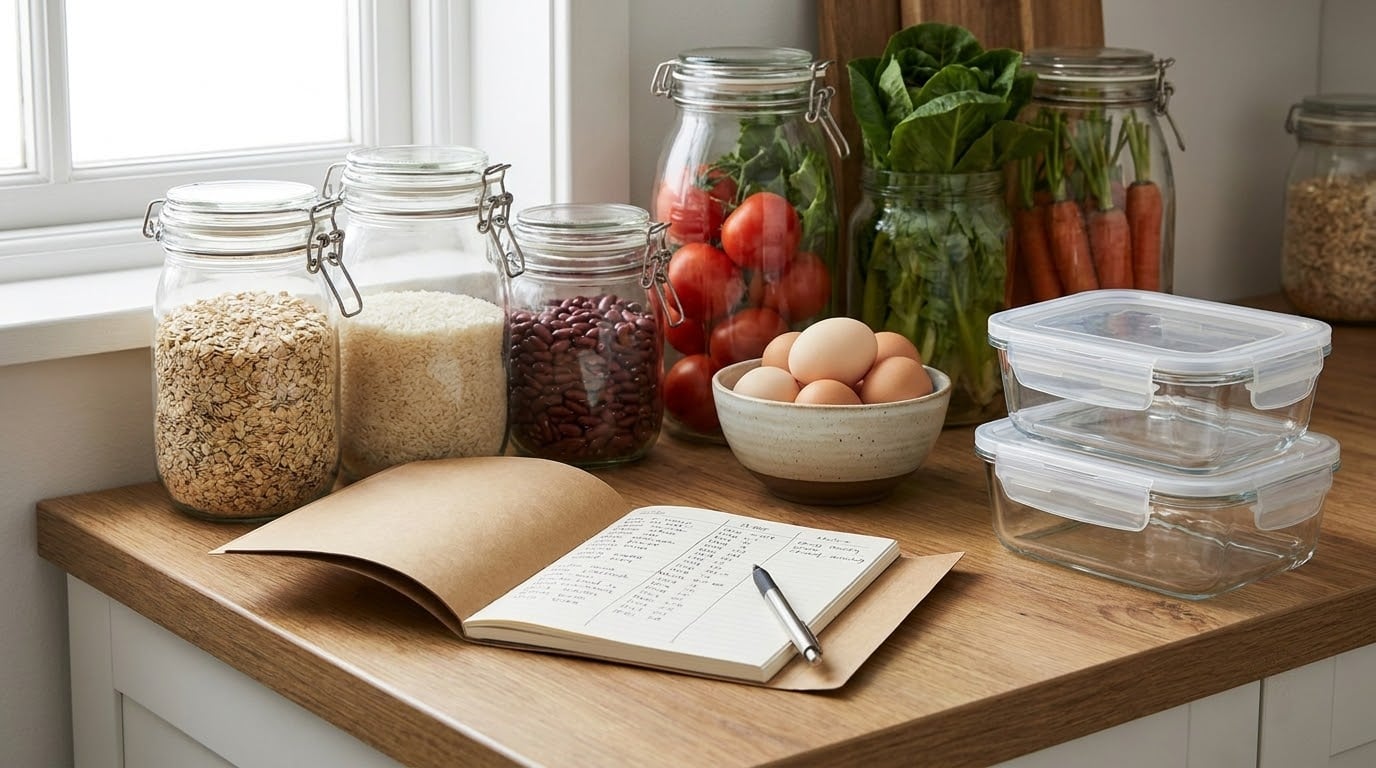
You can cut a specialty diet grocery bill substantially, and the biggest savings come from changing what you buy rather than where you buy it. The households that get this right stop treating gluten-free, dairy-free, or GFCFSF food as a bag of specialty substitutes and start building meals from whole foods that are compatible with the diet by default, spending the specialty budget only on the handful of items that genuinely have no substitute.
That distinction matters because the price gap is not about nutrition. Regular pasta often runs about one dollar to a dollar fifty per pound while gluten-free pasta sits closer to five dollars and twenty cents, and that is largely because specialty packages come in smaller formats with fewer buyers to spread the ingredient cost across. One person on r/Celiac put the number to five dollars and twenty cents per pound for a twelve ounce package and asked whether the shrink was deliberate or just processing cost.
Here is the short version of what works, before the detail:
- Set a fixed specialty spending number.
- Build meals around foods that are safe by default.
- Keep a written pantry and freezer inventory.
- Compare price per pound, not sticker price.
- Read labels for gluten, not for wheat.
- Buy store brands and frozen produce first.
- Stack rewards only on items already planned.
- Freeze and label before anything spoils.
None of that requires a perfect diet or a specialty aisle loyalty card. It requires about twenty minutes of planning and a willingness to buy rice instead of another bag of gluten-free crackers.
Table of Contents
- What You Need
- Step-by-Step: How to Save Money on Specialty Diet Groceries
- Set a spending limit for specialty diet groceries
- Plan meals around versatile specialty ingredients
- Shop with an inventory and substitution list
- Compare unit prices instead of package prices
- Buy seasonal, store-brand, and shelf-stable options
- Use grocery discounts without buying unnecessary extras
- Prevent waste with proper storage and batch cooking
- Common Mistakes
- Financial Assistance and Advocacy
- Frequently Asked Questions
- Conclusion
What You Need
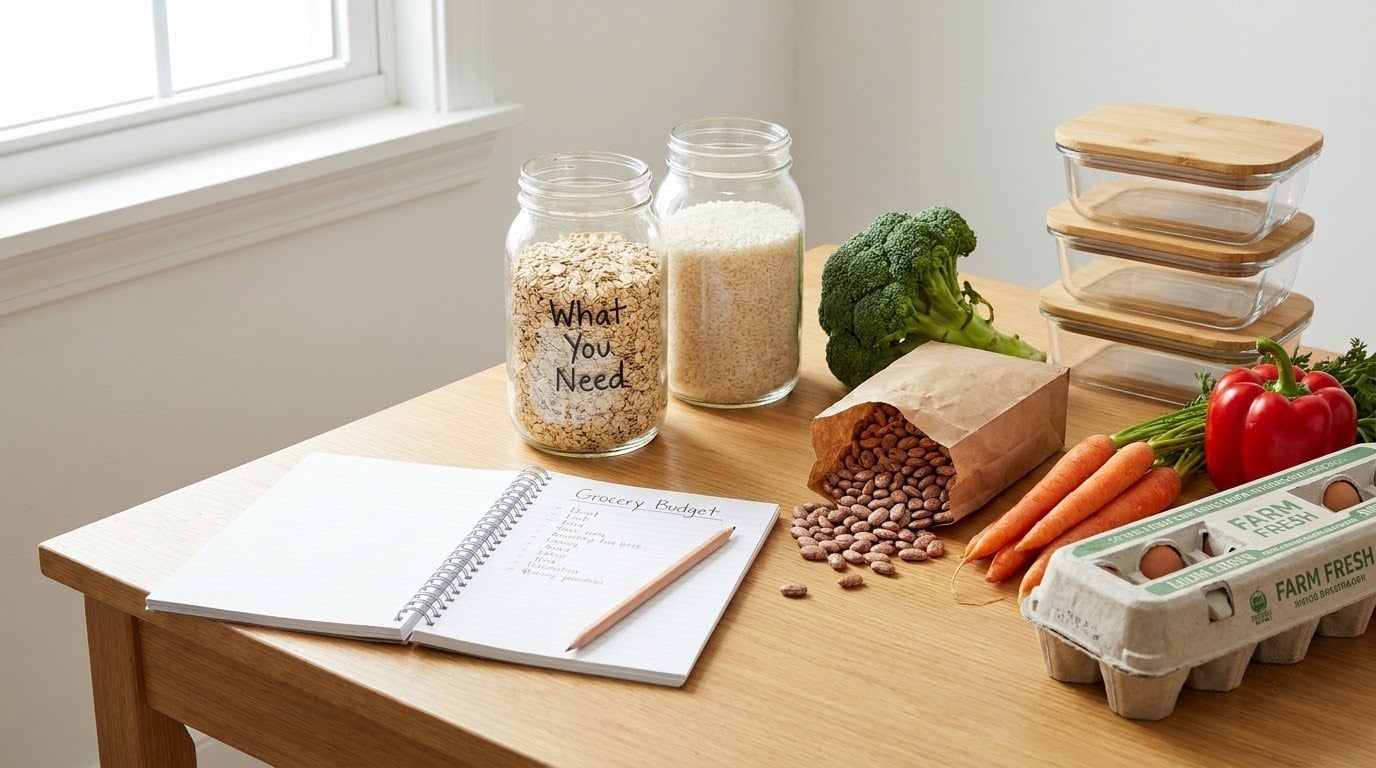
Everything below is cheap or already in your kitchen. Collect these before you walk into a store, because the savings come from deciding in advance what the trip is for.
A spending number. Pick a weekly or monthly figure for specialty items specifically, not for groceries in general. A shared budget muddles things, and one r/Frugal poster described a monthly Walmart budget covering food, household supplies and pet supplies together, which is realistic but very hard to steer.
A written inventory. One page, three columns: pantry, freezer, and fridge. Date anything opened. This is the document that stops you from buying a fourth container of oat milk while two sit in the back of the fridge.
A clear list of requirements. Write down what is actually medically necessary for your household, in plain terms: gluten-free for celiac, dairy-free for a milk allergy, casein-free for a casein sensitivity, or a GFCFSF trial chosen by a clinician for a child. Each of those excludes a different set of ingredients, and treating them as interchangeable is the most expensive mistake on this list.
A substitution list. Note the swaps you already know work, so you are not standing in an aisle improvising. Write it on the same page as the inventory.
Unit price access. Most store apps show a per pound or per ounce price on the shelf tag. Bring a phone with a calculator, or use the app.
Storage gear. Freezer bags, a permanent marker, and containers that fit your freezer rather than ones that need rearranging to close. Shelf space is a budget constraint too.
Step-by-Step: How to Save Money on Specialty Diet Groceries
Set a spending limit for specialty diet groceries
Open three months of grocery receipts and sort the specialty lines into two piles: the staples you buy nearly every week, and the occasional items you buy twice a quarter. Reviewers on r/Celiac frequently describe the same pattern, where a single box of crackers can eat a quarter of a weekly food budget, and that only becomes visible once the two piles are separated.
Then give each pile a cap. A simple split that works for many households is a small weekly number for staples, a monthly number for occasional items, and a separate line in the household budget for the genuinely irreplaceable purchases, like a box of gluten-free mozzarella that one r/MoneyDiariesACTIVE poster described as unavoidable at nine dollars when a recipe calls for it.
You will know this step worked when you can say, before shopping, the most you are spending this week and on what.
Plan meals around versatile specialty ingredients
The cheapest strategy in this whole guide is buying fewer specialty products, and that works because many restrictions are satisfied by ordinary food. Rice, potatoes, corn, oats, beans, eggs, meat, fish, most fruits and most vegetables are compatible with a gluten-free diet out of the box, and they are sold at standard grocery prices.
Pick three versatile ingredients and build a week of meals around each one before buying anything narrow. Oats become oatmeal, muffins, and pancakes if you check the certified gluten-free label. Rice becomes stir-fry, rice bowls, and a base for a casserole. Beans become chili, soup, tacos, and a protein base that stretches further than any packaged specialty product.
Ask a registered dietitian about any restriction where that assumption is wrong, especially for soy, peas, or corn sensitivities that some people with restricted diets also have.
Shop with an inventory and substitution list
Stand in front of your pantry, freezer, and fridge with your list, and mark anything you can use in the next week. Build the store list from the gaps only. This one habit tends to kill the impulse buys that quietly drain a specialty budget, because specialty aisles are designed to look like an emergency when you are already on a restricted diet.
Bring the substitution list too. When something is out of your usual rotation, write the alternative next to the item rather than browsing, because browsing in a specialty aisle is how a planned fifteen minute trip becomes a forty five minute one.
You will know this step worked when your cart matches the list at checkout without a second pass.
Compare unit prices instead of package prices
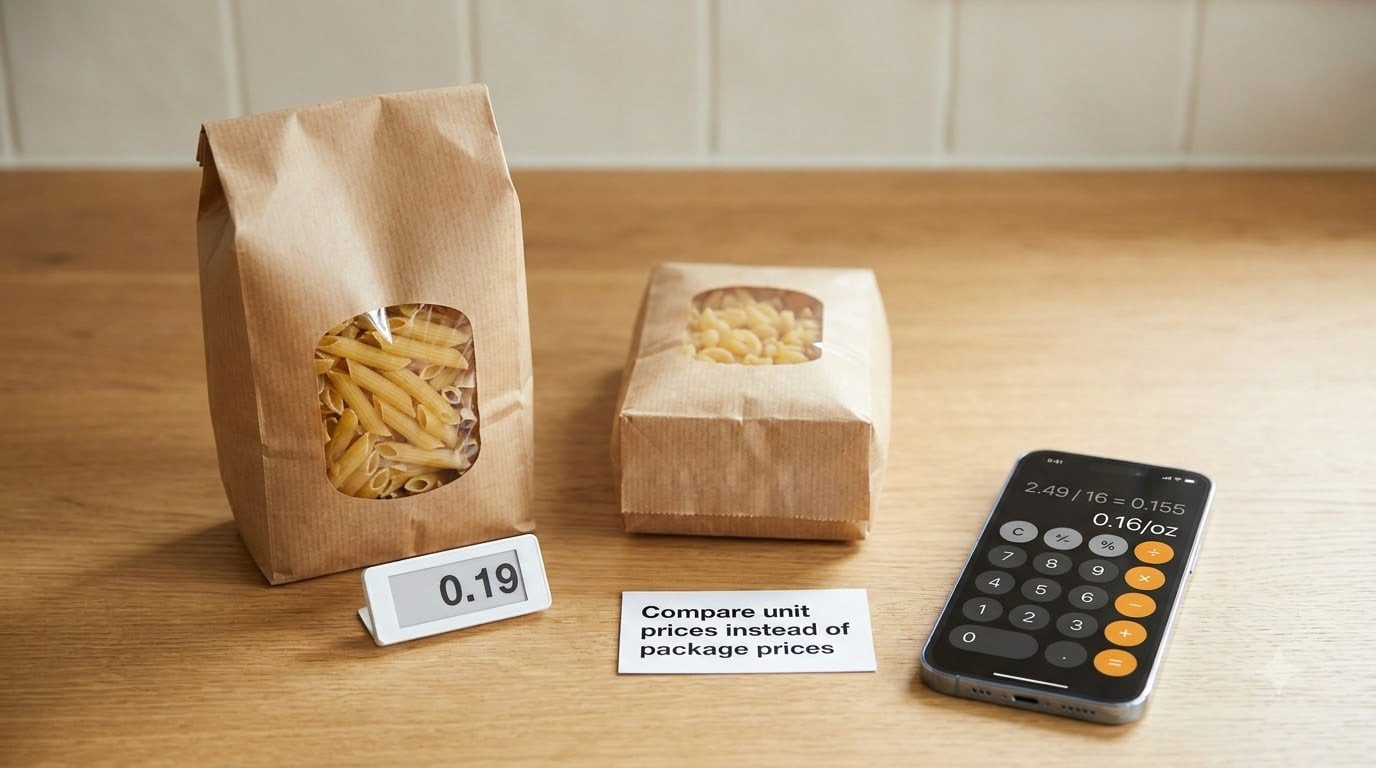
Price per package tells you almost nothing, because specialty formats vary so much. Divide the shelf price by the net weight in ounces, then multiply by sixteen to get the cost per pound. Do it for two products and the cheaper-looking box is often not the cheaper one.
Typical US grocery ranges, and they move with region and season, put the gap plainly:
| Category | Conventional range (cost per pound) | Specialty range (cost per pound) |
|---|---|---|
| Pasta | about 1.00 to 1.50 | about 4.00 to 6.00 |
| Bread, sliced | about 2.00 to 4.00 | about 6.00 to 10.00 |
| Tortillas | about 2.50 to 4.00 | about 7.00 to 12.00 |
| Crackers | about 2.00 to 4.00 | about 7.00 to 12.00 |
| All purpose flour | about 0.70 to 1.50 | about 2.50 to 4.00 |
Two rules come out of the math. If a larger package has a lower cost per pound, buy it only if you will actually finish it or freeze it, because waste erases the saving. And when the per pound gap is three times or more, that is your signal to find a whole food swap instead, not to hunt for a better store.
One r/glutenfree commenter pointed out the regional wrinkle: in the US southeast, gluten-free items were sometimes cheaper than comparable regular foods at the local store, with Aldi and Whole Foods named as the best-priced nearby. Chain reputation is not a rule, so do the math in your own store rather than assuming.
Buy seasonal, store-brand, and shelf-stable options
Store brands are the single fastest saving on specialty staples, because many of them are simply the same formula in a cheaper box with a different label. Compare ingredients rather than trusting a familiar name, and check that the private label version carries the certification your diet requires.
For produce, buy in season and freeze what you cannot use. Frozen vegetables are picked and frozen at peak, hold their nutrition, cost less out of season, and last long enough that you will not waste them. This is one of the rare wins with no trade-off attached.
Shelf-stable, freeze-dried, and canned versions of specialty items can also beat fresh when the fresh version spoils before you get to it. Buy shelf-stable dairy alternatives in the sizes that fit your household; a liter you will finish is cheaper per unit than a carton you will not.
Use grocery discounts without buying unnecessary extras
Digital coupons, loyalty points, and cash-back apps are free money, but only on things you were buying anyway. Buy-one-get-one deals are the trap, because they reward volume rather than need, and a bulk specialty item that nobody eats is not a saving.
Warehouse clubs can be worthwhile for non-perishable specialty staples you use steadily, such as pasta, flour blends, or canned goods, but they are poor fits for perishables, specialty snacks you are testing, or anything for a selective eater who may reject it after a single serving.
Apply the use-it-first test before every deal: do you have a meal on next week’s plan that this goes into, and do you have room for it? If either answer is unclear, skip the deal and save the points for a staple you know you will use.
Prevent waste with proper storage and batch cooking
Spoilage is where savings quietly disappear. When a child rejects an expensive specialty item, the money is gone whether you write it off or not, so the fix is smaller batches and cheaper experiments until you know what works.
Batch cook on a weekend and portion it into containers that freeze flat. Label everything with the item and the date, and keep a use-it-first list on the freezer door so the oldest package gets used first. When someone rejects a batch, reformat it rather than discarding it: a rejected flatbread becomes croutons, rejected crackers become a topping for a soup, refused pasta becomes a fried rice.
Follow USDA minimum internal temperatures when you cook in bulk: poultry to 165 degrees Fahrenheit, ground meat to 160, and whole cuts and fish to 145. Cooling cooked food quickly and freezing it promptly protects the budget as much as the meal plan does.
You will know this step worked when your pantry empties before your next shop and nothing has to be thrown out.
Common Mistakes
Buying the biggest package available. A low cost per pound is worthless if the food goes in the bin. Match package size to how often you actually cook, and freeze the difference rather than gambling on it.
Trying to replace everything. Replacing every wheat item with a specialty version is how families end up with a bigger bill and the same meals. People in r/Celiac report far better results being selective, choosing where specialty items earn their place and treating the rest as ordinary food.
Buying one brand and never comparing. Formulas change, availability changes, and store prices vary block to block. Compare unit prices across two stores each month rather than loyalty to a single product.
Quitting a food after one bad meal. A rejected pizza does not mean gluten-free pasta is off the table forever. Change the sauce, the shape, or the topping and try again in a smaller portion, because a single data point is not enough evidence to spend against.
Assuming an online order is cheaper. Delivery and service fees, membership costs, and tip can erase a headline discount, particularly on a heavy or bulky order. Compare the final number at checkout, not the item price.
Ignoring assistance entirely. Programs exist, and eligibility rules vary by country, state, and program. It is worth an hour of your time before the year is over.
Financial Assistance and Advocacy
Two things are worth knowing here. First, in the US, ordinary gluten-free food is generally not a deductible medical expense, because food itself is not a qualified medical expense under the federal rules, and grocery costs of any kind are not something to write off without a tax professional’s advice.
Second, where a clinician prescribes a medically formulated or elemental diet rather than ordinary gluten-free food, that is a different conversation with your insurer or a flexible spending account, and it is worth asking your doctor to document the medical necessity in writing. Rules and coverage vary by state and by plan, so treat this as a question to ask, not an answer to bank on.
Outside the US, advocacy campaigns have pushed for dedicated gluten-free tax credits. One r/Celiac thread described a Celiac Canada initiative asking people to email their local MPs for a one thousand dollar credit with no receipts or calculations, which is the kind of campaign that gains traction when enough families raise it.
At home, check whether you qualify for SNAP, WIC, or your state food assistance program, and whether your school district or your child’s provider offers any food support. Advocacy organizations such as TACA publish budget and label material for families running restrictive diets, and those handouts are free.
Frequently Asked Questions
Why is gluten-free food so expensive?
Cost comes down to packaging, production scale, and package size. Specialty producers have far fewer buyers than mainstream brands, so they charge more per unit and often use smaller packages to hit a shelf price that looks familiar. The gap shows up most clearly in the per pound math, where gluten-free pasta can run three to four times the cost of conventional pasta made from ordinary wheat flour.
How do I compare gluten-free product prices?
Compare cost per pound, not per package. Divide the shelf price by the net weight in ounces and multiply by sixteen, then do the same for the conventional version or the alternative you are weighing. Most store apps show this unit price on the shelf tag or product page. Only choose the larger package when you will finish or freeze it.
How much should I budget for specialty diet groceries each week?
Work it out from your receipts rather than a general figure. Sort three months of specialty purchases into weekly staples and occasional items, then cap each pile. A separate line for the items with no substitute, such as gluten-free mozzarella or a specific bread, keeps the surprises from breaking the weekly number. Real household budgets are usually shared with household and pet supplies, so leave room inside your number.
Is there a tax break for gluten-free food in the US?
Generally no. Food is not a qualified medical expense under federal tax rules, so ordinary gluten-free groceries are not deductible, and claims depend on your specific situation. A prescription for a medically formulated or elemental diet is a different situation that may be reimbursable by an insurer or a flexible spending account. Ask your doctor to document medical necessity and raise it with a tax professional before claiming anything.
How can I support an autistic person’s diet without blowing the budget?
Treat safety as predictable rather than restrictive. Ask the person which foods are reliably safe, then make those the default options offered most often, with any new food introduced separately and in a small portion. Budget-wise, buy the safe staples in bulk and the experimental items in the smallest available size, and build meals around familiar textures like rice, potatoes, and slow-cooked meats.
Conclusion
Start with three things this week. Pull three months of receipts and set a number for specialty items. Write down what you already have in the pantry and freezer before you shop. Then build your meals around whole foods that are safe by default, and spend the specialty budget only where nothing else works.
That approach tends to hold up better than any coupon or store loyalty trick, and it keeps updating for 2026 as prices and formulas change.