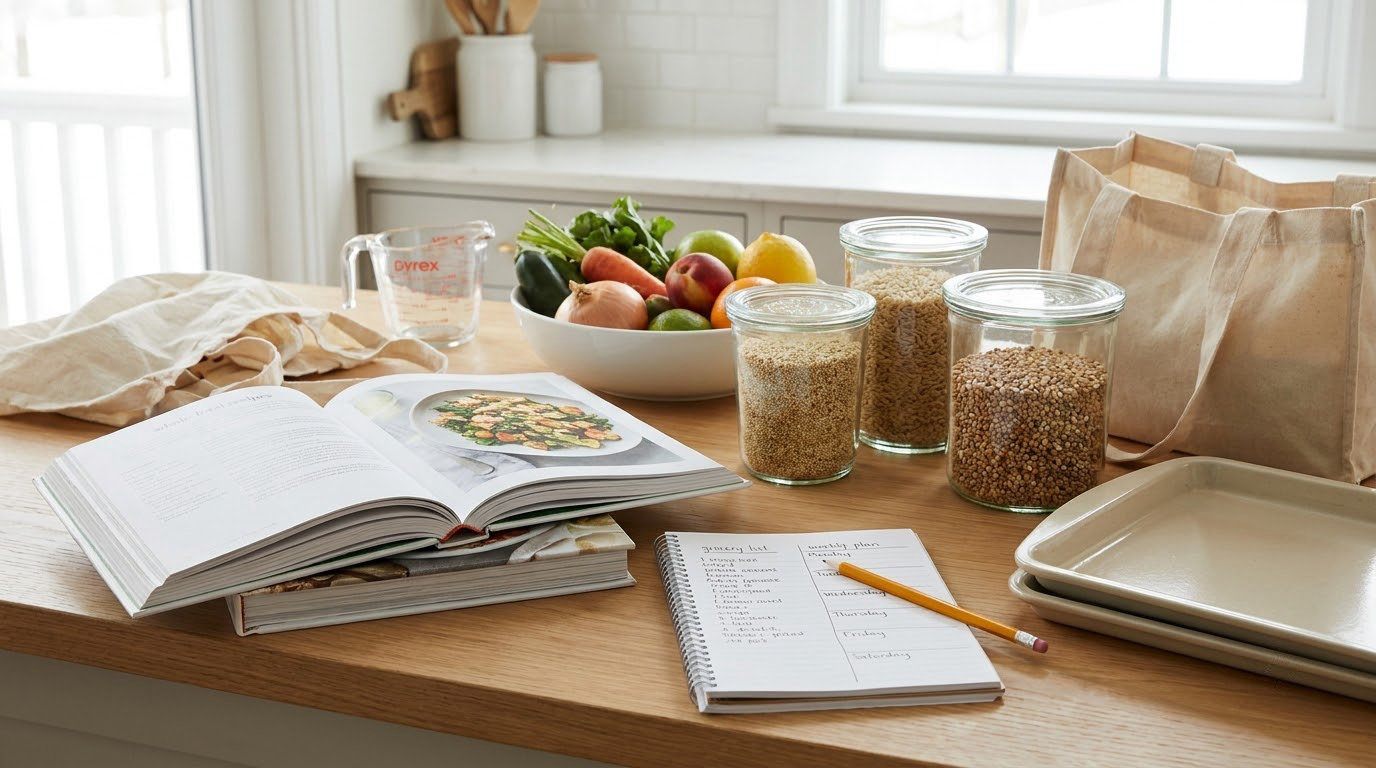
Learning how to meal plan for a gluten free family comes down to one repeatable weekly session: decide who needs strict gluten avoidance, build the menu around naturally gluten-free whole foods, then prep enough extra portions to cover the nights when nobody wants to cook. Most families land a full week in 60 to 90 minutes of planning plus about two hours of prep. Reviewed for 2026.
The hard part is not the recipe list. It is deciding, once, what your family’s rules are and then stopping to renegotiate them every Sunday night.
Table of Contents
What You Need
You need less than most people expect. Everything below can live on a single page or in one phone note.
- A seven-day calendar you can see from the kitchen, plus whatever calendar already holds your family’s appointments.
- Family meal notes: who is eating, who needs strict gluten avoidance, who is a picky eater this month, and which nights are impossible.
- A gluten-free grocery list template, either in a note app or written fresh each week.
- Storage containers that seal properly, plus a small dedicated basket or bin for the gluten-free person’s lunches and snacks.
- A label checklist or trusted-brand note, so you are not re-reading the same ingredient list at 7pm on a Tuesday.
- Guidance from a doctor or registered dietitian if the restriction is medically necessary. That conversation sets the standard you are planning around, and it is not something to guess at.
How to Meal Plan for a Gluten-Free Family
The system runs on seven steps, and the order matters. Plan the family’s rules first, the calendar second, the menu third. Shopping and prep come last because they depend on all three.
Celiac disease, wheat allergy and non-celiac gluten sensitivity are different situations, and only a clinician can tell you which one your family member has. A family that goes gluten-free because everyone simply prefers it has far more freedom than a family working around celiac disease, where even trace cross-contact matters.
1. Confirm What Gluten-Free Means for Your Family
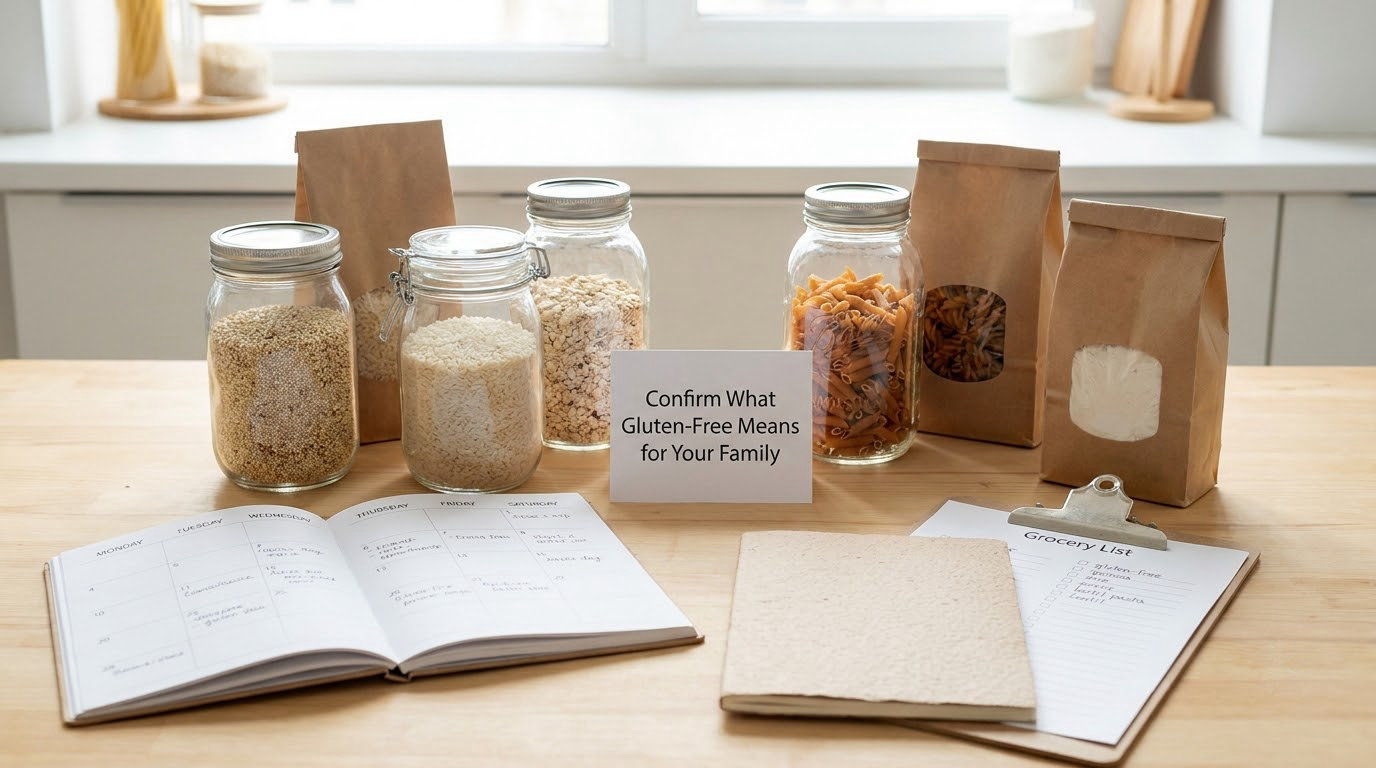
Start by writing down, in one sentence, why each person is eating gluten-free. One person might have a diagnosed condition, one might be choosing it for preference, and one might simply not care either way. Those are three different planning problems.
Gluten is the protein in wheat, barley and rye, and it shows up in more places than people expect: flour, barley malt, malt syrup, brewer’s yeast, semolina, durum and spelt. US labeling rules allow a product to call itself gluten-free when it holds under 20 parts per million, which is the number the FDA uses. Oats are a special case, because they’re naturally gluten-free but are frequently milled alongside wheat, so certified gluten-free oats are the safer choice for a celiac household.
If a doctor or registered dietitian set the rule for your family, write their wording down and keep it in your planning note. If you are deciding on your own, that’s a preference decision and you get more flexibility, including occasional restaurant bread or shared sauce.
2. Check the Calendar and Your Family’s Schedule
Mark the week’s fixed points before you think about food: school days, practices, appointments, work shifts, travel, visitors, and the birthday party on Saturday. Then mark the two or three evenings that are realistically a 25-minute meal, not a 60-minute one.
Count what actually needs to be made ahead. A week with five lunches out and one dinner guest might need six breakfasts and two dinners prepped, not fourteen of everything. Families who plan for the real week instead of an idealized one end up with fewer half-eaten containers in the back of the fridge.
3. Choose a Flexible Meal Template
Pick two or three bases you cook on repeat, then change the parts around them. Rice, potatoes, corn tortillas, quinoa and gluten-free pasta all work, because the base carries the meal and the sauce, toppings and vegetables carry the variety. One pot of rice becomes fried rice, burrito bowls and a side dish depending on what you do to it.
A sample week looks like this, with everything from naturally gluten-free sources:
| Day | Breakfast | Lunch | Dinner |
|---|---|---|---|
| Monday | Overnight oats with certified oats, banana, nuts | Prepped snack box | Sheet-pan chicken, potatoes, broccoli |
| Tuesday | Eggs, corn tortillas, salsa | Leftover chicken bowl over rice | Corn tortilla tacos with black beans, quick slaw |
| Wednesday | Yogurt, berries, seeds | Crackers, cheese, fruit, hummus | Gluten-free pasta with jarred sauce and salad |
| Thursday | Eggs, fruit | Prepped snack box | Quinoa bowls with roasted vegetables and tahini |
| Friday | Overnight oats | Leftover quinoa bowl | Easy fish or tofu with rice and frozen vegetables |
| Saturday | Whatever the family wants | Leftovers or packed lunch | Tacos night, everyone builds their own |
| Sunday | Eggs, toast if safe for the household | Prepped snack box | Roast chicken, second vegetables, dessert |
Notice how much is intentionally boring and repeatable. That is the point: the base is already solved, so the evening effort goes into the part people actually care about.
4. Plan Around Shared and Separate Meals
Cooking two full menus is what wears families out. Plan one core meal everyone can eat, then add a gluten-free side or a swap for the person who needs it. Corn tortillas next to shared beans and cheese, or a pot of rice beside a sheet pan of vegetables, means nobody is cooking alone.
Whole-household gluten-free is a legitimate option too, and celiac parents on community forums frequently report it is calmer than running two systems, because a shared toaster and colander add risk back into everything. It suits families where nobody strongly objects and the budget is tight. It does not suit a household where several people eat gluten daily and will not give it up.
For picky eaters, keep one familiar anchor on the plate even when the rest of the meal is new. A plain rice portion, corn tortillas, or fruit on the side often gets eaten when the rest does not. Texture matters more than novelty at most family tables.
5. Plan Snacks and Low-Effort Backups
Snacks decide whether the plan survives. Choose four or five that repeat all week: fruit, yogurt, cheese cubes, hard-boiled eggs, nut-butter cups, popcorn made from a certified gluten-free bag, or suitable crackers you have already checked.
Portion them at the start of the week into containers that live in a separate bin or bag. If the gluten-free lunches sit in the same cupboard as the regular ones, someone will eventually grab the wrong one, and that is the exact scenario you are trying to design out.
Keep one emergency meal in the freezer for the nights that go sideways. A container of soup, a portion of that Sunday roast, or a few frozen gluten-free burritos take ten minutes and save the evening.
6. Make One Organized Grocery List
Write the list grouped the way the store is laid out, not the way the recipe is written. Produce, proteins, dairy and plant alternatives, grains and starches, pantry staples, frozen, then household supplies. A list in store order means you are not walking back through the produce section three times.
Read labels again before you buy, even for products you have bought before. Formulas change and manufacturing lines shift. Look for wheat, barley, rye, malt and brewer’s yeast, and check whether oats are certified.
Shop the store section you trust first for gluten-free basics, then compare a couple of brands on taste and texture rather than assuming the first one works for your kids. When something is not available, swap it rather than dropping the meal: different beans in the same dish, a different cut of protein, a different vegetable, or a sauce you make from canned tomatoes.
7. Prep, Label, and Store Food Safely
Batch on the weekend: cook one grain, one protein and one tray of vegetables, then portion. Keep the gluten-free portions in their own labeled containers and store them on the upper shelf of the refrigerator so nothing drips onto them.
Give shared equipment a dedicated spot. People managing celiac disease in a shared kitchen usually point to the toaster and the colander as the two items that change everything, and cheap color-coded utensils make it obvious which knife and board are not for wheat. Cook gluten-free pasta in a clean pot with fresh water, never water used for regular pasta, and keep condiments in squeeze bottles so a knife never goes back into a shared jar.
Refrigerate perishable food within two hours and use it within three to four days, or freeze it. Reheat until steaming hot throughout. Cook poultry to 165°F, ground meat to 160°F, and whole cuts of meat and fish to 145°F, using a food thermometer rather than color or timing.
Common Mistakes
Planning too many new recipes. Five unfamiliar meals in a week means five chances to fail and buy a backup. Fix: two new recipes maximum, everything else recycled.
Forgetting an ingredient until 6pm. Fix: check the pantry before you build the menu, not after.
Treating gluten-free as automatically healthier. A gluten-free cookie is still a cookie. Fix: build the week around whole foods and let substitutes be occasional.
Ignoring cross-contact. A certified loaf in a toaster used for wheat bread does not stay certified. Fix: dedicate the toaster, or buy bread that is baked in a dedicated facility.
Overpacking the fridge. Six containers of the same rice dish is waste with good intentions. Fix: cook portions you will actually eat plus two spare.
Not building in extra portions on purpose. Fix: cook one extra dinner and one extra lunch portion every week and let them become the backup.
Five tips worth keeping in the planning note: the whole household eats the same base meal whenever possible, naturally gluten-free foods do the heavy lifting, every prepped lunch gets a name on it, one flexible dinner stays unscheduled on purpose, and the plan gets written down once so nobody re-litigates it at dinner time.
Frequently Asked Questions
How can I use extra portions when planning gluten-free family meals?
Cook one extra dinner portion and one extra lunch portion every week on purpose, then store them in labeled containers in the freezer. Most families end up eating them within a week or two. Label with the date, keep gluten-free containers separate and on the upper shelf, and reheat until steaming hot all the way through.
What are easy gluten-free lunches for school or work?
Build lunchboxes from three parts: a base such as a corn tortilla, gluten-free crackers or sliced cheese, a protein such as boiled eggs, yogurt cups or nut-butter packs, and a piece of fruit or vegetables. Packing from a Sunday prep session takes a few minutes each night. Check labels on crackers, wraps and spreads every time, since formulas change.
How can I save money while eating gluten free?
Let naturally gluten-free whole foods carry most of the week: rice, potatoes, corn tortillas, beans, eggs, meat, fish, dairy, fruit and vegetables are ordinary grocery items in ordinary sizes. Specialty bread, pasta and baked goods cost more, so use them for the two or three meals a week that would really suffer without them, and compare a few brands before committing.
How do I choose gluten-free meals at restaurants?
Call ahead, ask specifically whether the kitchen cooks gluten-free food separately, and mention celiac disease rather than just a preference. Ask what is cooked in a dedicated fryer and whether the toaster is used for wheat bread. Choose plain dishes such as grilled meat with potatoes or a salad with a simple dressing, where there are fewer shared surfaces to worry about.
Should my child stop eating gluten because of stomach problems or behavior changes?
Talk to your pediatrician or a registered dietitian before removing gluten, especially if your child is growing. Celiac disease, wheat allergy and non-celiac gluten sensitivity are separate conditions with different answers, and testing for celiac only works while your child is still eating gluten regularly. Cutting it out first can make the diagnosis much harder to confirm.
Start With One Easy Dinner
Pick one dinner the whole family already likes that happens to be gluten-free without substitutions. Cook it this week. That gives you a safe meal in rotation before you build anything complicated.
Then write down what gluten-free means for your family, block 60 minutes for a planning session, and build the grocery list by store section before your next trip. Repeat it once. The second week is where this starts feeling easy.